








Pool Builder
Building Pools With Maintenance in Mind

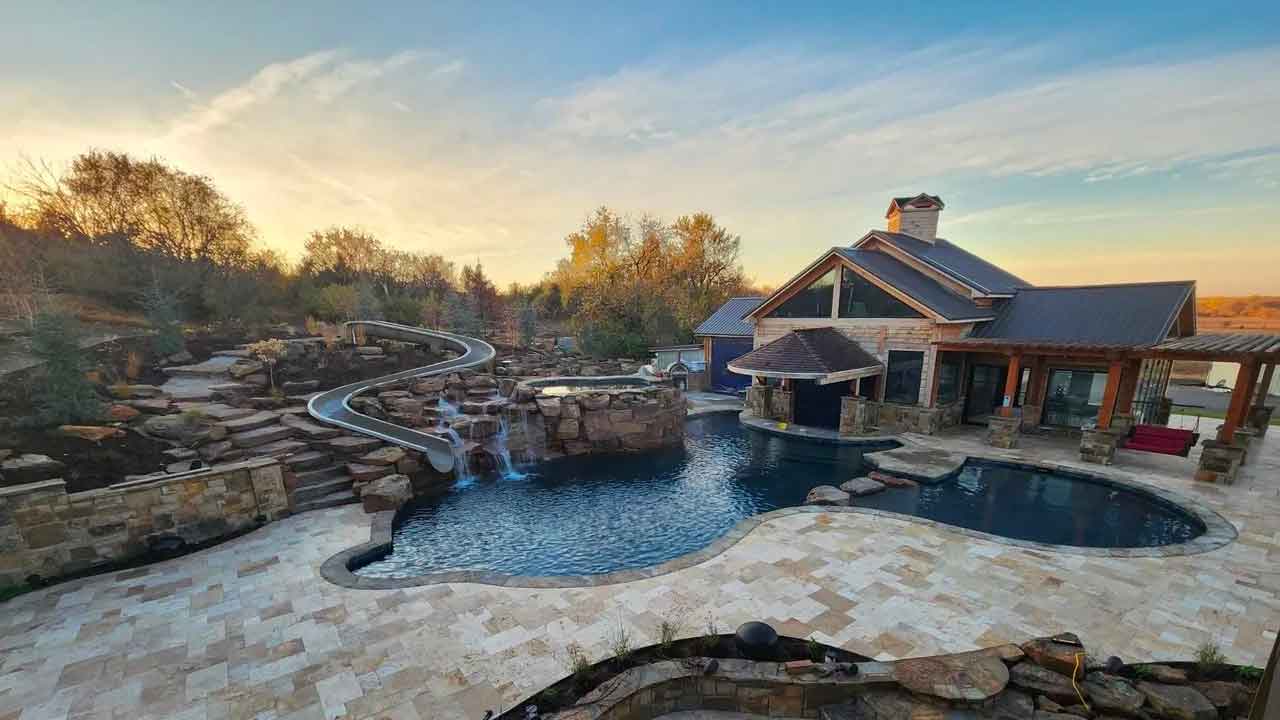
Edwards Pool Construction, based in Wichita, Kansas, has steadily carved out a niche for itself as the premier pool builder in the area. Headed by the visionary Steve Edwards, a seasoned pool builder and hot rod aficionado, the firm has transformed from its roots in pool service to one of the most respected names in pool construction. This transformation reflects their commitment to not only creating stunning designs but also building pools with service in mind.
Approaching Pool Construction With Future Maintenance in Mind
Steve Edwards, the driving force behind Edwards Pool Construction, has a unique approach to his work. In an interview with Pool Magazine, he shared his journey, stating, “I never worked for anyone and just reverse-engineered everything, as I learned.”
Hot Rodding Pools For Performance
Edwards’ passion for hot rods coupled with his mechanical knowledge has significantly influenced his pool construction techniques. He revels in modifying pool equipment pads for higher performance, drawing parallels between his love for speed and his innovative pool designs.

Averi Edwards, Steve’s daughter, maintains pools for the company. She explained that the service aspect is always an important consideration in her father’s mind. “My dad started in the business servicing pools. He would hot rod equipment pads and make them easier to work on. That is what is always in the back of his mind when he’s building something.”
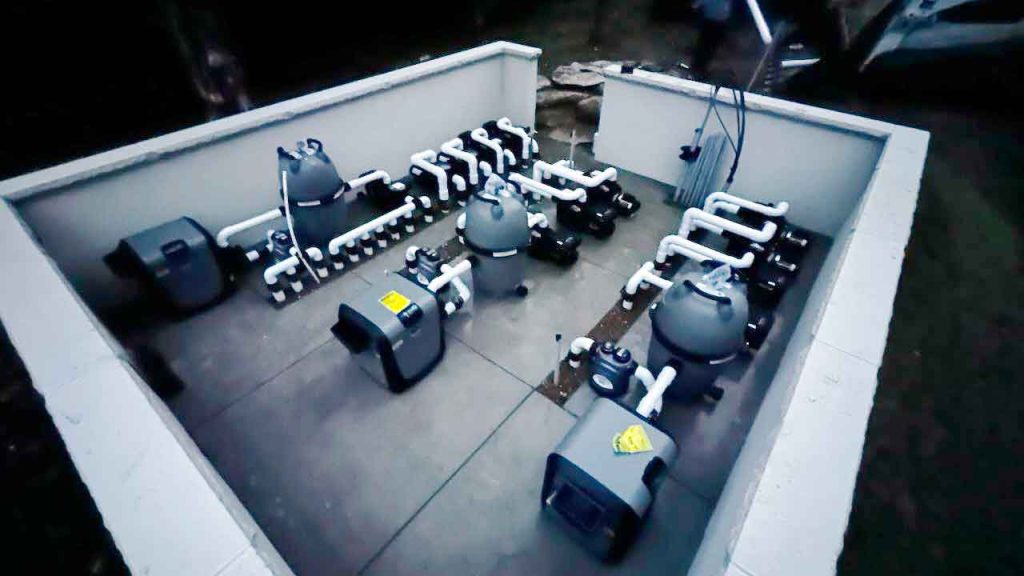
On Building Pools With Maintenance in Mind
Edwards says that her father’s doctrine of building around ease of access for maintenance remains a mission-critical aspect on every pool project.
“He’s always thinking, how is this going to be serviced? How are we going to clean this and get a vacuum hose down here? He’s making sure that we have adequate filtration. That the pipe sizes are big enough, that we’ve got enough pumps, enough chlorinators, enough sanitation. These things are always in the back of his mind. So really, by the time that our service guys come in, it makes it really easy on us to take over,” Averi explained.
Seeing Things a Little Different
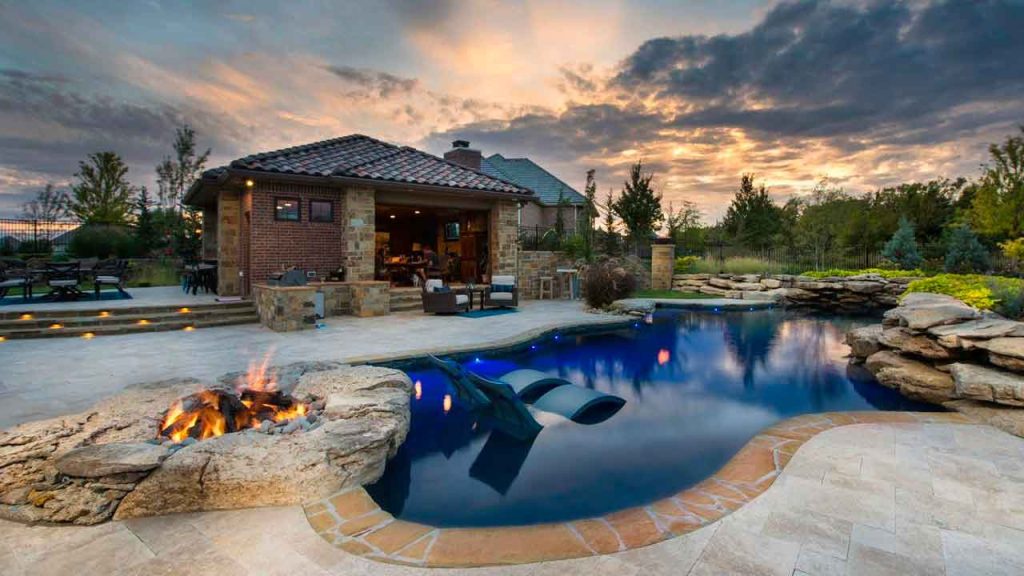
One of the most intriguing aspects of Edwards’ philosophy to building pools with service in mind is his ability to envision three-dimensional structures in his head, a skill that has helped him hone his craft as a builder. “I make my living doing things I’ve never done before and it’s been like that since day one,” explained Edwards. “The art of putting water over an edge or up in the air; that type of plumbing, it all comes back to hot rod knowledge, mechanical knowledge, and my ability to see hydraulics and structure in my head.”
Bringing The Wow Factor to Wichita
When it comes to designing and constructing pools, Edwards begins with the homeowner and the traditional expectations of Wichita’s conservative market. “Rectangular pools with auto covers are popular out here because we’ve got a lot of wind up here. So how do you dress that up? You curve it up on the inside, curve it up on the deck,” explained Edwards, “most of my design work is on the ground with a can of paint. Once people can see what I’m able to do there are x amount that will just let you go. Those are my favorite projects. I’ve had several clients just turn me loose. Not loose financially, but a little bit architecturally.”

Going outside the box seems to be working for Edwards. One of his most recent projects features killer geometry with an almost ampersand-shaped swimming pool and lazy river. The project presented numerous technical challenges and we were eager to learn more about what went into building the vessel.
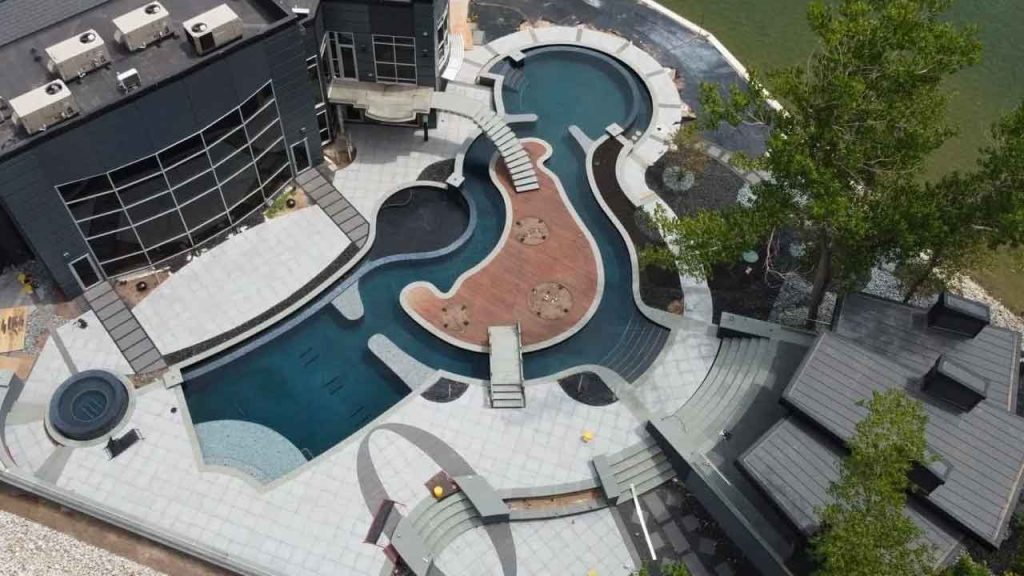
“This project was brought to me by a builder I’d never heard of,” said Edwards, “he just walked into my shop and threw down a set of plans. That project ended up probably at 10 million, I would think. We shot that pool and it was challenging.”
When an opportunity to hot rod the lazy river aspect of the pool presented itself, Edwards jumped on it. “I made some changes to the lazy river and how it was designed. It’s got two Riverflow, 3000 gallon-a-minute pumps in it. I’ve used Riverflow twice before. Never in a lazy river, but it all works amazing,” said Edwards.
Edwards’s unique ability to find ways to improve the aesthetic of the overall project would foster a unique collaboration with one of the industry’s leading tile artisans.
“They wanted to do tile and we introduced the idea of glass. So we contacted Jimmy Reed. We ended up tenting the pool. It was nice and air-conditioned through the rain and heat and the guys were able to work continuously for six or seven weeks. Then we had to cover the tile up and set for another winter before we ever plastered that pool,” explained Edwards.
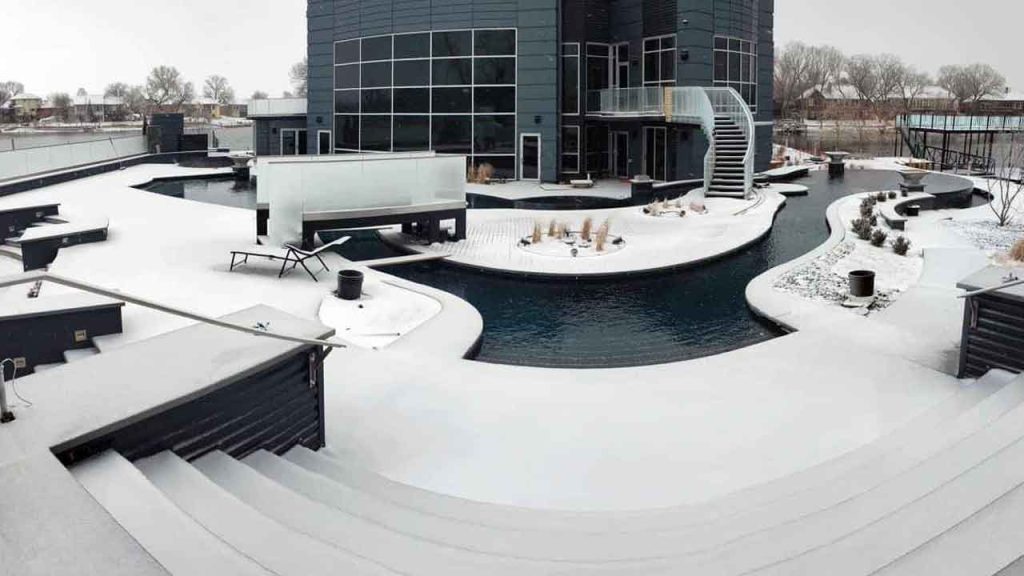
The end result of this sophisticated and avant-garde design represents a significant departure from the prototypical geometric-shaped swimming pools typically found throughout the Wichita market. In fact, the design is so unique that one might wonder if this pool in particular might usher a renaissance towards more unconventional designs.
“Batman Lives There”
“It’s an incredible pool,” Edwards remarked cheerfully, “you could plop that pool down in California just about anywhere but it’s really crazy for Wichita. I tell people Batman lives there because the Batmobile sitting in front of that house would look right at home.”
The success of this build has already led to more work of this nature for the Wichita pool builder. “I’m lucky to have been a part of this project I thought I’d never build anything like that. I just walked it the other day, and it’s just crazy when you realize you built something like that,” said Edwards. “Now we’ve got two other projects of that scale going at the same time in the same neighborhood. I never would have thought I could build two at the same time, but we’re doing it.”
Listen to our entire conversation with Steve & Averi Edwards on the Pool Magazine podcast.









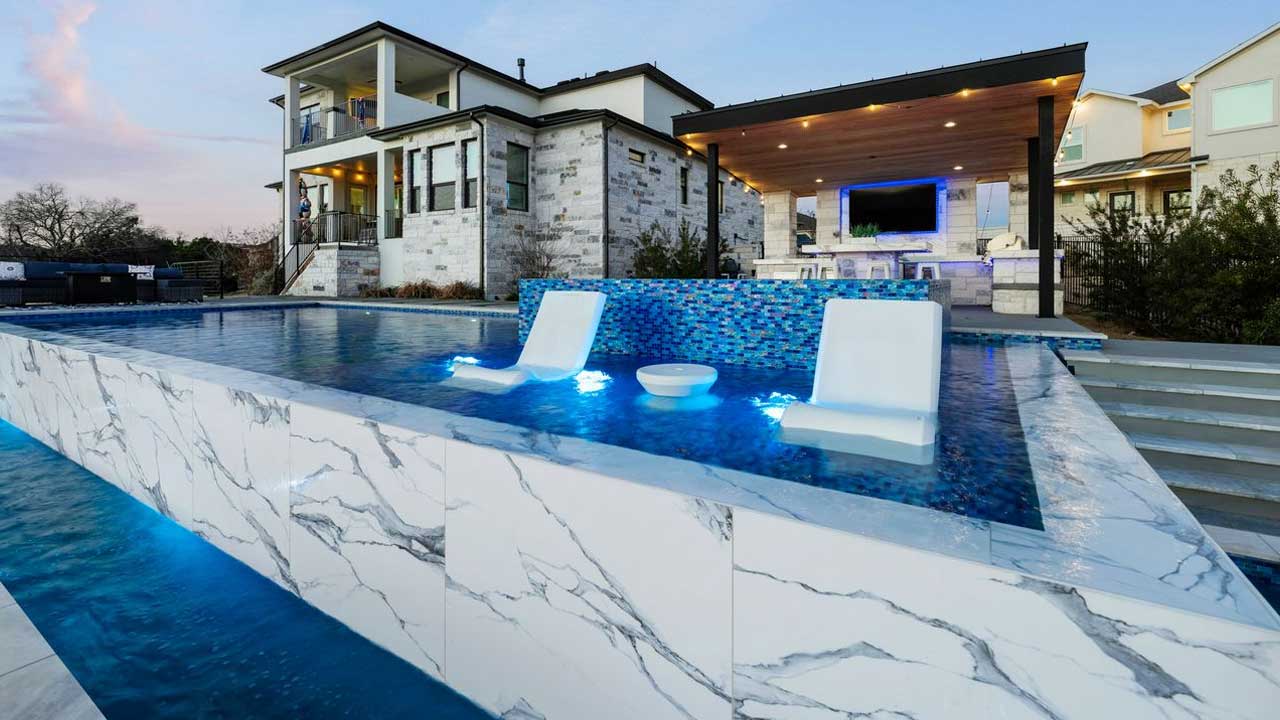
In Austin, Texas, a city known for its competitive pool and outdoor living market, Bo Barnett has carved out a reputation for pushing boundaries. As the founder of GBIV Designs, Barnett combines artistry with engineering precision, blending design sensibility with technical know-how.
His introduction to the pool industry came somewhat unexpectedly. “I actually started in the pool business about 24 years ago,” Barnett said. “At the time, I didn’t know much about swimming pools, but I had always been into design and drawing. I got my first job at a big box company that paid me to sell pools, and that’s where I fell in love with the industry.”
After moving to Austin, Barnett co-founded a pool company in 2007. Within a decade, his firm KB Custom Pools ranked among the Top 50 Builders in the U.S. and collected multiple industry awards. But Barnett wasn’t satisfied with simply excelling in the residential market. He wanted GBIV to become a design firm that architects and builders could collaborate with on a national scale.
“As a builder with ‘custom pools’ in the company name, it was hard to get architects and design firms to see me as a peer,” he explained. “That’s when I decided to pivot. With GBIV, we could offer everything from conceptual design to structural and hydraulic engineering—not just builds in central Texas, but resources for projects all over the country.”
This broader vision opened the door to exploring innovative materials, and it was around this point in time that Barnett began championing the use of large-format porcelain tile panels.
Why Porcelain?
At the Coverings trade show in Orlando earlier this year, Barnett’s panel on porcelain drew a crowd of builders eager to hear his perspective. It’s easy to understand why: porcelain is challenging to master, but its potential is enormous.
Barnett’s interest was sparked by limitations he saw in conventional materials. “I got really bored with the one-by-one or one-by-two tiles,” he admitted. “I’d visit these amazing homes, see porcelain panels in the bathrooms, and think—why can’t we use this outside?”
Manufacturers were skeptical, arguing that porcelain wasn’t durable enough outdoors. But Barnett’s curiosity led him overseas. “In Italy, they showed me thin veneer porcelain that looked just like marble but was almost impenetrable to water, resistant to thermal expansion, and built to last,” he said. “That’s when I knew it had potential.”
He tested it on two projects. The results were visually stunning—but the process was riddled with errors. Without the right tools or methods, Barnett and his team faced broken panels, failed adhesion, and financial setbacks. Still, he saw enough promise to keep going.
Lessons From Failure
Barnett doesn’t shy away from recounting those struggles. “The first project was a financial disaster,” he said bluntly. “We broke panels just carrying them into the backyard. We used the wrong blades, the wrong adhesion methods. Out of 11 panels, seven broke. But the end result still looked incredible.”
Instead of giving up, Barnett treated those failures as tuition in a new discipline. He invested in the proper equipment: cutting tables, racks, suction cups, and scoring systems. “It cost us about $6,000 to outfit ourselves to handle the panels correctly,” he recalled. “But once we did, everything changed. Now, breaking a panel is rare. If one breaks, it’s because someone did something wrong.”
The same lesson applied to adhesives. Cementitious methods failed within 60 days, even under ideal conditions. “We followed every guideline—temperature, mixing, application—and still had delamination,” Barnett explained. “Switching to an epoxy system solved everything. Since then, we haven’t had a single failure.”
The Aesthetic Advantage
Beyond durability, porcelain’s biggest appeal lies in aesthetics. It opens creative doors that other materials simply can’t.
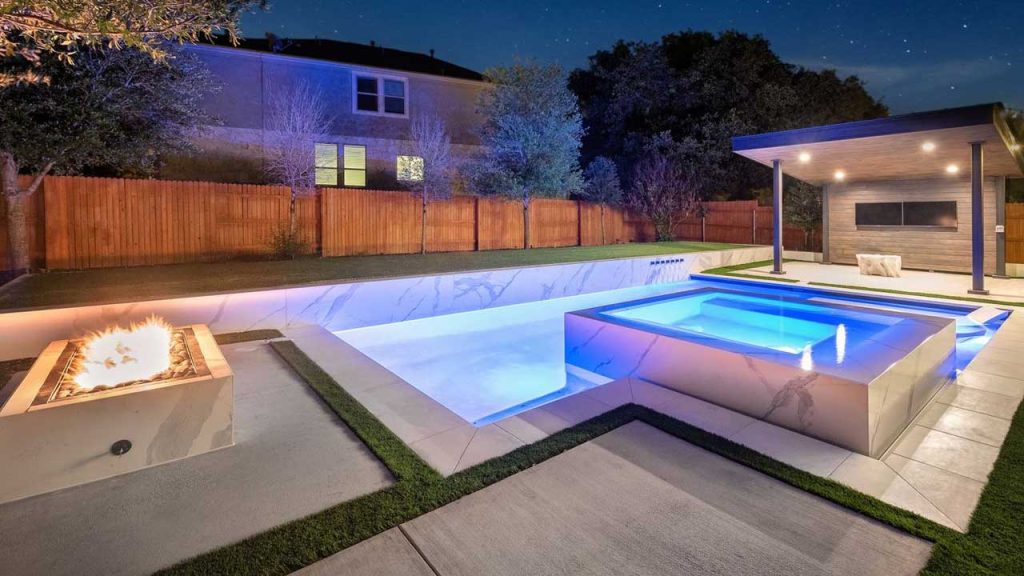
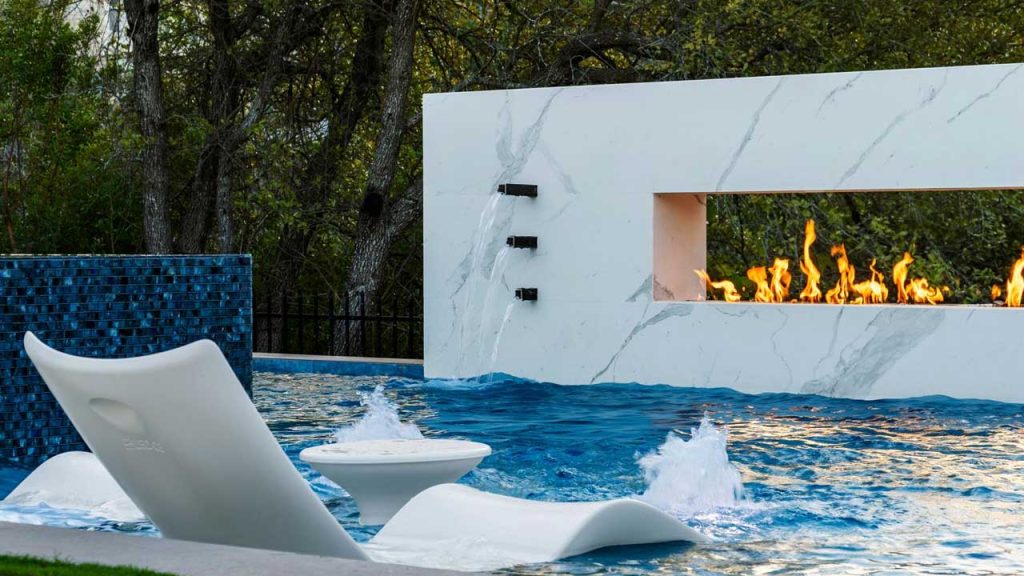
“You can create illusions—walls that look like wood, steel, or marble emerging from the water,” Barnett said. “People look at it and can’t believe it’s porcelain. That sense of wonder is part of the storytelling we’re trying to achieve in design.”
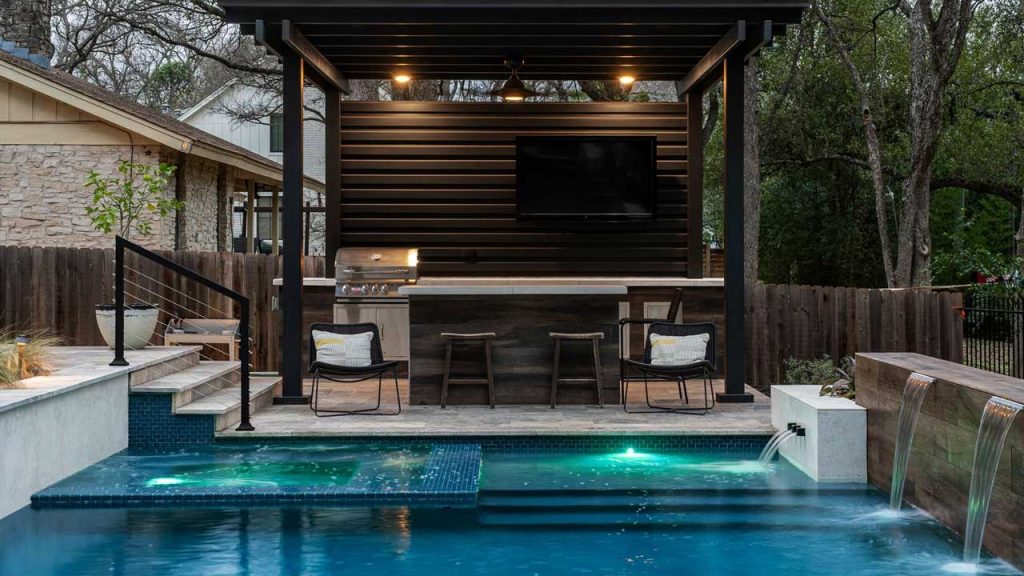
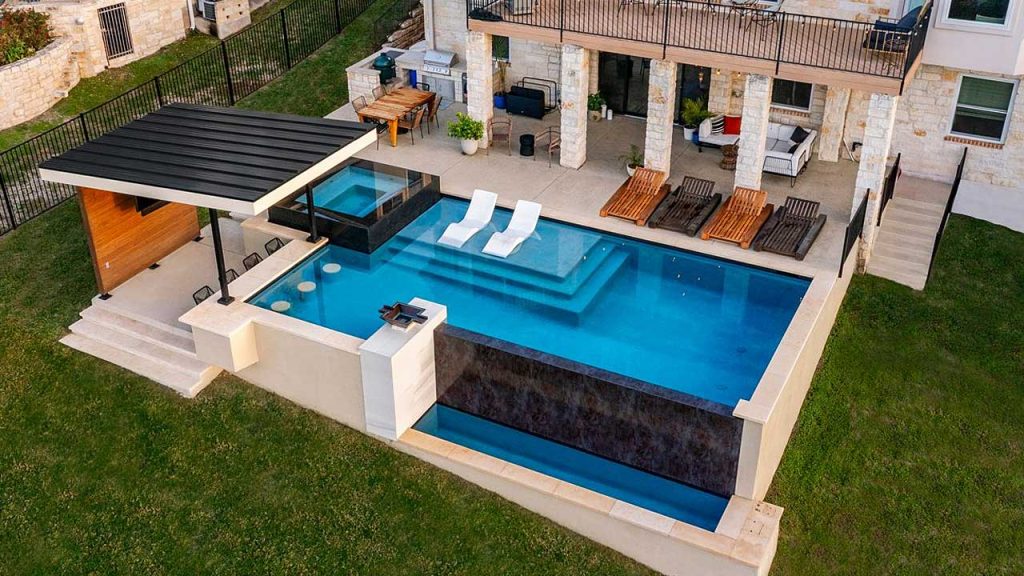
He has used porcelain to clad spas, pools, furniture, privacy walls, and even curved surfaces. A standout example is a perimeter overflow pool raised nine feet above grade.
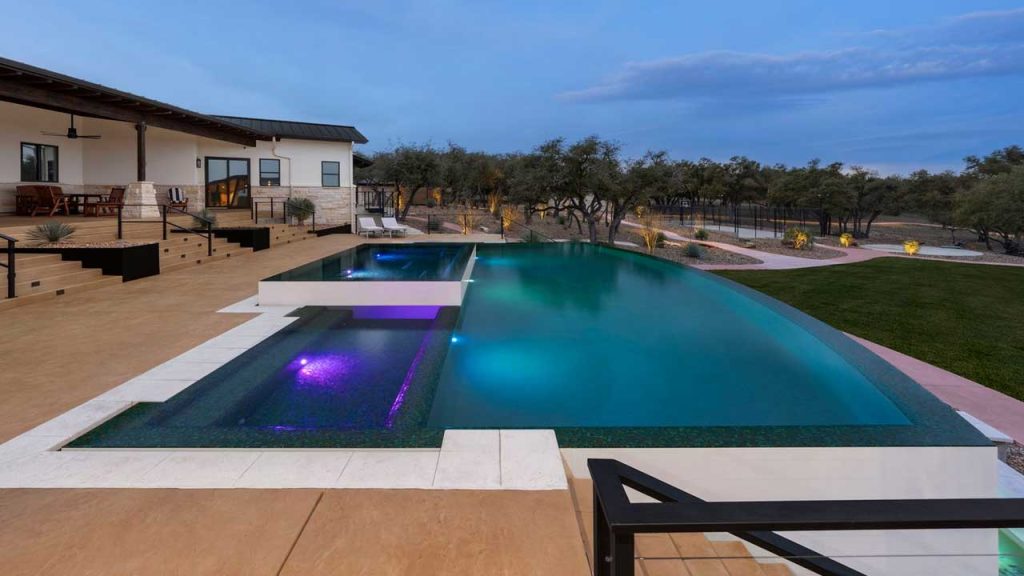
“The entire exterior was wrapped in a three-millimeter Italian porcelain,” Barnett explained. “It almost looks like slate, paired with green glass and gold epoxy grout. The porcelain even flexed around a bow-front radius. From ten feet away, it looks like one solid piece with almost no visible grout lines.”
This visual fluidity is what sets porcelain apart. Large panels eliminate the grid of grout lines that dominate traditional tile installations, giving pools a sleek, monolithic look.
Raising the Industry
What distinguishes Barnett from many of his peers is his willingness to share what he’s learned. “If I hadn’t had mentors early on, I would’ve failed,” he said. “That’s why I’m open about the mistakes we made. If I can help another builder avoid those pitfalls, it lifts the whole industry.”
He encourages builders interested in porcelain to start with education. “The NTCA [National Tile Contractors Association] offers regional classes specific to large-format panels. That’s where I’d begin,” Barnett advised. “After that, reach out to vendors directly. Many of them will help connect you with training and the right products.”
His collaborative mindset extends even to competitors in Austin. “I get calls from builders a mile away asking for advice,” he said. “That’s fine with me. If they get it wrong, it hurts the client and reflects poorly on all of us. There’s enough business out there. We’re better off raising the bar together.”
The Road Ahead
So, will porcelain become mainstream in pool construction? Barnett thinks so—but it won’t happen overnight. “For large-volume builders, the learning curve and upfront investment can be intimidating,” he acknowledged. “But for those who take the time to train their crews, it’s one of the most dynamic materials available. I think within the next decade, we’ll see it adopted much more widely.”
He’s quick to add that porcelain isn’t reserved for high-end builds. “We’ve proven you can use it on an $80,000 pool just as effectively as a $500,000 one,” he said. “That’s why its potential impact is so broad.”
Looking forward, Barnett is intrigued by other materials, like acrylic, and concepts involving optical illusions in water features. But porcelain remains his central focus. “Porcelain works at every level of pool construction,” he emphasized. “That’s why I think it will have a bigger impact than almost anything else coming down the pipeline.”
Redefining What’s Possible With Porcelain
For Barnett, continuous learning is non-negotiable. “If I’m not sharpening my sword, I don’t feel like I’m doing justice to the industry,” he said. “Education has to be the foundation. That’s what allows us to innovate and redefine what’s possible in the backyard.”
As GBIV continues to blend artistry with technical expertise, Barnett’s work with porcelain is proving that luxury pool design is about more than building beautiful spaces—it’s about pushing the industry forward.
“We’re just scratching the surface of what can be done with porcelain,” he said. “And I think that’s what makes this moment so exciting.”
Ready to take a deeper dive?
Listen to our entire conversation with Bo Barnett, owner of GBIV Designs, on the Pool Magazine Podcast.
Photography Credit: Ethan Cooper Photography
Features
The Growing Popularity of Reinforced PVC Membrane for Repairing and Restoring Residential Pools

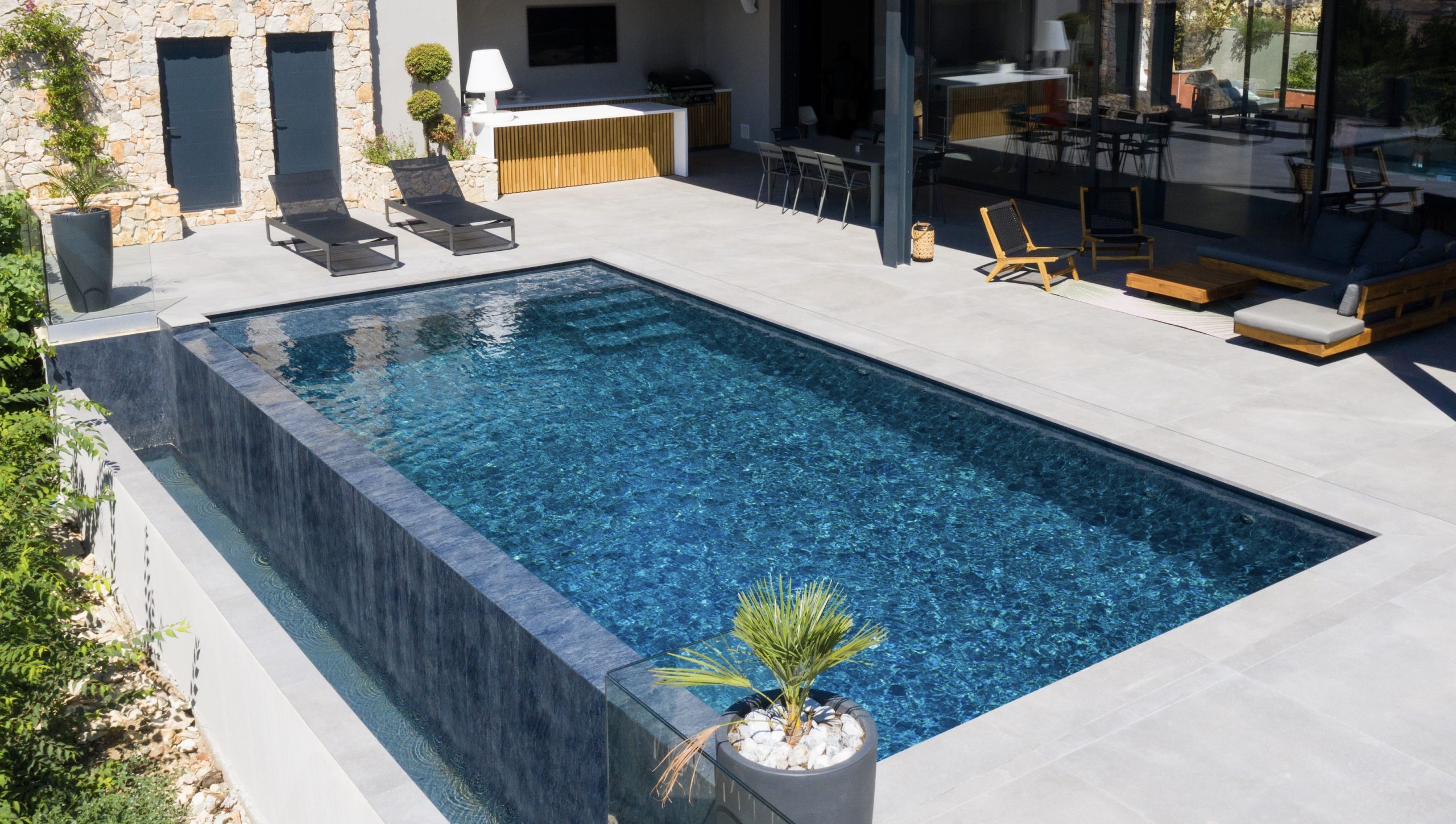
Reinforced PVC membrane is a proven European solution that is rapidly picking up speed in the United States. This gorgeous, reinforced PVC membrane pool finish has the appearance of slate, marble, granite, sand and even traditional gunite. Reinforced PVC membrane is rapidly growing in popularity among pool professionals for renovating residential pools. Here is what pool builders and pool renovators need to know about this trending material and why they should offer it to their customers for both pool renovations and new construction.
Offering a reinforced PVC membrane pool finish
One of the main advantages of reinforced PVC membranes is that they don’t crack regardless of freeze-thaw conditions or ground movement. Therefore, offering a reinforced PVC membrane provides a pool finish with unique benefits not provided by marbelite, stone-colored quartz finishes or thermoplastic coating. The reinforced PVC membrane completely seals the structure of the pool and keeps it watertight, making it ideal for renovating existing pools and building new pools. Reinforced PVC membrane is the perfect renovation product for pools with peeling paint, cracks, or leaking gunite and plaster. Using reinforced PVC membrane will break the cycle of constantly repainting or costly replastering of the pool surface. In fact, pool professionals can distinguish themselves from competitors by offering a more comprehensive pool repair and restoration. Offering this long-lasting, reinforced PVC membrane can become a lucrative addition to your business providing an invaluable and profitable renovation option for a comprehensive pool repair.

Designer colors and textures
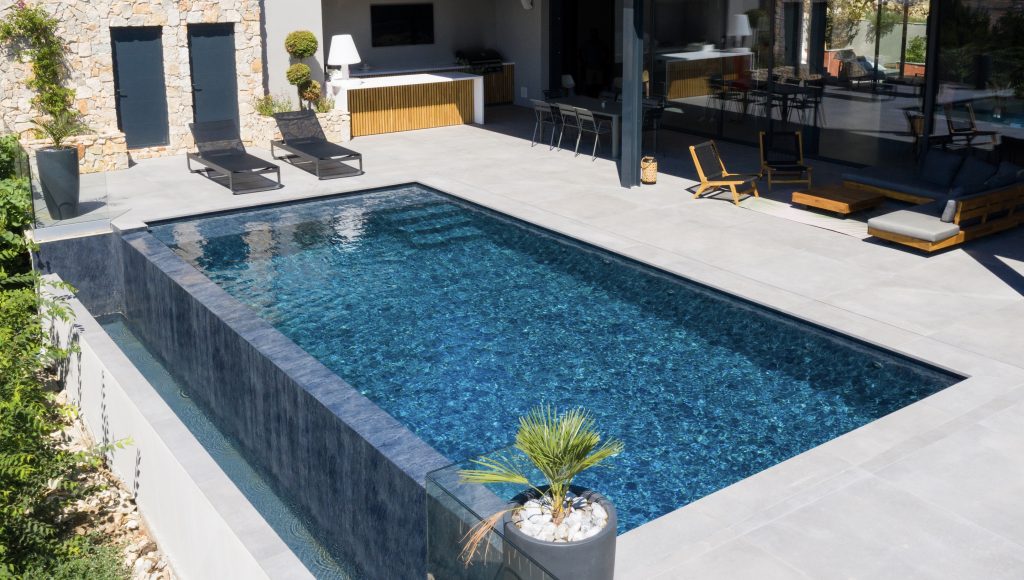
Today’s booming interest in this product for residential pools can be largely be attributed to the expansive colors and textures of reinforced PVC membrane that manufacturers like RENOLIT, in their TOUCH and VOGUE collections.
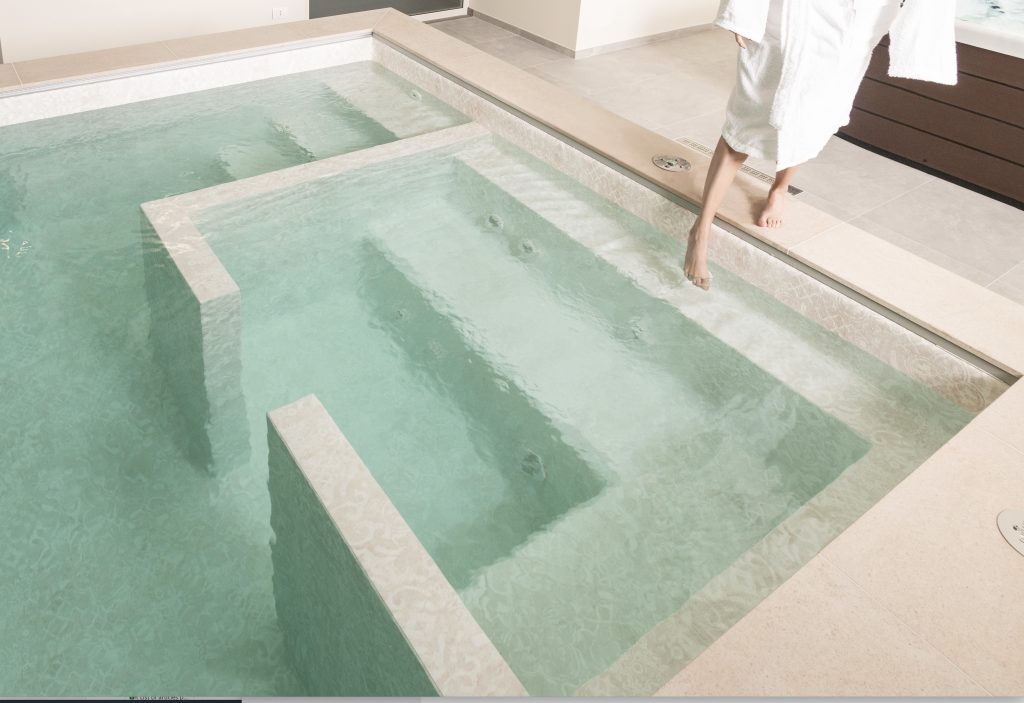
Consumers are drawn to the many new colors and finishes that give pool a high-end, designer look. For example, RENOLIT TOUCH series has colors and finishes that enhance and blend beautifully with today’s popular decking and coping treatments. The colors and textures offered by RENOLIT range from dark, grey slate and white marble finishes to speckled gunite and sand finishes. Buyers appreciate the materials high-quality and longevity inherent in the thicker 60, 70 and 80mil reinforced PVC membrane making it the perfect pool finish for pool professionals to add to their offerings.
Training
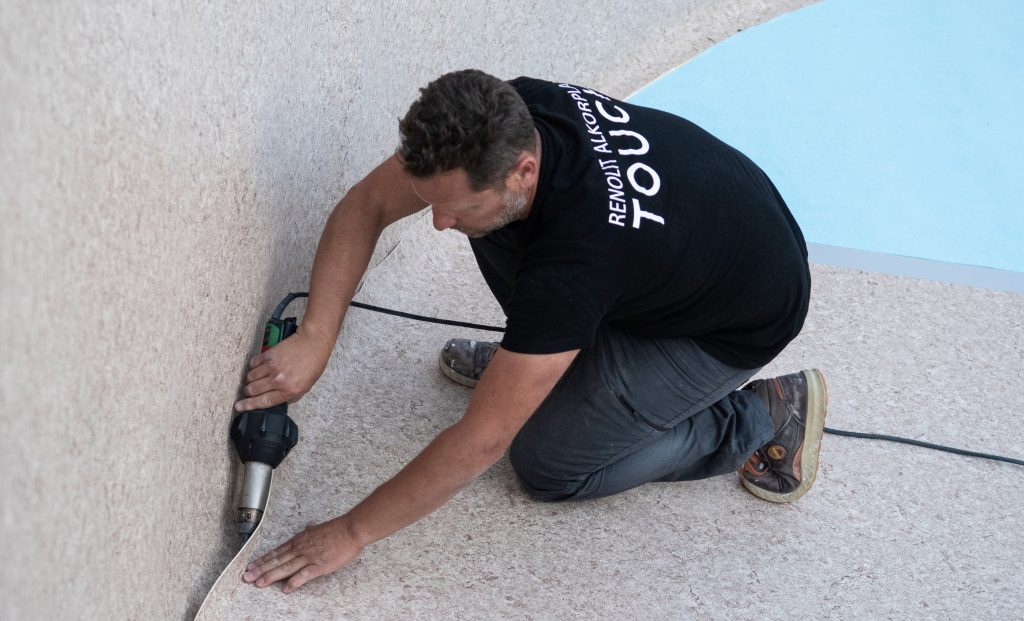
One, reinforced PVC membrane manufacturer, RENOLIT offers training and assisted installations to builders and installers getting started with learning the welding techniques for installing reinforced PVC membrane. In fact, installing reinforced PVC membrane is easy, and there are very low barriers to entry. No expensive equipment is required for installation and pool professionals can simply order the needed rolls and accessories for each job.
Once installation crews know how to install reinforced PVC membrane, they will find they are always busy and always in demand. Having the skill to install reinforced PVC membrane opens new opportunities for additional work in off-season. Residential installers equipped with this new set of skills find themselves expanding into commercial markets including hotels and motels where they can renovate indoor pools throughout the winter.
Growing demand of reinforced PVC membrane
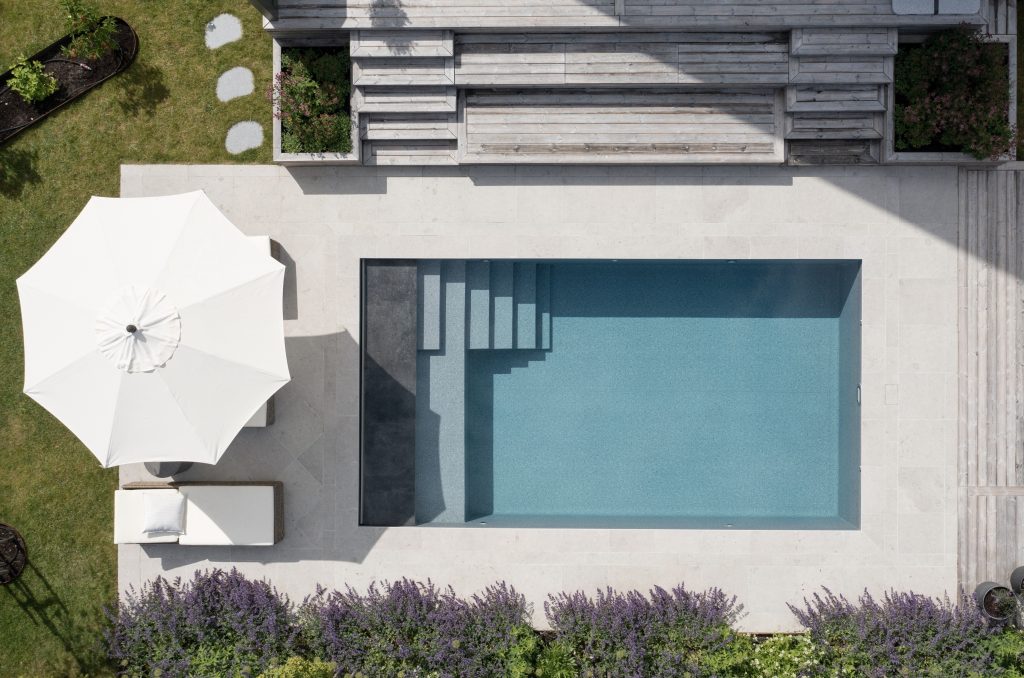
The introduction of new architectural patterns and textures such as the RENOLIT TOUCH series has contributed to the growing demand for reinforced PVC membranes. The new finishes imitate the look and feel of natural elements giving pools a high-end, designer look. It’s a high-quality premium product with a different price point that works for those that want to spend more for a long-lasting, attractive pool. By adding designer reinforced PVC membranes to their offerings, pool businesses can distinguish their business from competitors and expand their market.
Visit RENOLIT to learn more about designer reinforced PVC membrane, their new selection of finishes in various, colors and prints and sign up for installation training.

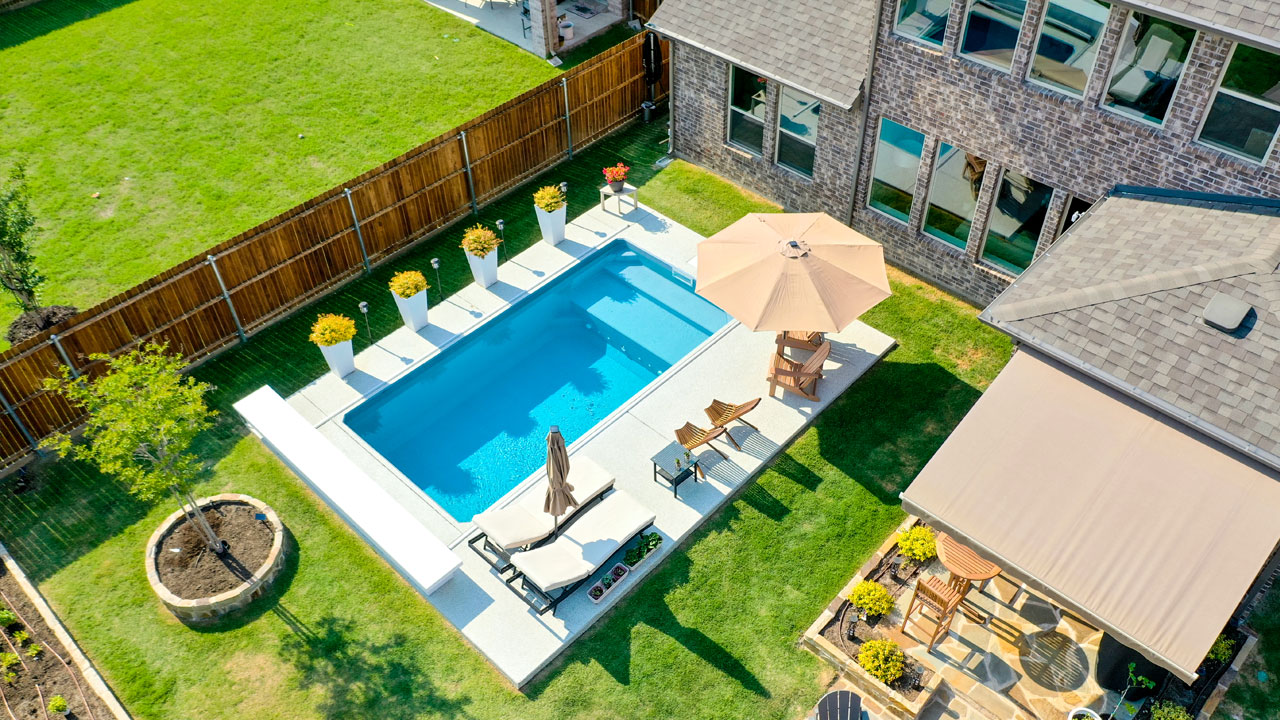
In an industry where speed, quality, and sustainability are paramount, Plungie is getting increased attention with its precast concrete pools. Aimed at pool builders, developers, and homeowners looking for smart turn-key solutions, Plungie pools offer a compelling alternative to traditional gunite, vinyl liner, or fiberglass options. During a recent interview with Cam Levick and Mike Walter from Plungie, Pool Magazine explored what makes these pools revolutionary—and why they are quickly gaining market share as the go-to choice for savvy professionals and eco-conscious consumers alike.
Plungie Pre-Cast Concrete Pools
According to Cam Levick, the story behind Plungie is both simple and exciting. “Our core founders, one is a traditional pool builder, and the other is a guy who just loves concrete and inventing things,” he explained. Six years ago, the team came together with a shared vision: creating a faster, more efficient way to build pools. The result was Plungie, a monolithic, precast concrete pool that could be installed in record time.
Plungie’s journey started in Australia, where they sold thousands of pools, and has since expanded into the U.S. market, providing the same high-quality product that has taken off across both continents.
Unlike traditional pools that require weeks or even months to construct, Plungie pools are factory-built and ready for installation within 10 days. “The pool industry has always been bogged down by delays—curing time, weather interruptions, and subcontractor availability,” Levick said. “With Plungie, those headaches are gone. Our pools come ready to install, so you can complete the project faster and with fewer disruptions.”
What Sets Plungie Apart?
One of the critical differences between Plungie and traditional pools lies in the construction method. Levick emphasized that all Plungie pools are built in a factory controlled environment, giving them a competitive edge over gunite and shotcrete pools. “Our lead time is 10 days,” he noted. “Because we build in a factory, our environmental footprint is much smaller, and we use 8000 PSI concrete, which is stronger than what’s used for gunite or shotcrete.”
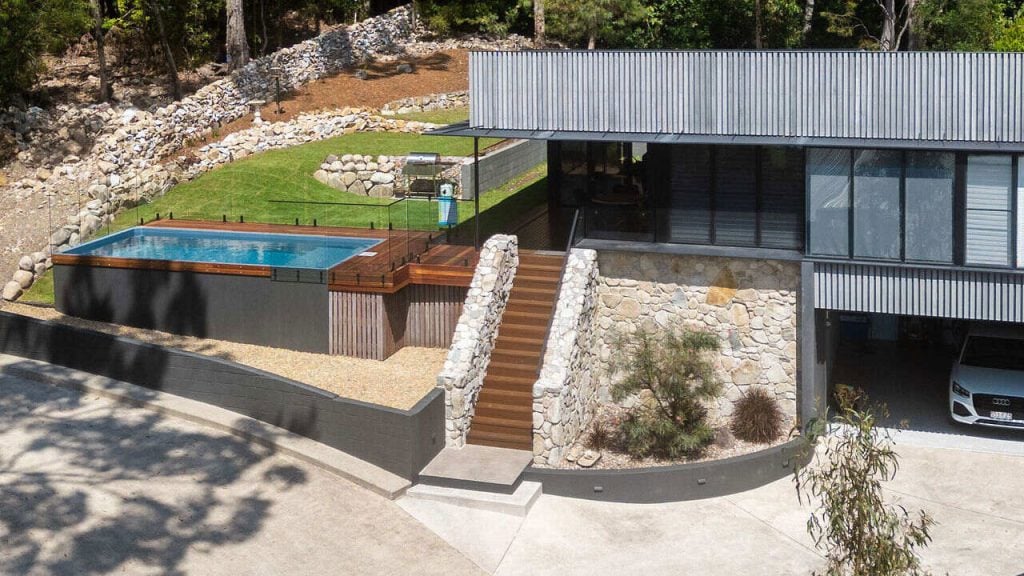
The precast design offers incredible versatility for homeowners with limited space or challenging terrain. “They can go above ground, fully in-ground, or even act as retaining walls,” Levick shared. This flexibility, combined with industry certifications like ICC and UL approvals, gives builders and homeowners confidence in the durability and quality of Plungie pools.
The Product Line: Something for Every Backyard
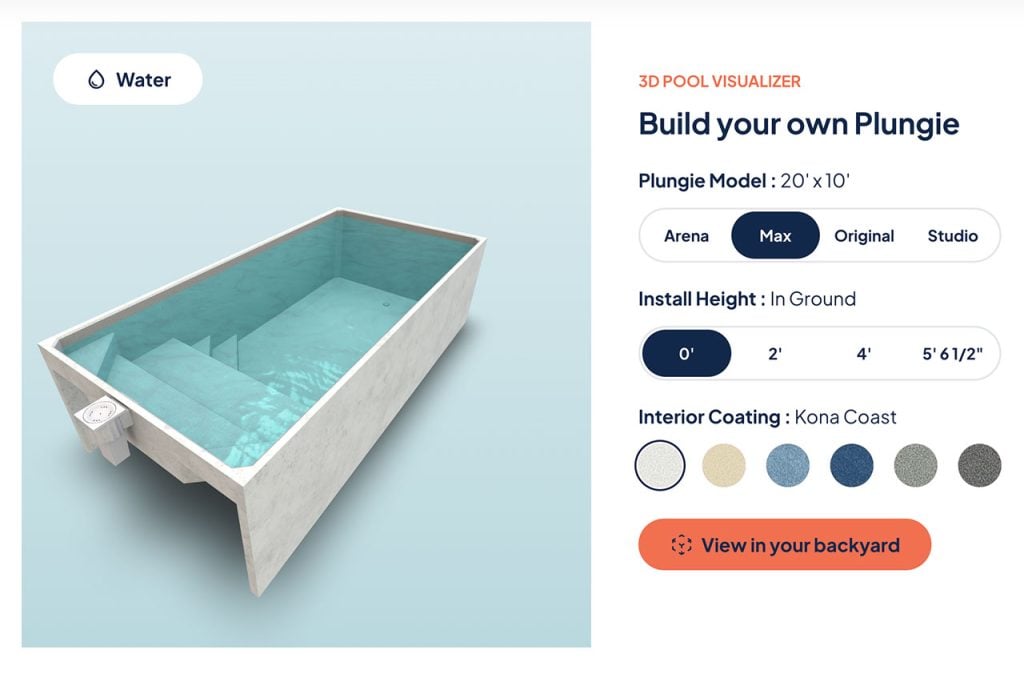
Plungie offers four flagship models to meet a variety of needs and preferences. Mike Walter elaborated on the different pool models:
The Max: 20×10 feet, holding 5,300 gallons of water, ideal for larger backyards.
The Original: 15×8 feet, with a 3,200-gallon capacity, balancing size and function.
The Studio: A compact 12×7-foot pool, perfect for urban settings or smaller spaces.
The Arena: An 11.5-foot circular pool, offering a distinctive, design-forward look.
In addition to the standard features, each Plungie pool comes pre-plumbed, pre-lit, and eco-finished with a 10-year warranty on both the shell and finish. “It’s a truly turnkey experience,” Walter said, adding that the pools also feature umbrella holders and hydrostatic valves to enhance convenience and functionality.
Performance That Builders and Homeowners Will Love
Beyond sustainability, Plungie pools outperform fiberglass pools in several key areas. “Concrete pools retain heat better than fiberglass, so they’re more energy-efficient,” Levick pointed out. “It’s easier to maintain your desired water temperature, whether you’re heating or cooling the pool.”
Levick also highlighted the durability and feel of concrete, which many homeowners prefer over fiberglass. “There’s just something about the feel of concrete that people love,” he said. “And with our monolithic pour—where the pool is cast in a single piece—there are no weak points or cold joints to worry about. That’s why we offer a 10-year warranty on both the shell and the finish.”
Plungie’s partnership with EcoFinish adds another layer of quality to the product. “EcoFinish is a high-performance polymer that bonds chemically and physically to our concrete,” Levick explained. “It’s easy to maintain, resistant to chemicals, and incredibly durable. Plus, it comes with a 10-year warranty, just like our pools.”
Sustainability at the Core
Sustainability is a key focus for Plungie, a point Levick was eager to elaborate on. “Building products don’t always have the best track record in terms of sustainability,” he admitted. “We wanted to take a proactive approach.” Plungie conducted a life cycle assessment comparing its pools to traditional concrete pools. The results were striking:
“We found that a Plungie has a 41% lower carbon footprint than a traditional on-site pool,” Levick said. “And in some cases, with recent changes, we’ve been able to reduce that footprint by up to 60%.” Plungie pools require fewer site visits and less concrete, and they can even be recycled at the end of their life—a feature not feasible with fiberglass pools.
Why Choose a Plungie Pool?
When evaluating pool options, Levick explained, many consumers appreciate the thermal and aesthetic benefits of concrete. “Concrete pools retain heat better than fiberglass, making them more energy-efficient to maintain the desired water temperature,” he said. Additionally, customers enjoy the durability and feel of concrete, which adds a layer of quality that fiberglass often cannot replicate.
Walter highlighted another benefit: Plungie’s speed of installation. “Homeowners can plan their pools on our website, connect with an installer, and have a pool in place within days, not months,” he said. This efficient process appeals to builders and developers alike.
Scalable Solutions for Developers
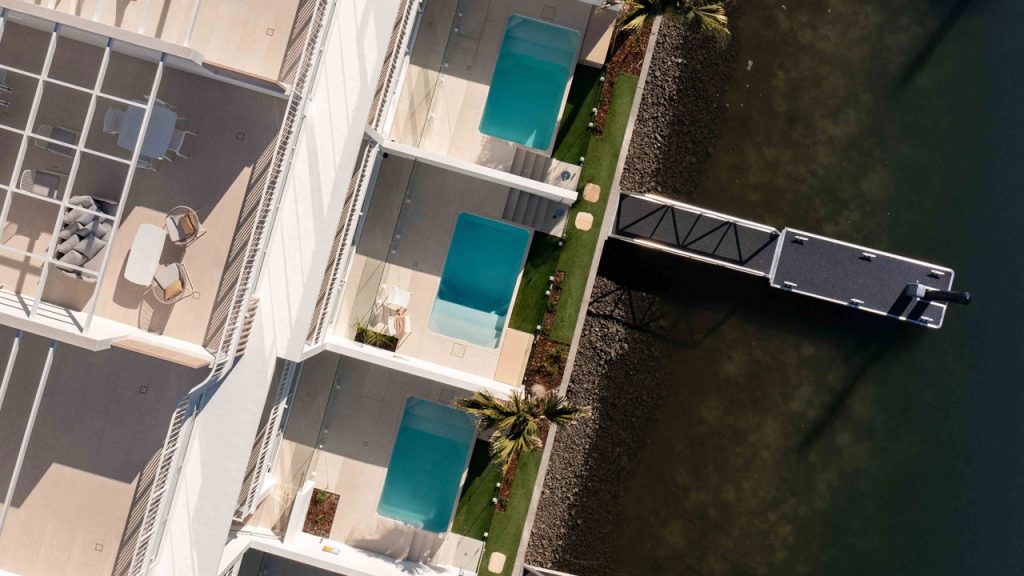
The ability to scale production is one of Plungie’s greatest strengths. Walter shared that Plungie’s approach has made them popular with homebuilders. “We’re currently working with a builder developing 1,600 homes. He’s planning to install 400 Plungie pools across the subdivision,” Walter revealed. “Because our pools are quick to install, builders can place a pool, finish the house, and sell it without delays.”
Keeping the entire process in-house—from excavation to installation—offers builders greater control over project timelines and profitability. “The margins are much better when you’re not outsourcing to subcontractors,” Walter noted.
A New Way Forward for Pool Professionals
Mike Walter explained that for value proposition for builders lies in Plungie’s speed, scalability, and quality, making it easier to meet tight deadlines and manage multiple projects. For homeowners, it provides a sleek, modern pool without the usual hassle of lengthy construction timelines and disruptive on-site work.
“Builders don’t need to worry about rain delays or subcontractor availability,” Walter emphasized. “With Plungie, they can plan their projects more efficiently, keeping everything on schedule and under budget.”
Levick added, “For developers and architects, Plungie offers a way to stay ahead of the curve. Our BIM content helps architects calculate the environmental impact of their projects, and our modular pool designs make it easy to customize installations.
Filling an Important Gap
Plungie pools aren’t here to replace custom pools but to fill an important gap in the market, offering a smart, practical option for both builders and homeowners. As Mike Walter explained, “There are a lot of cases where customers want a custom pool, but because of site challenges like slope or grade, they just can’t do it. Or, it might cost them a tremendous amount of money to build that pool the way they imagined.”
Plungie pools provide an alternative that works in a range of situations where a custom pool might be out of reach or impractical. “We offer the next option for them—something that’s going to be more affordable,” Walter continued. “It’s going to help the customer save money, reduce damage to their yard, and limit the amount of foot traffic during installation.” For homeowners, this means getting a pool without the usual stress and disruption.
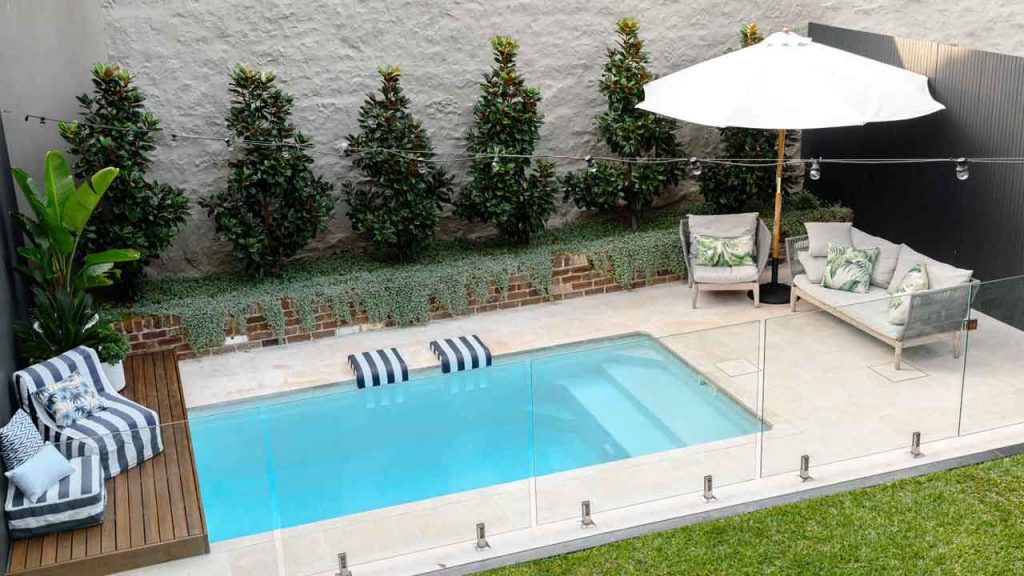
For pool professionals, Plungie is an essential tool to stay competitive and meet the evolving demands of today’s customers. “It’s just another arrow in their quiver,” Walter said. “They aren’t giving up custom pools. Instead, they now have a solution that lets them offer something equally impressive, but more accessible and affordable.”
Cam Levick also suggests that in the face of rising material costs, labor shortages, and growing environmental concerns, Plungie’s monolithic precast pools provide a streamlined solution that benefits everyone involved. “Builders appreciate the short installation timelines and reduced costs, while homeowners love the eco-conscious design, flexibility, and durability:.
“We’re not just selling pools,” Levick added. “We’re providing peace of mind—whether for a homeowner who wants to enjoy their pool in days, not months, or for a builder who needs a reliable product with fewer delays and complications.”
Ready to take a deeper dive?
Listen to our entire conversation about Plungie with Cam Levick and Mike Walter on the Pool Magazine podcast.



Download the NEW Pool Magazine App
 Sponsored Advertisement
 AquatiCare™: Proactive Pool Maintenance You Can Count On
 RB Retail & Service Solutions adds DocuSign to Software
 BSquared offers New Free Standing Sunledge
 Family Leisure Announces Exclusive Retail Partnership with Jacuzzi
  Blue Wave Recall on Over 13,000 Above Ground Pools
 Tile Heritage Foundation embraces FOUR NEW BOARD MEMBERS joining the current Board of Directors!
 Coverings 2026 Previews Conference Education Ahead of Las Vegas Show
 Construction Technology is Evolving
 Pool Toy SkimBe Is Taking Over!
 A Frank Lloyd Wright Inspired Pool Renovation, Behind The Collaboration Curtain
 LATICRETE Expands HYDRO BAN® System to Speed Up Shower Installation
 The Grit Game Announces Merger with Senne Sales, Bringing Decades of Industry Expertise
 Why Swimming in a Green Pool Just Isn’t Safe
 AquaDom Aquarium Explodes at Radisson Hotel in Berlin
 Sponsored Advertisement
 Sponsored Advertisement
-
 Pool News2 weeks ago
Blue Wave Recall on Over 13,000 Above Ground Pools
-

 Industry News4 weeks ago
Latham Group Appoints Sean Gadd as Chief Executive Officer
-

 News3 weeks ago
Built on Relationships: Pentair Pool’s New Sales Structure and the People Who Make It Work
-

 Pool Service News3 weeks ago
Easton Select Group Adds Harrison Pool & Spa, Expanding Service Across MetroWest Boston
-

 News3 weeks ago
Aquadei Technologies Announces Strategic Alliance with the Master Pool Guild
-
 Features3 weeks ago
Adopting Engineered, Reliable Pool Waterproofing Innovations — Why North America pool builders are shifting toward PVC membranes
-
 Manufacturer4 weeks ago
RicoRock® Offers New Temple Stone Firepit
-
 Press Releases3 weeks ago
FSPA Wins Big at Florida Building Commission