








Videos
Pool dog videos -This Pool Has Gone To the Dogs

There’s no better way to cool down under the summer heat other than taking a long swim in your pool. TeamDogs report that dogs enjoy hours of pool play. Swimming is important for the overall health of your dog. Pool dog videos are great to watch and can be enjoyed by everyone. This low-impact exercise makes your dog stronger and flexible. Moreover, it helps them relax and unwind; hence, it improves their mood.
All dogs at a doggy daycare center jumped into a pool on a hot sunny day in America. This sight was undoubtedly admirable from a distance. All 39 dogs jumped into the pool to cool themselves from the summer heat. Luckily, the witnesses did not forget to record this moment on camera.
Brenda Langley, Lucky Puppy founder, is responsible for managing the doggy daycare. She monitors all the dogs as they move freely in the compound. She says, “One of the main things she enjoys about her job is watching dogs let loose in the pool. Pool dog videos are always the best. It’s good to see the dogs happy and having fun amid the summer heat.”

Brenda continues to say, “Basically, I have grown up around a swimming pool. And I had so much fun in my childhood because of this spectacular feature. Consequently, I believe that it is important for every child to grow up around a pool. That’s the sole reason why I had to incorporate a pool into my property. I feel like dogs are just like kids; so, they need some pool time as well.”
Dogs indisputably enjoy pool time. Brenda’s pool is large enough to accommodate a large bather load capacity. Additionally, it has a shallow end for dogs who don’t know how to swim. Here, dogs can sit and relax as they enjoy more hours of pool play.
Brenda says, “Before having my current pool, I had an above-ground pool. Every time I’d go into the pool, the dogs would jump in too.” “Over time, I realized the dogs needed their own pool. So, I built a pool specifically for the dogs. Seeing the dogs happy in the pool melts my heart. I love dogs. And I’m so grateful whenever I see them enjoying themselves.”
Nonetheless, it is pretty challenging to maintain crystal clear pool water when you have dogs swimming in the pool. Keep in mind that the pool filter has to deal with pet hair. Dog hair can easily tangle along the filter cartridge. Thus, it can lead to clogging and damage to the filter. Brenda and her crew of pool experts have to wake up early in the morning to sweep the pool. Cleaning usually takes about an hour. Also, she has to switch on the filter 24 hours a day to ensure the pool water is clean and safe for use. Moreover, there’s always a professional who uses a net to get rid of any large dirt particles in the pool during dog swim times.
Are you a dog lover?
If you love dogs, do not hesitate to join TeamDogs. You can do this by signing up on their new website. Once you reach the website, start by sharing a picture with your dog.

Brenda says, “Not only does swimming make your dog happy, but it also makes them healthier. Your dog is likely to benefit physically from swimming. It makes them more flexible and stronger. Additionally, swimming improves the mental health of your dog. Your dog is likely to be happier and more satisfied from swimming. At the end of the day, you boost your dog’s overall health once you allow them to take a swim.
“It’s amazing to see our pool videos put a smile on faces. Some confess that the pool dog videos are the only thing that makes them smile amid their problems. And this makes us happy. Even though we may be miles away, at least we can touch people’s hearts. Teachers and parents also report using our videos to get their children to complete their homework or chores. Children love to see our pool dog videos; thus, they light up whenever they watch the video as a reward for something they did.”









Pool News
Transforming The Colosseum Into a Pool: Separating Fact From Fiction in Gladiator 2
Did ancient Romans really have pitched naval battles inside the Colosseum as portrayed in the movie Gladiator 2? It turns out, they did.

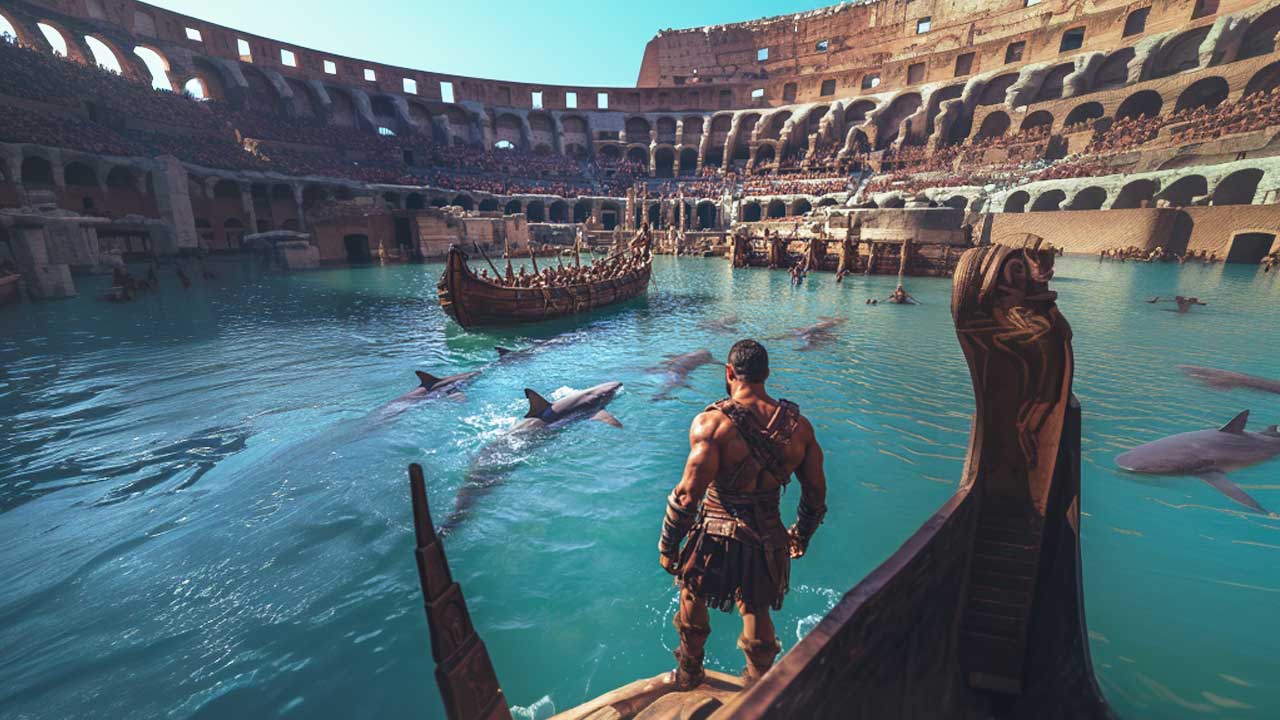
This month, Ridley Scott’s Gladiator 2 triumphantly returns audiences to the grandeur of Ancient Rome, rekindling the spectacle and drama that captivated viewers 25 years ago. The film picks up decades after the original, shifting focus to Lucius, the nephew of Commodus. With breathtaking visuals and intense action, the movie revisits the iconic Colosseum, now reimagined as a stage for epic naval battles, complete with flooded arenas and dazzling set pieces.
While the inclusion of sharks is likely a cinematic flourish, the scene is rooted in historical practices known as naumachiae, where Romans staged elaborate mock naval battles. Today we’ll dive headfirst into the history of these spectacles, the engineering marvels of the Colosseum, and how Hollywood magic may contrast with the realities of history.
Constructed under Emperor Vespasian and inaugurated in 80 CE by his son, Emperor Titus, the Colosseum (Flavian Amphitheater) epitomized Roman architectural ingenuity and could host up to 50,000 spectators, showcasing everything from gladiatorial combat to theatrical reenactments. Today the Colosseum is considered one of the New Seven Wonders of the World.
Was The Colosseum Really Flooded As Portrayed in Gladiator 2?
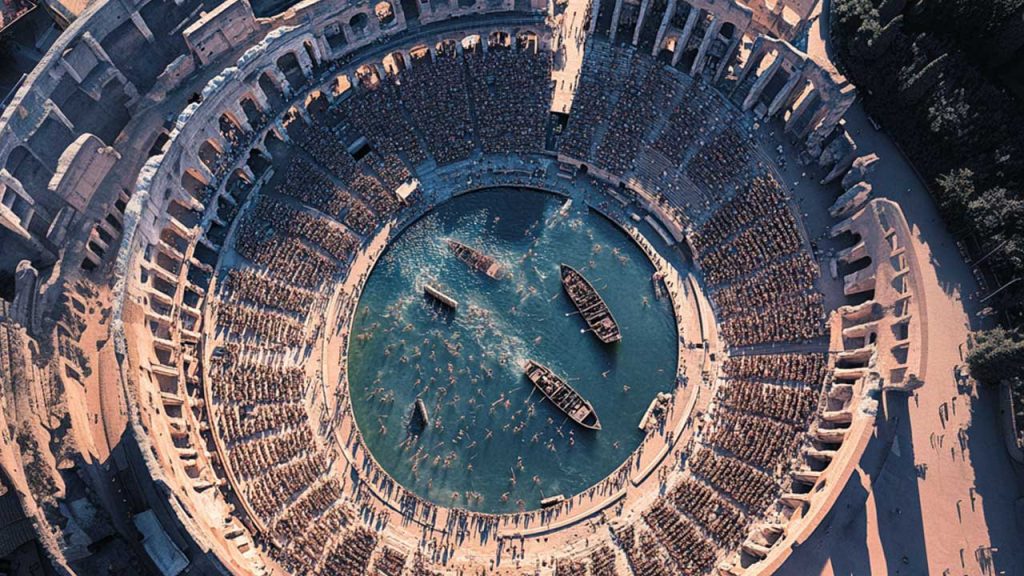
To answer that question we have to look back at evidence throughout antiquity. Naumachiae in the Colosseum were reportedly part of the opening ceremonies, which spanned 100 days of games and spectacles. These naval battles showcased the empire’s might and engineering prowess, leaving audiences in awe.
How Did The Romans Flood The Colosseum?
To facilitate these naval reenactments, the Romans employed an intricate system of aqueducts and channels. The Colosseum was connected to Rome’s extensive aqueduct network, allowing water to be channeled into the arena. Sluice gates controlled the flow, enabling rapid filling of the basin to a depth sufficient for maneuvering small ships. This setup transformed the arena into a temporary lake, accommodating the mock sea battles.
After the naumachiae concluded, the water was drained through a network of subterranean channels. These channels directed the water away from the arena, likely into the city’s sewage system or nearby bodies of water. The efficiency of this drainage system allowed the Colosseum to revert quickly to its primary function, hosting other events without prolonged downtime.
How Historically Accurate is Gladiator 2?
Historical accounts and archaeological findings do actually provide some evidence that these naval spectacles did occur.
- Roman historian Cassius Dio documented that Emperor Titus inaugurated the Colosseum in 80 CE with 100 days of games, including naval battles. He described the arena being flooded for these events, highlighting the grandeur of the spectacles. One of the battles replicated was between Syracuse and Athens. In fact, he goes on in detail about an artificial island constructed in the middle of the arena where the sailors landing would fight.
- Remnants of the Colosseum’s infrastructure, such as channels and evidence of water-resistant materials, suggest the capability to flood and drain within 2 to 5 hours. These findings align with historical descriptions of the naumachiae.
- The Romans’ advanced engineering skills, demonstrated in their aqueducts and public baths, support the plausibility of such complex water management within the Colosseum. The ability to control large volumes of water was well within their technological capabilities.
While some scholars debate the frequency and scale of these events, the convergence of historical records and archaeological evidence affirms that the Romans did, on occasion, flood the Colosseum to stage naval battles and other grand public spectacles.

Key Differences Between Gladiator 2 And Real-Life
Unlike the deep waters of natural harbors, the Colosseum’s flooded arena was shallow. Flat-bottom boats, easy to maneuver and lightweight, were designed to resemble Roman warships. These vessels added authenticity to the spectacle, though they were far removed from the realities of actual naval warfare.
While Gladiator 2 dramatizes the event with violence and gore, historical naumachiae were rarely ever truly deadly. Participants included trained performers, prisoners, or slaves, often spared death to ensure the continuity of future performances. The emphasis lay on dramatic choreography and visual splendor rather than actual combat.
Could There Have Been Sharks In The Colosseum As Depicted In Gladiator 2?
The inclusion of sharks, much less the man-eating tiger sharks depicted in the Colosseum in Gladiator 2 is a significant departure from reality, both in terms of practicality and historical plausibility. Historical accounts make zero mention of large marine predators like sharks ever being involved. The logistics of capturing, transporting, and maintaining large oceanic creatures like sharks would have been well beyond the technological and ecological capabilities of ancient Rome. In addition, sharks require saline, oxygen-rich seawater to survive. Even if transporting and housing such creatures were possible for the Romans—a highly unlikely scenario—they would not have survived in the stagnant freshwater of the Colosseum’s temporary pool.
Hollywood often blends fact with fiction for dramatic effect, and Gladiator 2 is no exception. Cinematic liberties on the silver screen underscore the balance filmmakers strike between authenticity and entertainment, particularly when trying to engage with today’s audiences. Does it make for a great sword and sandals flick? Absolutely. Could it have ever happened in real life? Probably not.
‘Weird History’ Separates Fact From Fiction
Want to take a deeper dive? One of our favorite YouTube channels “Weird History” made a great video on the subject of how historically accurate the movie Gladiator 2 really was.

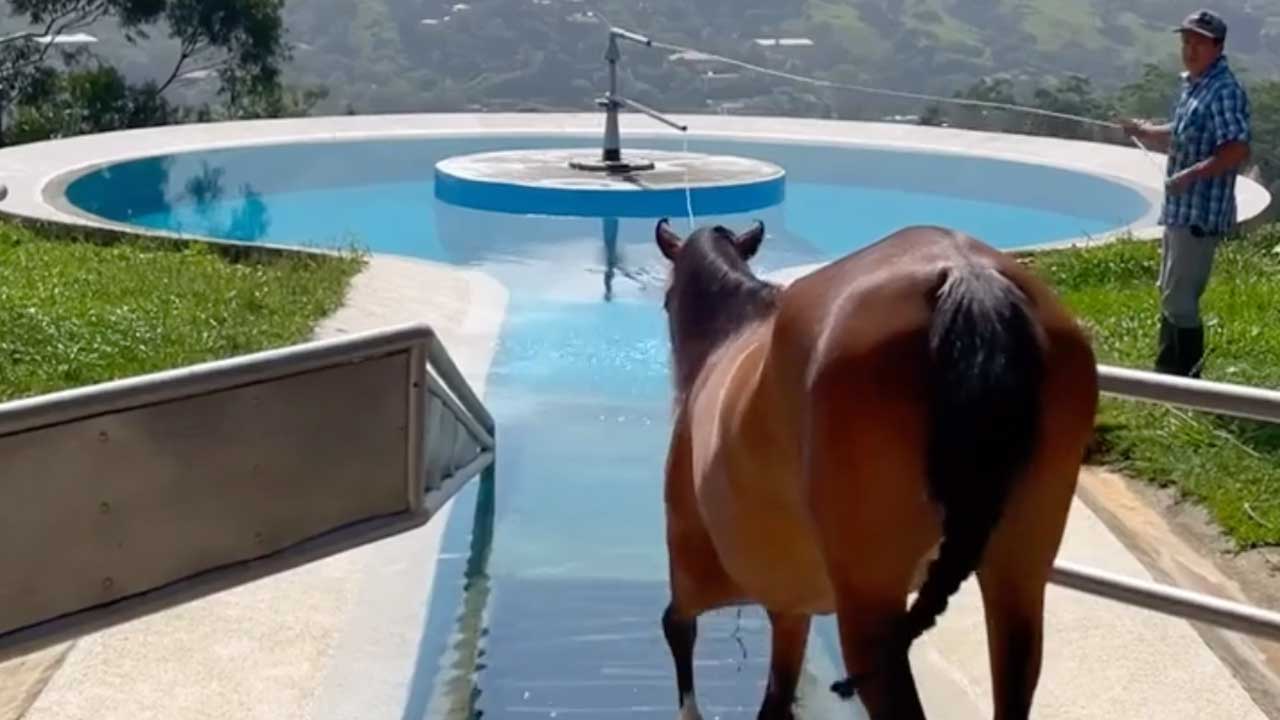
In recent years, horse therapy pools have become a sought-after amenity among horse owners and trainers dedicated to the health and recovery of their equine companions. These specialized pools provide a unique form of exercise and rehabilitation, helping horses recover from injuries, enhance their physical conditioning, and experience mental relaxation. Let’s delve deeper into why these pools are becoming so popular, why horses love water, and the role aqua therapy plays in equine care.
The Growing Popularity of Horse Therapy Pools
Horse therapy pools are designed to offer a controlled environment where horses can engage in low-impact exercise. The buoyancy provided by water reduces the strain on joints and muscles, making it an ideal medium for horses recovering from injuries. This form of aqua therapy is not only beneficial for rehabilitation but also for conditioning and maintaining peak physical performance. The growing awareness of these benefits has led to an increase in the installation of horse therapy pools at equine rehabilitation centers, racing stables, and private horse farms.
Why Horses Love the Water
Horses, like many animals, have a natural affinity for water. While they may not instinctively know how to swim as adeptly as some other species, they can quickly learn and adapt to the aquatic environment. The sensation of water around them often has a calming effect, helping to alleviate stress and anxiety. Additionally, the buoyancy of water supports the horse’s weight, allowing them to move more freely and comfortably than on land.

The feeling of weightlessness in water can be particularly appealing to horses with joint or muscle pain, as it provides relief from the constant pressure of bearing their own weight. This natural inclination towards water makes aqua therapy an enjoyable and beneficial activity for many horses.
The Role of Aqua Therapy in Equine Rehabilitation
Aqua therapy has become an essential component of equine rehabilitation, providing a range of benefits that are difficult to achieve through traditional land-based exercise. The key advantages of horse therapy pools include:
- Reduced Impact Exercise: The buoyancy of water reduces the impact on joints and muscles, allowing for safe and effective exercise. This is particularly beneficial for horses recovering from injuries or suffering from conditions like arthritis.
- Enhanced Recovery: Water therapy can accelerate the healing process by improving circulation, reducing inflammation, and promoting the regeneration of damaged tissues. The resistance offered by water also helps build muscle strength without the risk of further injury.
- Improved Flexibility and Strength: The resistance of water helps horses build muscle strength and enhance flexibility. This can be especially important for horses recovering from injuries that limit their range of motion.
- Mental Well-Being: The soothing properties of water can alleviate stress and anxiety in horses, promoting a positive mood and overall well-being. This is crucial for horses that may be anxious or restless due to injury or confinement.
Viral Sensation: A Luxurious Vanishing Edge Horse Pool
The concept of horse therapy pools recently captured widespread attention through a viral video that showcased a truly luxurious installation. In the video, a horse is led to a stunning vanishing edge pool, complete with sweeping views of mountainous vistas. The serene and picturesque setting, combined with the opulence of the pool, left viewers in awe.
Posts from the oddlysatisfying
community on Reddit
One Reddit user humorously commented, “This horse is wealthier than my entire family.” Another user, a contractor who installs pools, remarked, “As a contractor that sometimes installs pools I can’t imagine getting this call. I’d like a quote on getting my horse a pool. Ahhhhh pardon?” These comments highlight the novelty and luxury associated with such installations, as well as the surprise and admiration they elicit.
A more informed comment came from a user familiar with the benefits of such pools: “If this horse has a leg injury I guarantee this feels WONDERFUL for them. Similar to how a human with a back injury can feel instant relief in a pool. It’s very difficult for a horse to get time off an injured leg. It’s also very difficult for a horse to get exercise if they are injured, and lack of movement can lead to a host of other problems. These pools can be tremendous for injury recovery and for the mood of the horse. Usually, only racehorse facilities have pools like this because they are so expensive.”

The Practical Benefits of Horse Therapy Pools
While the viral video showcased the luxurious aspect of horse therapy pools, the practical benefits they offer are equally impressive. Here are some key ways in which these pools contribute to the health and well-being of horses:
- Rehabilitation from Injuries: Horse therapy pools are particularly effective for rehabilitating injuries such as tendon and ligament strains, fractures, and joint issues. The buoyancy of water reduces the load on injured limbs, allowing horses to exercise without exacerbating their condition. The resistance provided by water also helps strengthen the muscles supporting the injured area, aiding in a quicker and more effective recovery.
- Prevention of Further Injuries: Regular use of a therapy pool can help prevent future injuries by maintaining and improving the horse’s overall physical condition. The low-impact nature of aquatic exercise reduces the wear and tear on joints and muscles, which is particularly beneficial for older horses or those with a history of injuries.
- Enhanced Cardiovascular Fitness: Swimming provides an excellent cardiovascular workout for horses. The resistance of water requires more effort from the horse’s muscles, leading to improved cardiovascular health and endurance. This is especially beneficial for racehorses and performance horses that need to maintain peak physical condition.
- Stress Relief and Relaxation: The calming effect of water can significantly reduce stress and anxiety in horses. This is particularly important for horses that may be anxious or restless due to injury, illness, or confinement. The soothing properties of water can promote relaxation and improve the horse’s overall mood and well-being.
- Versatile Training Tool: Horse therapy pools can be used for a variety of training purposes. They provide a safe and controlled environment for conditioning young horses, improving the fitness of performance horses, and aiding in the rehabilitation of injured horses. The versatility of these pools makes them a valuable addition to any equine facility.
Horse therapy pools represent a unique blend of luxury and necessity, offering unparalleled benefits for the health and well-being of horses. While the cost and complexity of installing such pools mean they are often reserved for high-end facilities and elite racehorses, their advantages are undeniable. From accelerating injury recovery to enhancing overall fitness and mental well-being, these pools provide a comprehensive solution for equine care.
Photo / Video Credit: @SinjiOnO

A joyous bachelorette party turned into a nightmare for Rachelle Friedman Chapman, a 38-year-old from Raleigh, North Carolina, when a playful push into a swimming pool left her permanently paralyzed. The incident, which occurred in May 2010, has been shared in a viral TikTok video, garnering over 20 million views.
How Being Pushed Into A Pool Led To Catastrophe
Chapman, then 24, was enjoying a night with friends when the unthinkable happened. “When my best friend pushed me in a pool at my bachelorette party,” she wrote in the video’s captions, “I was permanently paralyzed.”
@rachelles_wheels So many people said you’d leave but here we are on our 12th wedding anniversary! We could never live without one another and we are beyond lucky to have this love story. And look what we created together#. Heres to many, many more. #love #lovestory #fyp #couplegoals #relationshipgoals #relationship #weddingtiktok #couplestiktok ♬ Thank God – Kane Brown & Katelyn Brown
The fall into the water resulted in a severe spinal cord injury that left Chapman a quadriplegic. Despite the profound impact on her life, Chapman has chosen to focus on the positives. “I will never like being paralyzed,” she said. “But it’s all about looking at the positive things in life.”
Her journey, previously documented in the TLC special “Rattled: A Paralyzed Mother’s Story” in 2017, continues to inspire many. This spring, Chapman reflected on the 14th anniversary of her injury, sharing how the event dramatically altered her life’s course.
“14 years ago today my whole world was rocked,” she posted. “I was 24 years old, had bought a house, got my first real job, and had just gotten engaged to my college sweetheart.”
The accident occurred after a fun night out with friends. Upon returning to the house to swim, a friend playfully pushed Chapman into the pool. Unprepared for the roughhousing, she fell headfirst into the water, breaking her neck and suffering an immediate spinal cord injury.
@rachelles_wheels I will never like being paralyzed. But it’s all about looking at the positive things in life #Motivation #Grudge #trend #Inspiration #f#fypc#crazystoryw#wheelchairp#paralyzedi#inspo ♬ original sound – James
Moving Forward
Despite this life-altering event, Chapman’s resilience has been remarkable. After a year of rehabilitation, she married her supportive husband Chris in 2011. The friend who pushed her was even a bridesmaid at their wedding. “I could go into detail about everything that happened that night,” Chapman said. “But now, the story is about love, family, and overcoming odds.”
Chapman and Chris welcomed a daughter four years later, continuing to build their lives together despite the challenges posed by her paralysis. “We got married a year later, had a baby girl four years after that, and [are now] living our best life,” she shared. “In a lot of ways I’m really, really lucky.”
Chapman’s story serves as a powerful reminder of the dangers associated with seemingly harmless pranks and accidents, particularly around pools and other bodies of water. Pranks can be dangerous, and a fall into any shallow body of water can result in severe injury.
For instance, Dana Barrett, a New York woman, experienced a life-changing accident when she dove into a shallow swimming pool and ended up a quadriplegic. “I remember diving into the pool and hearing my neck crack, then nothing,” Barrett, 31, told news sources. The freak accident, which occurred on June 29, 2019, forced her to spend over a year in the hospital as she could no longer move or breathe independently.
The former restaurant manager was attending a pool party at her boyfriend’s home on Long Island when the accident happened. Diving into the pool, she unfortunately misjudged the depth, hit her head, and snapped her neck.
More recently, in Texas, a 13-year-old boy named Semyon Williams Jr. became a quadriplegic after diving into a pool to avoid being stung by a wasp. The dive fractured his neck and shattered his spinal cord, leaving him paralyzed and unable to use his arms, hands, legs, or feet.
Final Thoughts
These incidents highlight the sobering reality of water-related accidents, where even a minor misstep can result in life-altering injuries. Horseplay and risky behaviors around pools can pose significant dangers that should be taken seriously. Incidents like pushing someone into a pool, even in jest, can have severe consequences, as seen in cases where individuals have suffered spinal injuries or worse. Similarly, diving into shallow bodies of water, often perceived as harmless fun, can lead to head and neck injuries that may result in paralysis or even death.
Featured Photo Credit: @rachelles_wheels



Download the NEW Pool Magazine App
 Sponsored Advertisement
 AquatiCare™: Proactive Pool Maintenance You Can Count On
 RB Retail & Service Solutions adds DocuSign to Software
 BSquared offers New Free Standing Sunledge
 Family Leisure Announces Exclusive Retail Partnership with Jacuzzi
  Blue Wave Recall on Over 13,000 Above Ground Pools
 Tile Heritage Foundation embraces FOUR NEW BOARD MEMBERS joining the current Board of Directors!
 Coverings 2026 Previews Conference Education Ahead of Las Vegas Show
 Maximizing Efficiency in Pool Building: The Impact of Careful Supply Selection on Your Bottom Line
 Pool Photography: How to Take Memorable Snaps of Your Pool
 Fluidra North America Announces Leadership Transition: Jon Viner Named President
 PHTA Announces Approval of ANSI/PHTA/ICC-10 2021 American National Standard for Elevated Pools, Spas and Other Aquatic Venues
 Thursday Pools Adds Samantha Kuonen to Accounting Team
 One on One With Lucas Congdon of Lucas Lagoons
 California Aiming For Energy Efficient Pools by 2025
 Sponsored Advertisement
 Sponsored Advertisement
-
 Pool News2 weeks ago
Blue Wave Recall on Over 13,000 Above Ground Pools
-

 Industry News4 weeks ago
Latham Group Appoints Sean Gadd as Chief Executive Officer
-
 News3 weeks ago
Built on Relationships: Pentair Pool’s New Sales Structure and the People Who Make It Work
-

 Pool Service News3 weeks ago
Easton Select Group Adds Harrison Pool & Spa, Expanding Service Across MetroWest Boston
-

 Press Releases4 weeks ago
FSPA Wins Big at Florida Building Commission
-

 News4 weeks ago
Aquadei Technologies Announces Strategic Alliance with the Master Pool Guild
-

 Features4 weeks ago
Adopting Engineered, Reliable Pool Waterproofing Innovations — Why North America pool builders are shifting toward PVC membranes
-

 Manufacturer4 weeks ago
RicoRock® Offers New Temple Stone Firepit