


Pool News
Transforming The Colosseum Into a Pool: Separating Fact From Fiction in Gladiator 2
Did ancient Romans really have pitched naval battles inside the Colosseum as portrayed in the movie Gladiator 2? It turns out, they did.

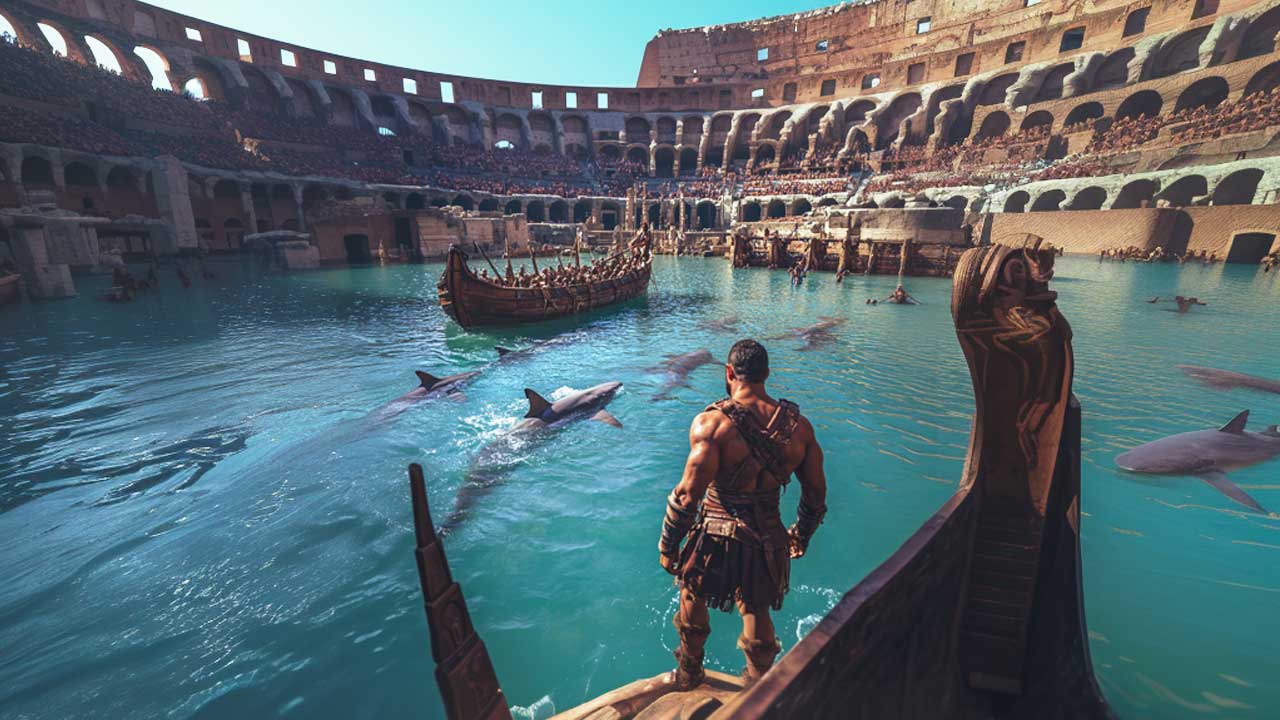
This month, Ridley Scott’s Gladiator 2 triumphantly returns audiences to the grandeur of Ancient Rome, rekindling the spectacle and drama that captivated viewers 25 years ago. The film picks up decades after the original, shifting focus to Lucius, the nephew of Commodus. With breathtaking visuals and intense action, the movie revisits the iconic Colosseum, now reimagined as a stage for epic naval battles, complete with flooded arenas and dazzling set pieces.
While the inclusion of sharks is likely a cinematic flourish, the scene is rooted in historical practices known as naumachiae, where Romans staged elaborate mock naval battles. Today we’ll dive headfirst into the history of these spectacles, the engineering marvels of the Colosseum, and how Hollywood magic may contrast with the realities of history.
Constructed under Emperor Vespasian and inaugurated in 80 CE by his son, Emperor Titus, the Colosseum (Flavian Amphitheater) epitomized Roman architectural ingenuity and could host up to 50,000 spectators, showcasing everything from gladiatorial combat to theatrical reenactments. Today the Colosseum is considered one of the New Seven Wonders of the World.

Was The Colosseum Really Flooded As Portrayed in Gladiator 2?
To answer that question we have to look back at evidence throughout antiquity. Naumachiae in the Colosseum were reportedly part of the opening ceremonies, which spanned 100 days of games and spectacles. These naval battles showcased the empire’s might and engineering prowess, leaving audiences in awe.

How Did The Romans Flood The Colosseum?
To facilitate these naval reenactments, the Romans employed an intricate system of aqueducts and channels. The Colosseum was connected to Rome’s extensive aqueduct network, allowing water to be channeled into the arena. Sluice gates controlled the flow, enabling rapid filling of the basin to a depth sufficient for maneuvering small ships. This setup transformed the arena into a temporary lake, accommodating the mock sea battles.
After the naumachiae concluded, the water was drained through a network of subterranean channels. These channels directed the water away from the arena, likely into the city’s sewage system or nearby bodies of water. The efficiency of this drainage system allowed the Colosseum to revert quickly to its primary function, hosting other events without prolonged downtime.
How Historically Accurate is Gladiator 2?
Historical accounts and archaeological findings do actually provide some evidence that these naval spectacles did occur.
- Roman historian Cassius Dio documented that Emperor Titus inaugurated the Colosseum in 80 CE with 100 days of games, including naval battles. He described the arena being flooded for these events, highlighting the grandeur of the spectacles. One of the battles replicated was between Syracuse and Athens. In fact, he goes on in detail about an artificial island constructed in the middle of the arena where the sailors landing would fight.
- Remnants of the Colosseum’s infrastructure, such as channels and evidence of water-resistant materials, suggest the capability to flood and drain within 2 to 5 hours. These findings align with historical descriptions of the naumachiae.
- The Romans’ advanced engineering skills, demonstrated in their aqueducts and public baths, support the plausibility of such complex water management within the Colosseum. The ability to control large volumes of water was well within their technological capabilities.
While some scholars debate the frequency and scale of these events, the convergence of historical records and archaeological evidence affirms that the Romans did, on occasion, flood the Colosseum to stage naval battles and other grand public spectacles.


Key Differences Between Gladiator 2 And Real-Life
Unlike the deep waters of natural harbors, the Colosseum’s flooded arena was shallow. Flat-bottom boats, easy to maneuver and lightweight, were designed to resemble Roman warships. These vessels added authenticity to the spectacle, though they were far removed from the realities of actual naval warfare.
While Gladiator 2 dramatizes the event with violence and gore, historical naumachiae were rarely ever truly deadly. Participants included trained performers, prisoners, or slaves, often spared death to ensure the continuity of future performances. The emphasis lay on dramatic choreography and visual splendor rather than actual combat.
Could There Have Been Sharks In The Colosseum As Depicted In Gladiator 2?
The inclusion of sharks, much less the man-eating tiger sharks depicted in the Colosseum in Gladiator 2 is a significant departure from reality, both in terms of practicality and historical plausibility. Historical accounts make zero mention of large marine predators like sharks ever being involved. The logistics of capturing, transporting, and maintaining large oceanic creatures like sharks would have been well beyond the technological and ecological capabilities of ancient Rome. In addition, sharks require saline, oxygen-rich seawater to survive. Even if transporting and housing such creatures were possible for the Romans—a highly unlikely scenario—they would not have survived in the stagnant freshwater of the Colosseum’s temporary pool.
Hollywood often blends fact with fiction for dramatic effect, and Gladiator 2 is no exception. Cinematic liberties on the silver screen underscore the balance filmmakers strike between authenticity and entertainment, particularly when trying to engage with today’s audiences. Does it make for a great sword and sandals flick? Absolutely. Could it have ever happened in real life? Probably not.
‘Weird History’ Separates Fact From Fiction
Want to take a deeper dive? One of our favorite YouTube channels “Weird History” made a great video on the subject of how historically accurate the movie Gladiator 2 really was.




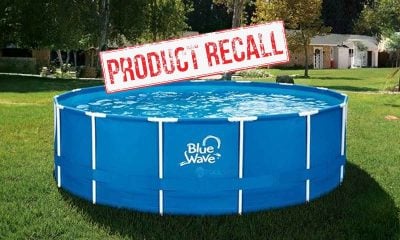
Blue Wave has issued a recall affecting multiple above-ground swimming pool models after federal safety officials identified a potential drowning hazard involving children.
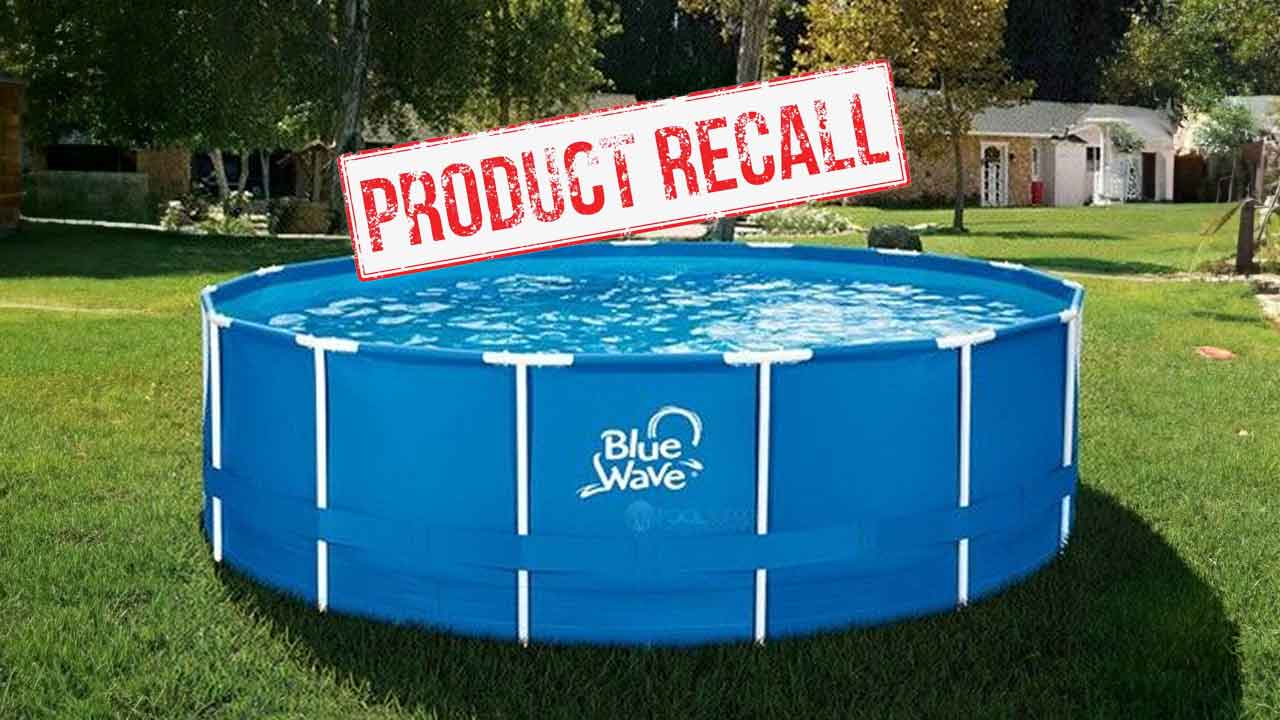
The recall, announced by the U.S. Consumer Product Safety Commission (CPSC) on December 18, covers approximately 13,400 Blue Wave brand above-ground pools that are 48 inches deep or taller and utilize an exterior compression strap as part of the pool’s frame system.
Reason for the Recall
The affected pools feature a compression strap positioned around the outside of the vertical support poles. While the strap is designed to provide structural stability, the CPSC determined that its placement may unintentionally create a foothold.

According to the agency, this foothold could allow children to climb into the pool, even when the ladder has been removed, creating a risk of unsupervised access and potential drowning.
No injuries or fatalities have been reported in connection with the recalled products at the time of the announcement.
Affected Models
The recall applies to the following Blue Wave above-ground pool models:
• Blue Wave 15-Ft Rd 48-In Active Frame Pool
• Blue Wave 18-Ft Rd 52-In Active Frame Pool
• Blue Wave 18-Ft Rd 52-In Dark Cocoa Wicker Frame Pool
• Blue Wave 24-Ft Rd 52-In Dark Cocoa Wicker Frame Pool
• Blue Wave Rustic Cedar 15-Ft Round 48-In Deep Frame Swimming Pool Package W/Cover
• Blue Wave Rustic Cedar 18-Ft Round 52-In Deep Frame Swimming Pool Package W/Cover
• Blue Wave 18-Ft Round 52-In Gray Rattan Swimming Pool Package W/Cover
• Blue Wave 18-Ft Round 52-In Espresso Wicker Swimming Pool Package W/Cover
• Blue Wave 15-Ft Round 48-In Navy Blue Frame Swimming Pool Package W/Cover
• Blue Wave 18-Ft Round 52-In Navy Blue Frame Swimming Pool Package W/Cover
• Blue Wave 15-Ft Round 48-In Aspen Swimming Pool Package W/Cover
• Blue Wave Mocha Wicker 18-Ft Round 52-In Deep Swimming Pool Package With Cover
• Blue Wave Mocha Wicker 24-Ft Round 52-In Deep Swimming Pool Package With Cover
• Blue Wave Laguna 15-Ft Round 48-In Deep Swimming Pool Package With Cover
• Blue Wave Laguna 18-Ft Round 52-In Deep Swimming Pool Package With Cover
All affected models share a common design feature: an exterior compression strap that encircles the pool’s vertical supports.
Sales Channels and Distribution
The recalled pools were sold nationwide from January 2021 through July 2025 through a mix of big-box retailers, sporting goods stores, and online marketplaces, including:
• The Home Depot
• Lowe’s
• Dunham’s Sports
• Amazon
• Walmart
• Wayfair
Retailers have been notified to halt sales of affected models and to direct customers to the manufacturer’s recall remedy.
What Dealers and Retailers Should Know
For dealers and retail partners, the recall highlights the importance of prompt inventory review and customer outreach. Any remaining unsold stock matching the recalled models should be removed from the sales floor and distribution channels immediately.
Retailers that sold affected units during the recall period may see an increase in customer inquiries regarding eligibility, repair kits, and interim safety measures. Clear communication at the point of contact will be critical, particularly around the distinction between structural components and ladders, which many consumers assume are the primary access risk.
Service professionals and retail staff should also be prepared to explain that the recall does not involve a full product replacement, but rather a manufacturer-provided modification designed to eliminate the foothold while maintaining frame integrity.
Manufacturer Remedy
Blue Wave is offering a free repair kit to affected pool owners. The kit replaces the exterior compression strap with a lower-profile system installed closer to ground level. Once the repair is completed, the original strap can be removed.
Until the repair is installed, the manufacturer and CPSC recommend that pool owners prevent unsupervised access to the pool area or drain the pool temporarily.
Dealers and service professionals should advise customers not to remove or cut the compression strap prior to installing the repair kit, as doing so could compromise the pool’s structural stability.

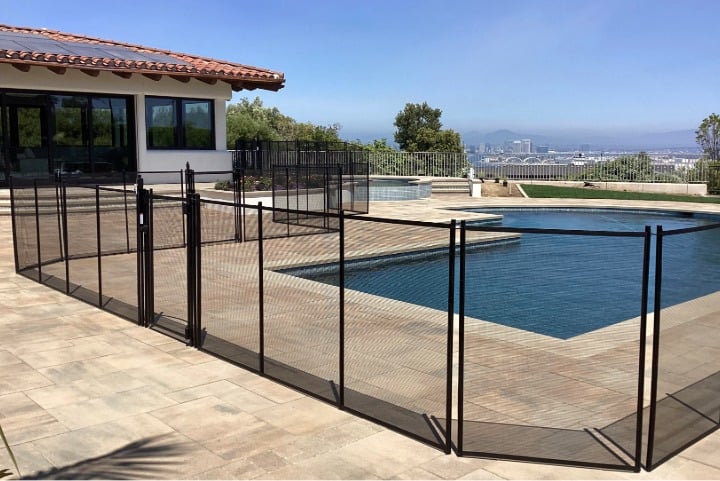
Poolsafe LLC, offers new mesh, removable safety fencing designed to be installed around any pool shape or size. Uses patented, transparent, large-hole ClearGuard™ Mesh for better visibility into the pool area, while also blending the fence into backyard. Lockable, self-closing Triton™ gate features a curved top bar to help prevent climbing. Unique Tri-Pod Truss system keeps gate aligned with daily usage. Available in 4ft and 5ft heights, in black, brown, beige, or gray colors.
https://poolsafe.com/
(888) 489-2282


Latham Group, Inc. (Nasdaq: SWIM), the largest designer, manufacturer, and marketer of in-ground residential swimming pools in North America, Australia, and New Zealand, appoints Sean Gadd as the company’s new President and Chief Executive Officer as part of a CEO transition that will take effect on January 5, 2026. The appointment follows a comprehensive search as part of a succession planning process led by the Board and current CEO Scott Rajeski, who will be retiring from Latham and will serve as a special advisor to the company.
Sean Gadd comes to Latham following a 21-year career at James Hardie. He most recently served as President of North America since 2022, where he has had full P&L responsibility for James Hardie’s largest regional business. Prior to his role as President of North America, Sean served as Executive Vice President, North America, Commercial (2018-2022) and Executive Vice President, Markets and Segments, North America (2015-2018) at James Hardie, leading the front end of the business across product, marketing, and sales. Sean has been instrumental in spearheading James Hardie’s substantial organic net sales growth since 2022, driving material conversion and deeper market penetration through a refined go-to-market strategy targeting end-users via channel partners. Sean brings experience that is directly comparable to Latham’s material conversion and Sand State initiatives, and his demonstrated success in driving strategic growth will be invaluable for Latham and its shareholders.
James E. Cline, Chairman, commented, “Sean is known as a strong leader and brand-builder and has an impressive track record of driving growth at James Hardie. We are thrilled that he has accepted the CEO role at Latham, and the Board believes Sean will be able to leverage his robust commercial experience, sector knowledge, and branding expertise to accelerate our ability to continue to gain share and further the conversion to fiberglass from concrete pools.”

“I am pleased to be joining Latham and am looking forward to building on its achievements to date. This is an excellent opportunity for me to utilize my experience in the building products category to drive further market penetration and adoption of Latham’s top-quality products and greater recognition for its superior service standards,” Mr. Gadd commented.
Mr. Gadd will also become a member of Latham’s Board of Directors, replacing Mr. Rajeski, who is resigning from the Board concurrently with his retirement.
Mr. Cline commented, “On behalf of the Board of Directors, I want to express our deep appreciation for the contributions that Scott Rajeski has made to Latham during his long tenure at the company, first as Chief Financial Officer and, since 2017, as President and Chief Executive Officer. Under his leadership and that of his executive and operating teams, the company went public in April of 2021 and has experienced substantial growth, demonstrated resilience within a difficult industry environment, and built a strong financial position.”
Mr. Rajeski noted, “It has been a privilege to serve as the President & CEO of Latham alongside the talented executive and operating teams that we have at the company. Together, we have advanced the awareness and adoption of fiberglass pools and autocovers, while implementing production and related efficiencies that have streamlined our operations. I am proud to be retiring as CEO of Latham with the company in a strong financial position and in very capable hands. Throughout my conversations with Sean, I have been very impressed with his leadership capabilities and background, and I am confident that he will bring a unique skillset that will allow Latham to continue to outperform the industry, gain further traction in the important Sand States, and remain an acquirer of choice.”
About Latham Group, Inc.
Latham Group, Inc., headquartered in Latham, NY, is the largest designer, manufacturer, and marketer of in-ground residential swimming pools in North America, Australia, and New Zealand. Latham has a coast-to-coast operations platform consisting of approximately 1,850 employees across around 30 locations.


Download the NEW Pool Magazine App
 Sponsored Advertisement
 AquatiCare™: Proactive Pool Maintenance You Can Count On
 RB Retail & Service Solutions adds DocuSign to Software
 BSquared offers New Free Standing Sunledge
 Family Leisure Announces Exclusive Retail Partnership with Jacuzzi
  Blue Wave Recall on Over 13,000 Above Ground Pools
 Tile Heritage Foundation embraces FOUR NEW BOARD MEMBERS joining the current Board of Directors!
 Coverings 2026 Previews Conference Education Ahead of Las Vegas Show

 Pools Versus Earthquakes: Videos That Went Viral
 Pool Industry Mourns the Passing of Icon, Vance Gillette
 Florida Pool Permits Down Roughly 3% YTD as Market Continues Post-Boom Adjustment
 Effects of the COVID-19 Pandemic on the Pool and Spa Industry
 Pool Cover Cybertruck Strength Test Goes Viral
 Too Big To Fail – Olympus Pools Implodes
 What Should I Be Charging For Pool Service?
 Sponsored Advertisement
 Sponsored Advertisement
-
 Pool News2 weeks ago
Blue Wave Recall on Over 13,000 Above Ground Pools
-

 Industry News4 weeks ago
Latham Group Appoints Sean Gadd as Chief Executive Officer
-
 News3 weeks ago
Built on Relationships: Pentair Pool’s New Sales Structure and the People Who Make It Work
-

 Pool Service News3 weeks ago
Easton Select Group Adds Harrison Pool & Spa, Expanding Service Across MetroWest Boston
-

 Press Releases4 weeks ago
FSPA Wins Big at Florida Building Commission
-

 News4 weeks ago
Aquadei Technologies Announces Strategic Alliance with the Master Pool Guild
-

 Features4 weeks ago
Adopting Engineered, Reliable Pool Waterproofing Innovations — Why North America pool builders are shifting toward PVC membranes
-

 Manufacturer4 weeks ago
RicoRock® Offers New Temple Stone Firepit