







Op Editorials
Hair Entanglement in Pools, Are Current Standards Adequate?


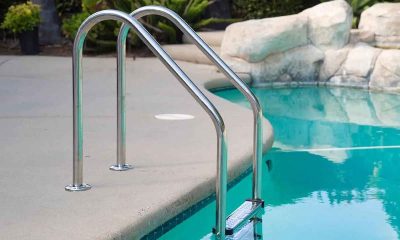
When discussing hair entanglement in the pool and how to prevent these types of incidents from occurring, we have to look at a few things. The first is line velocity. If it is low enough, hair won’t be ingested by the pipe and tangled under the drain lid. Suction entrapment wouldn’t occur either, even if a grate were missing.
The second issue pertains to the current codes and standards. Some states have state building codes that dictate maximum line velocities for energy efficiency. California and Florida both mandate line velocities of 6 FPS suction and 8 FPS returns for energy efficiency.
Current Standards
Residential In-ground Pools NSPI-5/2003 (9.2) the line velocities were limited to 8 FPS suction and 10 FPS returns. (9.2.1) the limit through the drain cover was limited to 1.5 FPS.

Residential In-ground Pools NSPI-5/2013 (9.2) the line velocities were limited to 8 FPS suction and 8 FPS returns. (9.2.1) the limit through the drain cover was deferred to the APSP-7 standard.
Suction Entrapment Avoidance APSP-7 (2013) Piping line velocity is not specified, though the flow rate through the drain cover is limited to 1.5 FPS.
APSP-15 Energy Efficiency Code (2011) 6 FPS suction and 8 FPS return
ISPSC 2015 (311.3) limits the line velocities in the return piping to 8 FPS. (310) It defers to the specifications in APSP-7 (there is no longer a suction line velocity in the standard).
Suction Outlet Fitting Assemblies APSP-16/2017 (3.9.2) piping line velocities were eliminated, though 1.5 FPS remained as the line velocity through the RDP/SOFA.


The safety standards are not addressing energy efficiency. Most experts agree that the optimum efficiencies are achieved at 6 FPS suction and 8 FPS return line velocities. The majority of hydraulic engineers are designing at 4.5 FPS suction and 6 FPS return line velocities. This allows for a margin of error and minor deviations that may occur during construction, while still staying below the maximums. Most codes for public pools recognize the need for low line velocities and therefore limit the velocities at the pipe connected to the main drain to 1.5 – 3 FPS.
The safety standards assume two things occur. The first assumption is that the drain sump size is compliant with the SOFA requirements and the manufacturer’s specifications. Field-built sumps (divots carved out of the shotcrete) are oftentimes too shallow. Few builders thicken the shotcrete around the suction pipes to allow for a proper depth sump.
The decreased distance between the suction pipe and the underside of the drain cover increases the flow through the drain cover. This increases the danger of hair entanglement, as the design standards and flow rate through the cover have been exceeded. Therefore the sumps are of insufficient size and volume to slow the velocity of the water.
Swimming Pool Expert Witness
Photo Credit: Getty Images













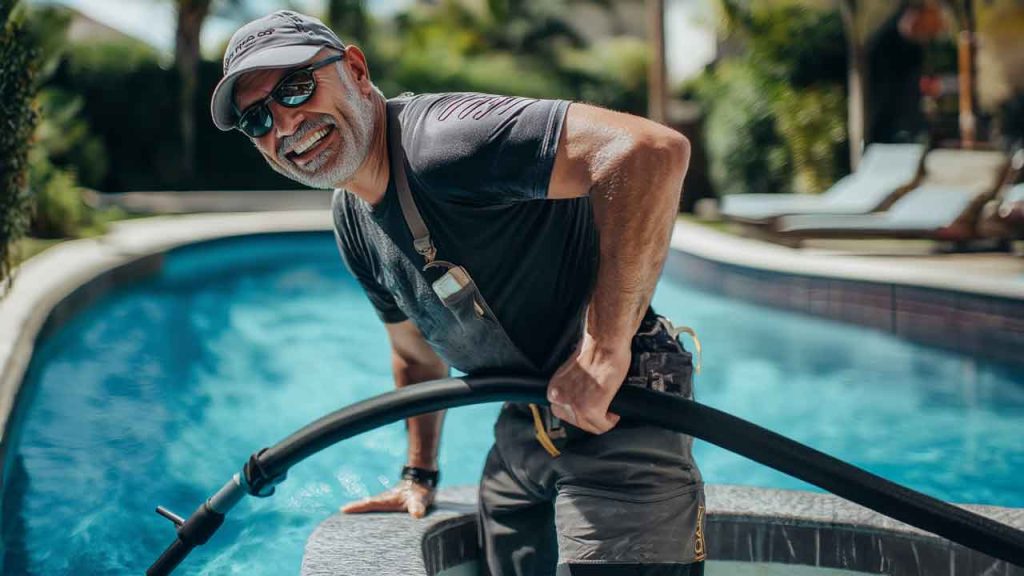
John’s knees and back ache. After nearly three decades of cleaning filters, lifting equipment, and braving triple-digit temperatures, he’s finally thinking about retirement. But there’s one big problem — John never planned for it. He spent his career focused on his customers — keeping pools clean, equipment running, and business steady. But he gave little thought to retirement along the way. Now 55, with no 401(k), no exit plan, and no real savings to speak of, John’s wondering if he’ll ever be able to slow down.
If you work in the pool and spa industry — whether servicing routes, managing crews, or building backyard escapes — chances are you didn’t get into this line of work for the financial planning. But the truth is, it’s never too early (or too late) to start saving for your future.
Whether you want to retire at 55 with $1 million in the bank or just build a cushion that gives you freedom later in life, smart planning today can make all the difference.
Retirement Planning for Pool & Spa Professionals: Saving for the Future
You’ve spent years in the sun performing physically strenuous work and servicing your customers. The work is tough, the hours are long, and most days, you’re too busy running to the next job to worry about what happens 20 or 30 years down the road.
But here’s the hard truth: no one plans to stay building or servicing pools well into their 60s — they just never planned not to.
What if you could break that cycle? What if retiring with $1 million in savings wasn’t just a pipe dream, but a goal you could actually hit — even if you’re just getting started?
In this article, we’ll show you exactly what it takes to retire from the pool industry with real money in the bank. From how much to save each week, to what accounts to use, and the common mistakes that hold too many pros back — we’ve got you covered.
The Million-Dollar Question: How Much Should You Save?
Assuming an average return of 7% annually (a realistic long-term expectation with diversified investments like an index fund), here’s what the math looks like:

Goal: $1,000,000 by age 55
Starting Age: 25
Years to Invest: 30
Estimated Weekly Savings Needed: $157–$160 per week
That adds up to about $625–$640 per month. Thanks to compound interest, where your investment gains start earning gains, the earlier you start, the less you need to save.
Understanding Compound Interest
Compound interest is the process where your money earns interest — and then that interest earns interest. Over time, this snowball effect can turn modest weekly savings into major retirement gains.
For example, saving $160 per week for 30 years at 7% annual return would grow to over $1 million. If you waited until age 35, you’d need to save over $340 per week to hit that same goal by 55.
What About Inflation?
Let’s say inflation averages 3% annually over the next 30 years — that $1 million would only be worth about $412,000 in today’s dollars.
So if you want $1 million in future dollars to maintain today’s buying power, you actually need to aim higher — closer to $2.4 million in nominal dollars.
To meet that inflation-adjusted goal by 55:
Estimated Weekly Savings Needed: $375–$400/week
Estimated Monthly: $1,500–$1,600/month
This is where financial planning becomes essential — especially for business owners.
Want to retire with $1 million by the time you’re 55? The earlier you start, the less you need to save — thanks to compound interest.
Assuming a 7% annual return (a realistic long-term average for diversified investments like index funds), here’s what the math looks like:
| Starting Age | Years to Invest | Monthly Savings Needed |
|---|---|---|
| 25 | 30 | $690/month |
| 30 | 25 | $955/month |
| 35 | 20 | $1,400/month |
| 40 | 15 | $2,150/month |
| 45 | 10 | $3,900/month |
📌 Assumes a 7% annual return with consistent monthly contributions with reinvested returns and no withdrawals during the investment period.
💡 Tip: The earlier you start, the less you need to save — compound interest does the heavy lifting.

💼 Which Retirement Accounts Pay Off Best for Pool & Spa Professionals?
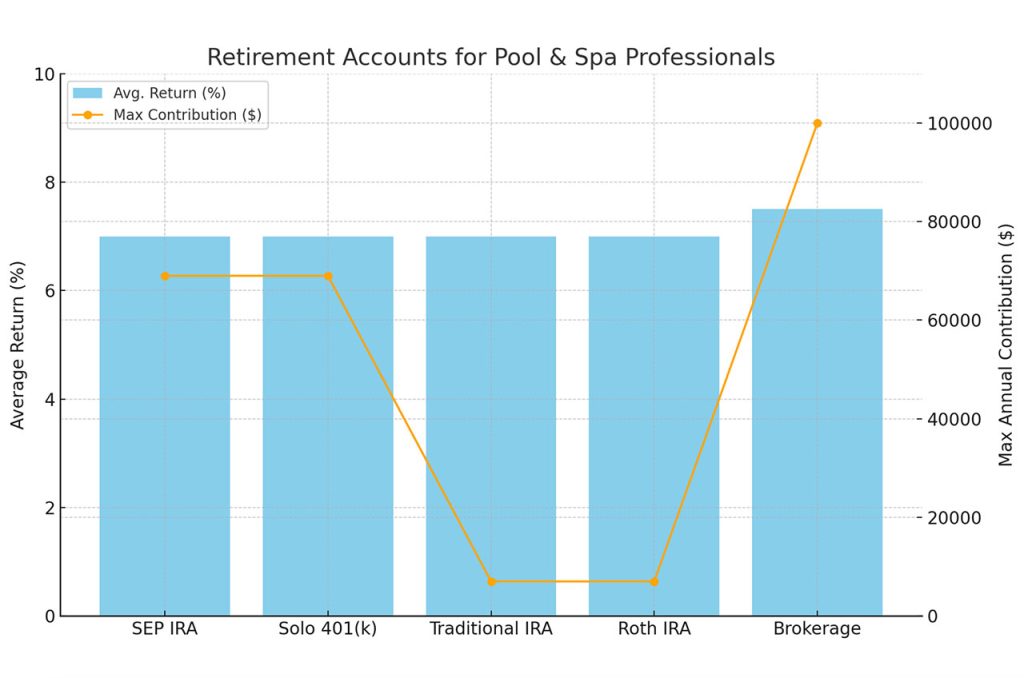
If you’re self-employed or run your own pool business, the traditional 401(k) route might not be available — but you’ve actually got even better options. Whether you’re looking for tax advantages, high contribution limits, or just a simple way to start saving, here’s a breakdown of the most effective retirement accounts tailored for service and construction pros:
📊 Retirement Account Comparison
| Account Type | Best For | 2025 Contribution Limit | Tax Treatment | Avg. Return | Pros | Cons |
|---|---|---|---|---|---|---|
| SEP IRA | Self-employed or small business owners with few/no employees | $69,000 or 25% of compensation (whichever is less) | Tax-deductible contributions, tax-deferred growth | ~7% | ✅ High contribution limit ✅ Easy to set up | ❌ Employer only contributes ❌ No Roth option |
| Solo 401(k) | Self-employed individuals with higher income potential | $69,000 (+$7,500 if over 50) | Tax-deductible or Roth option, tax-deferred growth | ~7% | ✅ Highest contribution limit ✅ Roth option available | ❌ Slightly more admin requirements |
| Traditional IRA | Anyone with earned income | $7,000 (+$1,000 if over 50) | Tax-deductible (if eligible), tax-deferred growth | ~7% | ✅ Simple to open ✅ Widely available | ❌ Low contribution limit ❌ Income deduction limits apply |
| Roth IRA | Individuals who expect to be in a higher tax bracket at retirement | $7,000 (+$1,000 if over 50) | After-tax contributions, tax-free growth | ~7% | ✅ Tax-free withdrawals in retirement | ❌ Income limits ❌ No up-front deduction |
| Taxable Brokerage Account | Anyone wanting flexibility | No limit | Taxable contributions and gains | 6–8% (varies) | ✅ No contribution limits ✅ Full investment freedom | ❌ No tax benefits ❌ Capital gains taxes |
🧠 Which One Should You Choose?
✅ Starting out? A Roth IRA is a great first step with tax-free growth and simple setup.
✅ Running your own crew? A Solo 401(k) gives you the most flexibility and room to grow.
✅ Need something easy? A SEP IRA is low-maintenance and allows big contributions fast.
✅ Want flexibility without limits? A Brokerage account gives you options, but less tax help.
Saving as a Pool Service or Construction Pro
Many pool and spa professionals are self-employed or run small businesses. Here’s how you can start saving:
✅ Open a SEP IRA or Solo 401(k) – These accounts are made for the self-employed and allow larger contributions than traditional IRAs.
✅ Automate contributions – Treat your retirement savings like a monthly bill.
✅ Pay yourself first – Before reinvesting everything into the business, prioritize your financial future.
✅ Use tax deductions – Retirement contributions are often tax-deductible for business owners.
Pitfalls to Avoid
Many in the pool industry delay retirement planning, assuming they’ll work forever or sell their business someday. Common pitfalls include:
🚫 Not separating personal and business finances
🚫 Underestimating how much you’ll need
🚫 Ignoring inflation and healthcare costs
🚫 Waiting too long to start investing
🚫 Relying solely on Social Security or business value
Without a clear plan, you may find yourself working into your late 60s or 70s — not because you want to, but because you have to.
💬 Quotes from Pool Pros Who Are Planning Ahead
🗣️ “I used to pour everything back into the business. Once I started setting aside just $200 a week into a SEP IRA, I finally felt like I was building something for myself, not just for my clients.”
— Carlos M., Pool Service Pro, Arizona
🗣️ “I opened a Solo 401(k) after talking with my accountant. It’s one of the best moves I made in my 30s. I wish I’d done it sooner.”
— Lindsey J., Pool Contractor, Florida
🗣️ “If you’re in your 20s or 30s and running a business in this industry, don’t wait. You’ll blink and be 50. Start saving now, even if it’s small.”
— Greg T., Pool Builder, Texas
Final Thoughts
At the end of the day, none of us want to end up like John — thinking about retirement, but stuck without a plan to make it happen.
Instead, be the pool pro who did it right.
The one who showed up early, built a solid business, took care of their customers — and also took care of their future. The one who swapped chlorine tabs for golf clubs at 55, because they planned ahead. The one who turned their pool career into long-term wealth.
Be the pool pro who retires a millionaire.


If you run a pool service business, chances are you’ve lost customers without ever knowing why. Most pool customers don’t post a bad review. They won’t call to complain. They don’t provide you a chance to make it right. They just leave.
According to a comprehensive 2025 survey from PissedConsumer.com, this is not an anomaly. It’s the norm. More than half of the 40,000+ consumers surveyed said they never received any response at all from the companies they contacted for help. And that silence—on both sides—can be costly.
For pool professionals, where reputation, referrals, and reliability are everything, these findings are a wake-up call. This isn’t just a customer service issue—it’s a customer retention issue. When pool companies fail to respond to issues or follow through on service complaints, they lose more than just a sale—they lose trust, loyalty, and long-term revenue.

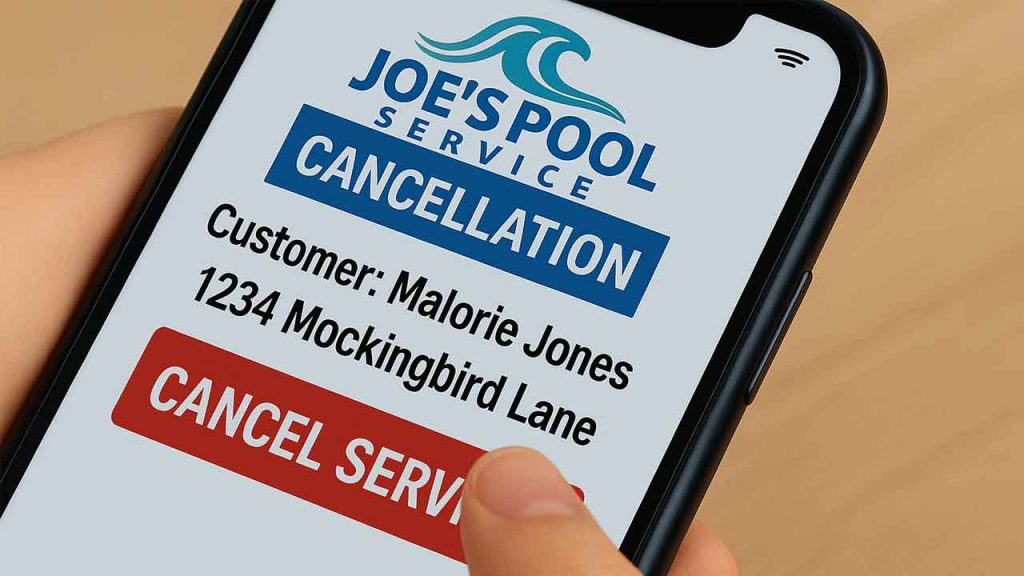
The Silent Goodbye: A Threat to Pool Businesses
One of the most striking insights from the PissedConsumer.com study is how often consumers don’t bother to complain. They simply vanish.
In a service industry like ours, that silence is deadly. Pool customers rarely fire off a warning shot. They’re busy people. If they don’t feel heard or valued, they’ll ghost your business just as fast as they hired you. The data shows that 58.3% of consumers never hear back from customer service after submitting a concern. No phone call. No email. No effort.
That kind of disengagement is a huge red flag. It shows how easy it is to lose a client simply by failing to follow up. And yet, many pool businesses don’t even know it’s happening.
Why Pool Customers Aren’t Complaining
Think about it from the customer’s perspective. They’ve already paid you. You’re in their backyard. Their expectations are high, and their tolerance for inconvenience is low. If something goes wrong—whether it’s cloudy water, a missed service day, or an unexplained charge—they may give you a chance to fix it. But if you don’t respond quickly or respectfully, you’re probably not getting another shot.
According to the survey, only 26.1% of consumers said companies offered a resolution to their issue. Even when a response was provided, 61.18% were still unsatisfied with the solution.
So it’s not just about showing up—it’s about how you show up. Half-hearted responses, passing the buck, or ignoring issues altogether drives even loyal customers to leave quietly—and potentially tell others to do the same.
The Real Cost of Ignored Complaints
Ignoring a customer doesn’t just mean losing that one person’s business. It means risking negative word-of-mouth, bad reviews, and missed referrals—all critical components of a successful pool business.
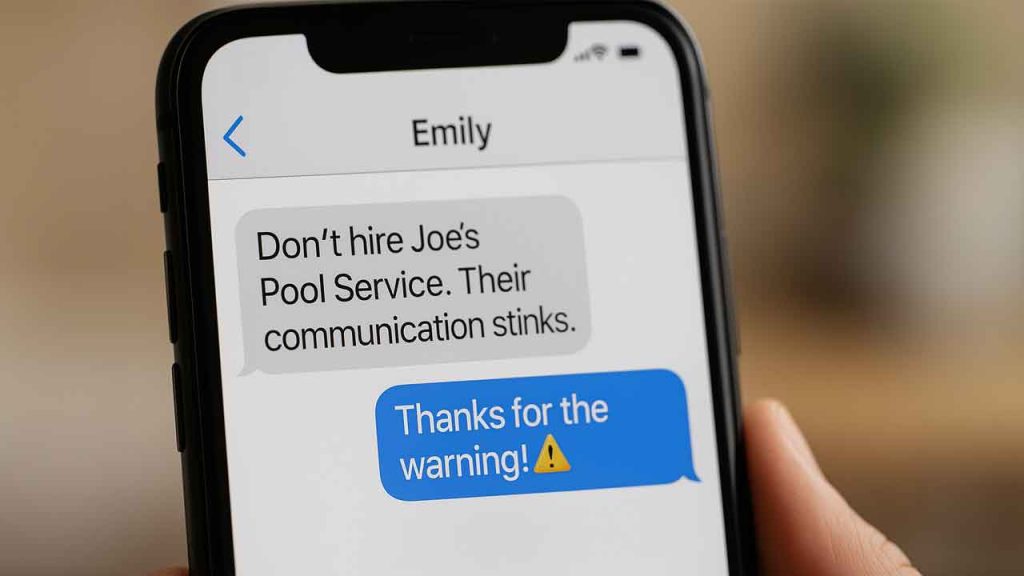
More than 31% of negative online reviews happen because customers want to warn others about their bad experiences. They aren’t venting for the sake of it. They’re trying to protect their neighbors, friends, and communities from having the same issue.
And in a hyperlocal service market like pool cleaning, maintenance, and repair—reputation is currency.
On the flip side, when companies do respond and resolve issues, the effect is dramatic. According to the same study:
30% of respondents said they’d consider staying with a company that resolved their complaint.
41% of customers who received a satisfactory email support experience said they’d definitely use the company again.
So, responsiveness isn’t just a matter of courtesy. It’s a measurable business decision that can either fuel retention—or kill it.
What Pool Companies Can Learn from This
There’s a tendency in the pool industry to focus on the visible stuff: clean water, working equipment, a sparkling backyard. But what’s not visible can be just as important.
The customer who stops answering your texts? They’re not too busy. They’re probably done.
Here’s what pool companies need to do to prevent quiet attrition:
1. Respond to Every Inquiry—Fast
No excuses. Whether it’s a voicemail, email, or social media message, every touchpoint needs to be acknowledged promptly. The PissedConsumer.com report found that email responses were only received by 42% of customers, yet those who did receive timely email replies were more satisfied and more likely to remain customers.
Automated email acknowledgments can help, but they’re not enough. Personal follow-ups are key. If you can’t solve the problem right away, let the customer know you’re working on it and when they’ll hear from you next.
2. Train for Empathy and Resolution
It’s not enough to show up and do the job—you have to listen. And you have to care.
The report revealed that 45% of consumers were unsatisfied with the customer service rep they spoke to over the phone, even if the problem was resolved. That tells us resolution alone isn’t enough—it has to be paired with respect, patience, and professionalism.
Pool techs and office staff need basic customer service training, especially in conflict resolution and de-escalation.
3. Use Preferred Communication Channels
Consumers still prefer old-school methods: phone and email. In fact, these two alone reach 65% of customers, according to the study.
That’s important context in a time when many businesses are investing heavily in live chat, AI, and social messaging. While those tools have value, pool companies shouldn’t overlook the basics. If your customers want to talk on the phone, be available. If they email, respond the same day.
4. Make the First Move
Even if a customer doesn’t reach out to complain, businesses can proactively monitor satisfaction. A follow-up message after a service visit—“Hey, how did everything go today?”—can reveal hidden dissatisfaction before it turns into lost revenue.
Likewise, monitoring online reviews (especially on platforms like Google, Yelp, and yes, PissedConsumer.com) gives you a chance to respond publicly, show accountability, and potentially win customers back.
Stop Thinking of Service as a “Support” Role
In many companies, customer service is treated like a cost center. But in service-based industries like pools, it’s your retention engine. Without it, you’re constantly chasing new customers to replace the ones silently walking away.
Service is sales. Service is marketing. Service is your brand promise in action.
Here’s how to make that shift stick:
- Empower field techs to make on-the-spot fixes without having to “check with the office.”
- Create a shared inbox for all customer communication so nothing slips through the cracks.
- Set internal KPIs for response times—email within 24 hours, phone calls within the hour.
- Celebrate “save stories” internally—when someone wins back an unhappy customer, treat it like a sale.
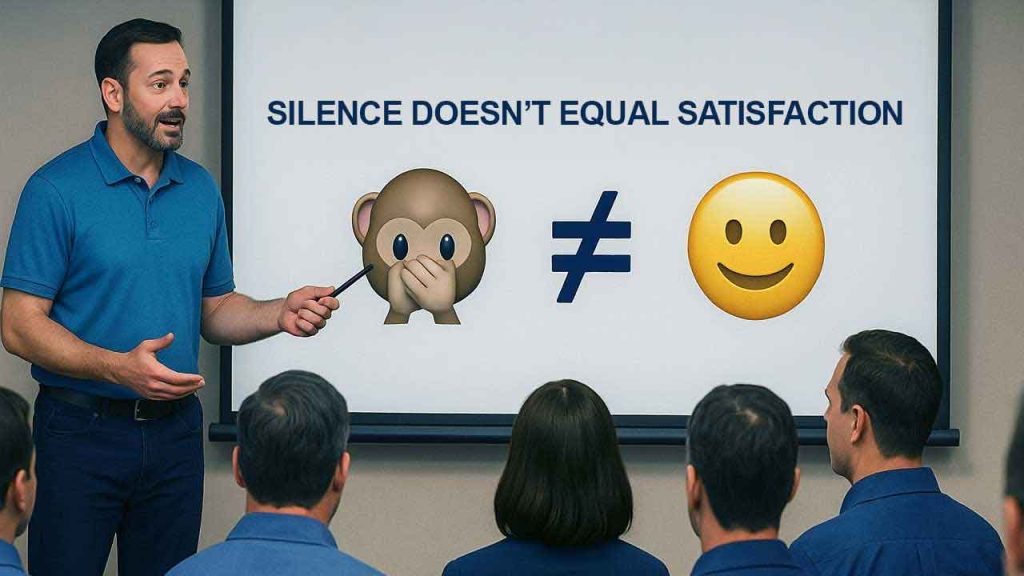
Final Thoughts: Silence Doesn’t Equal Satisfaction
The biggest mistake a pool business can make is assuming no news is good news. In the pool industry, silence shouldn’t be mistaken for satisfaction. Reach out, connect, and you’ll turn quiet customers into loyal ones—and loyal customers into lasting growth.

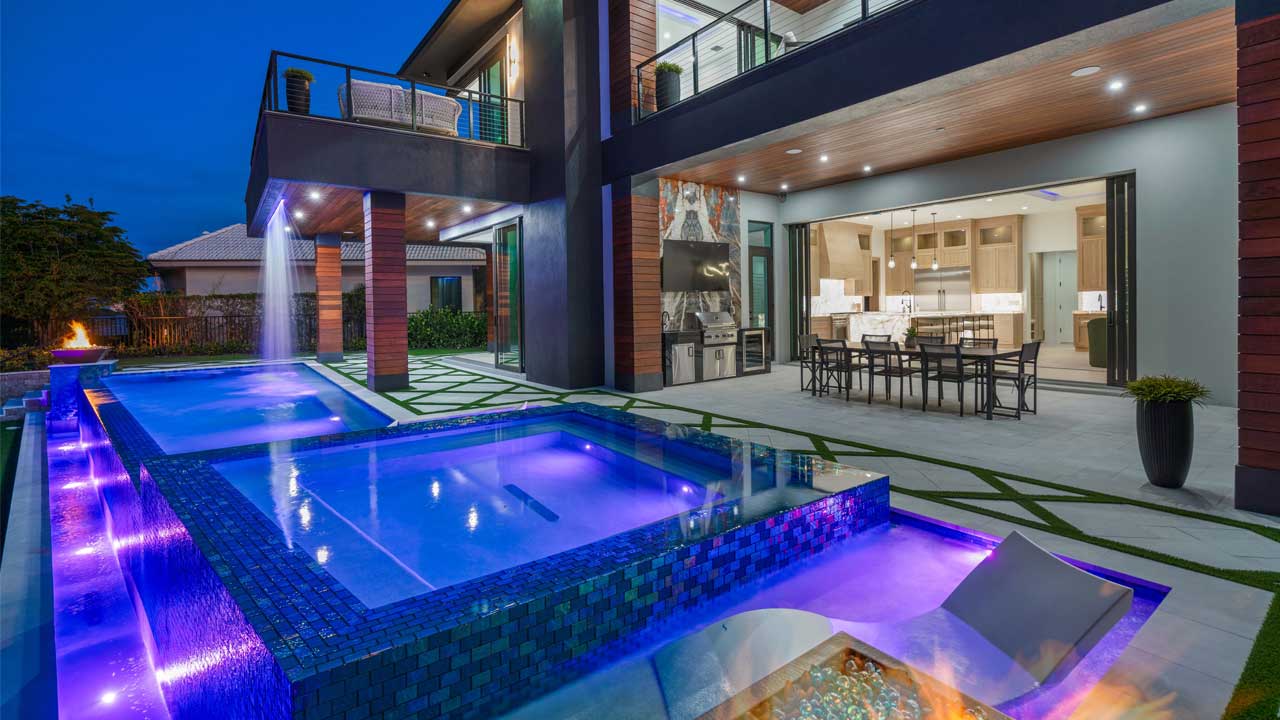
Is it just me, or are swimming pools starting to look more and more like incredible works of art? I know you see it too, and I think there’s a really interesting reason we both feel this way.
I’m an Elder Millennial (or a “Geriatric Millennial” if you want to be rude about it), and the narrative thrust upon us is all about how many industries we’ve “killed.” Everything from diamonds to Harleys, casual dining to golf. It’s all disappearing under our watch. But why isn’t anybody talking about the positive influence we’ve had on the culture of consumption? That’s deeply relevant to all those incredible pools we were just admiring. But before I explain, I first want to go back a generation for some context.
The Baby Boomer Influence
The Baby Boomers came to prominence as global industry and trade reached new heights. They were surrounded by an abundance of cheap goods from overseas. In this era, the pursuit of status was subtly oriented toward how much “stuff” you could acquire. As kids of Boomers, we benefited from this with an endless parade of Tamagotchis, Trolls, G.I. Joes, and Beanie Babies. But as we came of age, the horde of low-cost goods just started to feel like… clutter.
And to be fair, this wasn’t just about people currently in their late 30s to 40s. It was everyone. People everywhere started to realize just how much junk their lives had been overrun with, and a recalibration of values began to happen. We started finding value in simplicity. We bought less. We bought with intention. We wanted fewer things. We wanted higher quality.
Lessons from the Renaissance
I’m so close to getting to my point, I bet you can almost taste it. But humor me with one more flashback. Remember the Renaissance? It brought us legendary artists like Leonardo da Vinci and Raphael Sanzio da Urbino—and all of the other Ninja Turtles we’ve come to know and love. Want me to summarize six whole YouTube documentaries about it in one paragraph? Too bad. I’m doing it:
As both nation-states and independent dreamers alike invested heavily in exploration, research, and technological innovation, the world was filled with excitement and prosperity. Prosperity then led to the pursuit of finer things. And that’s when the artistic Renaissance exploded. Writers, artists, and thinkers all got fashionably reacquainted with earlier Greek and Roman “masters.” They started reflecting on what it meant to “do great work,” how one could achieve it, and why it mattered in the first place. And this inspired several generations to strive for new heights of artistic achievement.
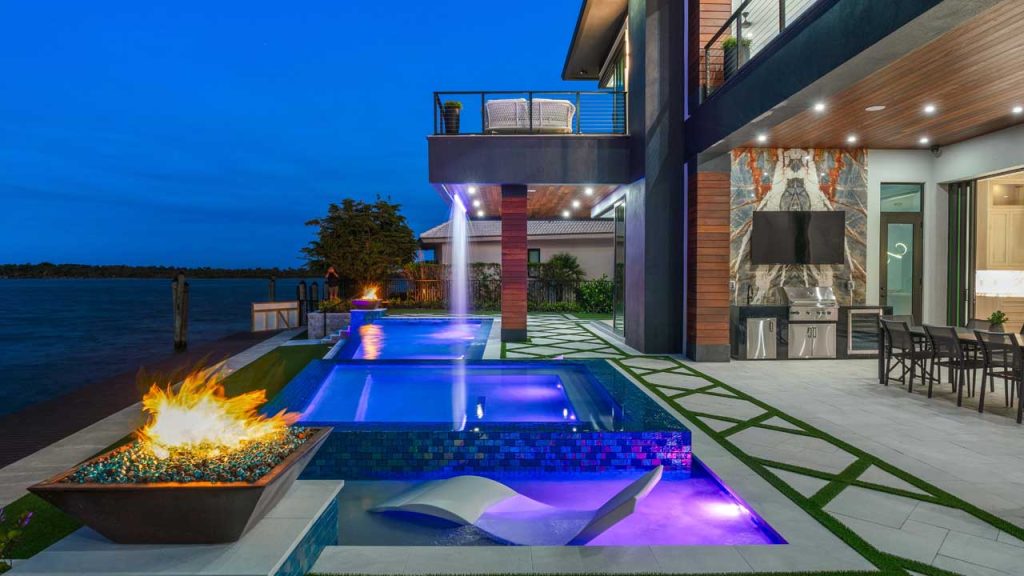
The Swimming Pool as Modern Art
And it’s here, dear friends, that we finally arrive at the core point. Just like those Europeans from the Middle Ages, this newer generation of homeowners and builders is now experiencing a little Renaissance of their own. No, I’m not saying everyone is outside carving an alabaster statue of the perfect male figure in their backyard. I mean that our newfound focus on quality and experience is leading us toward higher-quality investments in our personal spaces.
I want to give credit where credit is due: the swimming pool industry, as we know it, was made popular by our parents and grandparents. And if you’re making a living in this market like I am, you have them to thank. But it wasn’t until recently that swimming pools started to become a higher art form.
Rejecting the Template
On one hand, the industry itself was constantly raising the bar of its own best practices, which meant higher costs and pushed the swimming pool further into exclusivity. But at the same time, consumers everywhere had become obsessed with individuality and superb quality. It was only natural that this would bleed into their swimming pools as well.
It was no longer exciting to have the same templated design that six of your neighbors had down the street. It was no longer acceptable to settle for plain white plaster and bullnose brick coping. Throwing a couple of palm trees next to a boulder-stack waterfall just didn’t feel like the escape it once was. And all the freeform pools in the world started to feel like they lacked any real intention.
Trailblazers Redefining Design
So, what was the response? Would-be pool owners grabbed those templated designs, wadded them up, and tossed them into a wastebasket overflowing with phone books, AOL promotional CDs, and gift cards to Applebee’s. Buyers started demanding unparalleled craftsmanship in their outdoor spaces. And thanks to the innovative trailblazers in our industry, they’re getting it in spades.
Homeowners can ditch that boring pool interior and instead have Ray Corral (Mosaicist, Inc.) install a tile mosaic that would put the ancient Pompeii bathhouses to shame.
Tired of arbitrary pool shapes and sizes? Listen to Kirk Bianchi (Bianchi Design) explain how every pool should feature the esoteric yet pleasing principles of the Golden Ratio, proportion, and root rectangles.
Marvel at designers like Randy Angell (Randy Angell Designs), who channels mid-century masters like Frank Lloyd Wright and incorporates the beauty and grace of timeless architecture into pools and outdoor entertaining structures.
Be amazed by Cipriano Landscape Design’s attention to detail as they build a giant violin you can swim in, or watch them form an ancient Roman-style fountain with real, hand-sculpted animal heads and medallions.
Have the professionals at Elemental Acrylic carefully engineer giant transparent walls and windows along your pool’s perimeter to give your body of water the illusion of defying physics.
Familiarize yourself with manufacturers like Crossville Studios, who continue to push the boundaries of what’s possible as they innovate finishing surface products that convincingly imitate natural woods and gorgeous stones from exotic locations around the globe.
Quality as the New Virtue
Every new project is a vote, and the poll results are in. Quality is the new virtue, and installing personalized outdoor works of art is how we “keep up with the Joneses” now. This is the new world of “less is more,” and as a designer who prioritizes thoughtfulness and attention to detail, I couldn’t be more pleased about it.



Download the NEW Pool Magazine App
 Sponsored Advertisement
 AquatiCare™: Proactive Pool Maintenance You Can Count On
 RB Retail & Service Solutions adds DocuSign to Software
 BSquared offers New Free Standing Sunledge
 Family Leisure Announces Exclusive Retail Partnership with Jacuzzi
  Blue Wave Recall on Over 13,000 Above Ground Pools
 Tile Heritage Foundation embraces FOUR NEW BOARD MEMBERS joining the current Board of Directors!
 Coverings 2026 Previews Conference Education Ahead of Las Vegas Show
 LATICRETE Officially Launches HYDRO BAN® 1 and MULTIMAX™ 1
 Raising Prices For Pool Service Is Never Easy
 CCEI Taps Martin Grenier to Head North American Operations
 Premier Franchise Management Signs New Franchise in Little Rock, Arkansas
 Scott Walk is one of the Top Pool Designers / Pool Builders in Georgia
 Pool and Spa Industry: The Path to Success
 Pool Scouts Aims at Changing the Way Homeowners View Pool Maintenance
 Sponsored Advertisement
 Sponsored Advertisement
-
 Pool News2 weeks ago
Blue Wave Recall on Over 13,000 Above Ground Pools
-

 Industry News4 weeks ago
Latham Group Appoints Sean Gadd as Chief Executive Officer
-

 News3 weeks ago
Built on Relationships: Pentair Pool’s New Sales Structure and the People Who Make It Work
-

 Pool Service News3 weeks ago
Easton Select Group Adds Harrison Pool & Spa, Expanding Service Across MetroWest Boston
-

 Press Releases4 weeks ago
FSPA Wins Big at Florida Building Commission
-

 News4 weeks ago
Aquadei Technologies Announces Strategic Alliance with the Master Pool Guild
-

 Features4 weeks ago
Adopting Engineered, Reliable Pool Waterproofing Innovations — Why North America pool builders are shifting toward PVC membranes
-

 Manufacturer4 weeks ago
RicoRock® Offers New Temple Stone Firepit