


Pool News
Man Holds Breath for 29 Minutes: Poolside Feat Shatters World Record
Think you’re the champ at holding your breath underwater? Think again. A Croatian man broke the world record lasting over 29 minutes on a single breath!


On June 14, 2025, in a hotel pool in Opatija, Croatia, Croatian freediver Vitomir Maričić lay back beneath the surface and didn’t breathe—incredibly—for 29 minutes and 3 seconds. The attempt, verified by Guinness World Records officials and witnessed by roughly 100 spectators, smashed the previous oxygen-assisted mark by nearly five minutes and instantly became one of the most astonishing endurance feats ever recorded. Maričić framed the effort as both a personal challenge and a way to draw attention to ocean conservation, adding a purpose that extended beyond physiology and performance.
While “holding your breath” sounds simple, the record sits at the intersection of careful science, meticulous training, strict safety protocols—and significant risk. Here’s what happened, how it compares with past records (with and without oxygen), what the science says about the dangers of extreme apnea, how elite athletes train for it, and how similar principles can help you swim faster, farther, and colder—safely.
The New Benchmark—and What “Oxygen-Assisted” Means
Guinness lists Maričić’s mark—29:03—as the longest time breath held voluntarily underwater (male). The attempt followed Guinness rules for oxygen-assisted static apnea, which allow breathing 100% O₂ before submersion (in Maričić’s case, 10 minutes). Pre-breathing oxygen raises body oxygen stores and blunts the normal “panic” signal from carbon-dioxide-sensing chemoreceptors, delaying the urge to breathe and pushing the body deeper into its oxygen reserves. Maričić later described the last minutes as a battle against painful diaphragm contractions rather than a crisis of will.

How big a leap is this? The prior oxygen-assisted record stood at 24:37, set in 2021 by fellow Croatian Budimir “Buda” Šobat—a mark Maričić bested by almost five minutes. Before Šobat, Spain’s Aleix Segura held 24:03 (2016), and earlier attempts included David Blaine’s televised 17:04 (2008).
It’s important to distinguish oxygen-assisted records from unaided, competition “static apnea” records (no pure O₂ allowed). Under AIDA International rules (the sport’s governing body), the men’s static apnea record is 11:35 by Stéphane Mifsud. Guinness has separately recognized Branko Petrović at 11:54 in 2014 under its protocols—illustrating how sanctioning bodies keep different ledgers depending on event definitions and verification standards.
How It Stacks Up to Marine Mammals (Reality Check)
Human O₂-assisted apnea now exceeds typical dolphin dives and overlaps the upper range of harbor seals. Bottlenose dolphins commonly dive for 20–40 seconds and can hold for around 10–15 minutes in extreme cases; harbor seals typically stay down a few minutes but can reach about 30 minutes. But we’re still far shy of the true champions: elephant seals can remain submerged up to two hours, and Cuvier’s beaked whales have been recorded on dives lasting 222 minutes (3 hours, 42 minutes). O₂ helps humans stretch the envelope, but marine mammals evolved a different league of adaptations.
Is Holding Your Breath For That Long Dangerous?
Even for experts with medical oversight, prolonged apnea can be dangerous. Key risks include:
• Shallow-Water Blackout (Hypoxic Blackout). Hyperventilation before a hold (or the dynamics of ascent during a dive) can suppress the CO₂ signal that normally forces you to breathe, leading to sudden loss of consciousness without warning—often near the surface. Blackouts in water are frequently fatal without immediate rescue.

• Lung Barotrauma and “Squeeze.” As pressure increases at depth, lung volume decreases; if compression surpasses tissue tolerance, pulmonary barotrauma or edema can occur, presenting as chest tightness, coughing, or even blood in sputum.
• Decompression Stress. Surprisingly, repetitive or deep breath-hold diving can produce gas bubbles and decompression-like illness in some contexts. Case reports describe neurological symptoms in breath-hold divers.
• Other Concerns. Chronic exposure may affect renal function and other systems, though long-term outcomes are still being studied. Bottom line: the margin for error shrinks quickly as efforts become extreme.
• Safety: All serious apnea training belongs under qualified instruction, with strict protocols, a trained buddy, and no hyperventilation. The best practices involve normal breathe-ups before a final inhale and immediate recovery breathing after surfacing.

How Elite Freedivers Train Their Bodies and Minds
- They harness the mammalian dive response. Submerging the face and holding your breath triggers a reflex suite: bradycardia (slowed heart rate), peripheral vasoconstriction (directing blood to the brain and heart), and splenic contraction (dumping extra red blood cells to raise oxygen-carrying capacity). Training seems to amplify parts of this response; in elite divers, spleen size and lung volumes correlate with performance, and short training blocks can measurably alter spleen dynamics.
- They build CO₂ tolerance and manage hypoxia—progressively. Common tools include CO₂ and O₂ tables (structured intervals that progressively increase breath-hold difficulty), apnea walks (breath-holds while gently walking), and relaxation drills. These methods condition the body and—crucially—the mind to remain calm as CO₂ rises and diaphragm contractions begin.
- They perfect breathe-ups and recovery breathing. Contrary to myth, hyperventilating before a hold is dangerous. Best practice is a normal, calming breathe-up, a full but unforced final inhalation, and then post-apnea “hook”/recovery breathing (short, pressurized inhales with brief holds) to rapidly restore oxygen saturation and maintain airway control after surfacing.
- They respect strict supervision. Organized training and competitions require safety divers and rehearsed rescue protocols. Recreational swimmers and triathletes should never simulate extreme apnea underwater; even pool “hypoxic sets” have led to tragedies.
Previous Records: A Short, Clear Timeline
- Oxygen-assisted (Guinness):
• 29:03 – Vitomir Maričić (Croatia), Opatija, June 14, 2025.
• 24:37 – Budimir Šobat (Croatia), 2021.
• 24:03 – Aleix Segura (Spain), 2016.
• 17:04 – David Blaine (USA), 2008 (televised). - Unaided static apnea (no O₂ before the hold):
• AIDA: 11:35 – Stéphane Mifsud (France).
• Guinness: 11:54 – Branko Petrović (Serbia, 2014).
These categories are sometimes conflated in headlines; the underlying rules differ, which is why it’s valuable to specify “oxygen-assisted” vs. “unaided.”
What This Training Unlocks Beyond Breath-Holding
You may never aim for minutes-long apnea, but the underlying respiratory control, efficiency, and mental composure translate directly into other aquatic goals.
Swim Faster: Breathing muscles and hydrodynamics
• Train the engine: Respiratory muscle training can produce measurable performance gains in sprint and mid-distance events. Stronger breathing muscles reduce the metabolic cost of ventilation and may delay fatigue.
• Streamline to save energy: Reducing drag—by maintaining a tight, aligned body position—has an outsized effect on speed.
• Use breath rhythm wisely: Regulating breathing patterns helps balance oxygen delivery with efficient stroke mechanics.
Swim in Cold Water: Habituate the “cold shock” response
The gasp, hyperventilation, and heart-rate spike you feel on first immersion—cold shock—can be reduced with progressive exposure. Even a handful of sessions of repeated cold-water entry can blunt the reflex, making cold swims safer and more comfortable.
Practical takeaways: Accumulate short, supervised cold exposures; wear insulation when needed; and always swim with safety support in open water.
Swim Longer: Fueling, pacing, and technique for distance
• Fuel early and often: Marathon swimmers refine feeding routines, minimizing stoppage time.
• Rehearse pacing: Training long swims at 65–75% of goal pace prepares both body and mind.
• Protect shoulders: Efficient technique reduces drag and fatigue over hours in the water.
A Final Word on Purpose and Responsibility
Maričić’s record—performed under tight controls with medical and safety oversight—demonstrates a remarkable human capability and, in his case, a platform for ocean advocacy. But it also underscores a non-negotiable truth: extreme breath-holding is inherently risky. For most swimmers, the smartest way to apply “apnea lessons” is indirectly—by building respiratory strength, mastering relaxation, refining streamlining, acclimating safely to cold, and rehearsing feeding and pacing for long efforts.
If you’re inspired to explore breath-hold training, do it the right way: get instruction, use a buddy, avoid hyperventilation, follow recovery-breathing protocols, and keep in-water holds conservative. Adaptations accumulate over weeks and months; there’s no shortcut that’s worth your life.



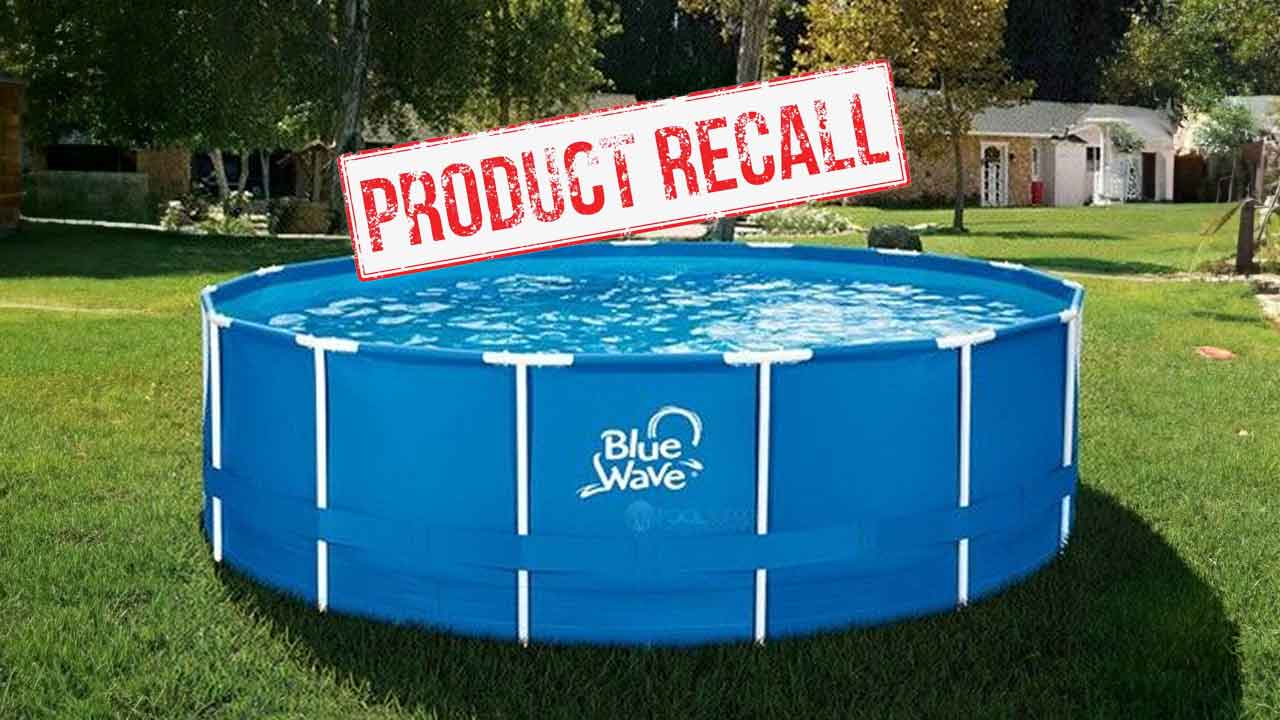
Blue Wave has issued a recall affecting multiple above-ground swimming pool models after federal safety officials identified a potential drowning hazard involving children.
The recall, announced by the U.S. Consumer Product Safety Commission (CPSC) on December 18, covers approximately 13,400 Blue Wave brand above-ground pools that are 48 inches deep or taller and utilize an exterior compression strap as part of the pool’s frame system.
Reason for the Recall
The affected pools feature a compression strap positioned around the outside of the vertical support poles. While the strap is designed to provide structural stability, the CPSC determined that its placement may unintentionally create a foothold.

According to the agency, this foothold could allow children to climb into the pool, even when the ladder has been removed, creating a risk of unsupervised access and potential drowning.
No injuries or fatalities have been reported in connection with the recalled products at the time of the announcement.
Affected Models
The recall applies to the following Blue Wave above-ground pool models:
• Blue Wave 15-Ft Rd 48-In Active Frame Pool
• Blue Wave 18-Ft Rd 52-In Active Frame Pool
• Blue Wave 18-Ft Rd 52-In Dark Cocoa Wicker Frame Pool
• Blue Wave 24-Ft Rd 52-In Dark Cocoa Wicker Frame Pool
• Blue Wave Rustic Cedar 15-Ft Round 48-In Deep Frame Swimming Pool Package W/Cover
• Blue Wave Rustic Cedar 18-Ft Round 52-In Deep Frame Swimming Pool Package W/Cover
• Blue Wave 18-Ft Round 52-In Gray Rattan Swimming Pool Package W/Cover
• Blue Wave 18-Ft Round 52-In Espresso Wicker Swimming Pool Package W/Cover
• Blue Wave 15-Ft Round 48-In Navy Blue Frame Swimming Pool Package W/Cover
• Blue Wave 18-Ft Round 52-In Navy Blue Frame Swimming Pool Package W/Cover
• Blue Wave 15-Ft Round 48-In Aspen Swimming Pool Package W/Cover
• Blue Wave Mocha Wicker 18-Ft Round 52-In Deep Swimming Pool Package With Cover
• Blue Wave Mocha Wicker 24-Ft Round 52-In Deep Swimming Pool Package With Cover
• Blue Wave Laguna 15-Ft Round 48-In Deep Swimming Pool Package With Cover
• Blue Wave Laguna 18-Ft Round 52-In Deep Swimming Pool Package With Cover
All affected models share a common design feature: an exterior compression strap that encircles the pool’s vertical supports.

Sales Channels and Distribution
The recalled pools were sold nationwide from January 2021 through July 2025 through a mix of big-box retailers, sporting goods stores, and online marketplaces, including:
• The Home Depot
• Lowe’s
• Dunham’s Sports
• Amazon
• Walmart
• Wayfair
Retailers have been notified to halt sales of affected models and to direct customers to the manufacturer’s recall remedy.
What Dealers and Retailers Should Know
For dealers and retail partners, the recall highlights the importance of prompt inventory review and customer outreach. Any remaining unsold stock matching the recalled models should be removed from the sales floor and distribution channels immediately.
Retailers that sold affected units during the recall period may see an increase in customer inquiries regarding eligibility, repair kits, and interim safety measures. Clear communication at the point of contact will be critical, particularly around the distinction between structural components and ladders, which many consumers assume are the primary access risk.
Service professionals and retail staff should also be prepared to explain that the recall does not involve a full product replacement, but rather a manufacturer-provided modification designed to eliminate the foothold while maintaining frame integrity.
Manufacturer Remedy
Blue Wave is offering a free repair kit to affected pool owners. The kit replaces the exterior compression strap with a lower-profile system installed closer to ground level. Once the repair is completed, the original strap can be removed.
Until the repair is installed, the manufacturer and CPSC recommend that pool owners prevent unsupervised access to the pool area or drain the pool temporarily.
Dealers and service professionals should advise customers not to remove or cut the compression strap prior to installing the repair kit, as doing so could compromise the pool’s structural stability.

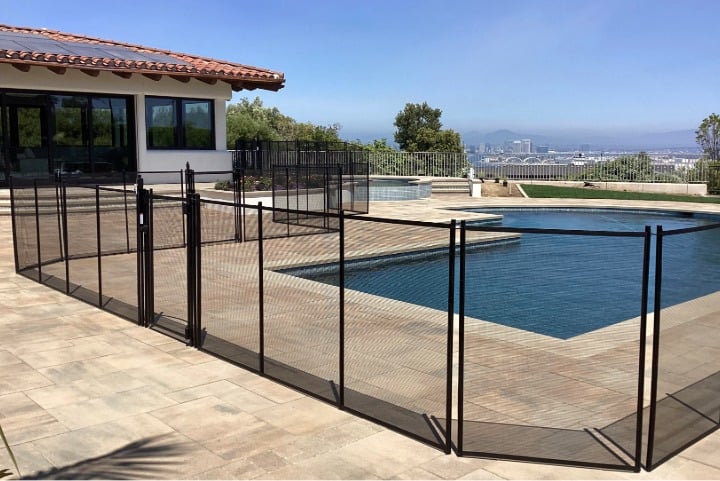
Poolsafe LLC, offers new mesh, removable safety fencing designed to be installed around any pool shape or size. Uses patented, transparent, large-hole ClearGuard™ Mesh for better visibility into the pool area, while also blending the fence into backyard. Lockable, self-closing Triton™ gate features a curved top bar to help prevent climbing. Unique Tri-Pod Truss system keeps gate aligned with daily usage. Available in 4ft and 5ft heights, in black, brown, beige, or gray colors.
https://poolsafe.com/
(888) 489-2282

Latham Group, Inc. (Nasdaq: SWIM), the largest designer, manufacturer, and marketer of in-ground residential swimming pools in North America, Australia, and New Zealand, appoints Sean Gadd as the company’s new President and Chief Executive Officer as part of a CEO transition that will take effect on January 5, 2026. The appointment follows a comprehensive search as part of a succession planning process led by the Board and current CEO Scott Rajeski, who will be retiring from Latham and will serve as a special advisor to the company.
Sean Gadd comes to Latham following a 21-year career at James Hardie. He most recently served as President of North America since 2022, where he has had full P&L responsibility for James Hardie’s largest regional business. Prior to his role as President of North America, Sean served as Executive Vice President, North America, Commercial (2018-2022) and Executive Vice President, Markets and Segments, North America (2015-2018) at James Hardie, leading the front end of the business across product, marketing, and sales. Sean has been instrumental in spearheading James Hardie’s substantial organic net sales growth since 2022, driving material conversion and deeper market penetration through a refined go-to-market strategy targeting end-users via channel partners. Sean brings experience that is directly comparable to Latham’s material conversion and Sand State initiatives, and his demonstrated success in driving strategic growth will be invaluable for Latham and its shareholders.
James E. Cline, Chairman, commented, “Sean is known as a strong leader and brand-builder and has an impressive track record of driving growth at James Hardie. We are thrilled that he has accepted the CEO role at Latham, and the Board believes Sean will be able to leverage his robust commercial experience, sector knowledge, and branding expertise to accelerate our ability to continue to gain share and further the conversion to fiberglass from concrete pools.”

“I am pleased to be joining Latham and am looking forward to building on its achievements to date. This is an excellent opportunity for me to utilize my experience in the building products category to drive further market penetration and adoption of Latham’s top-quality products and greater recognition for its superior service standards,” Mr. Gadd commented.
Mr. Gadd will also become a member of Latham’s Board of Directors, replacing Mr. Rajeski, who is resigning from the Board concurrently with his retirement.
Mr. Cline commented, “On behalf of the Board of Directors, I want to express our deep appreciation for the contributions that Scott Rajeski has made to Latham during his long tenure at the company, first as Chief Financial Officer and, since 2017, as President and Chief Executive Officer. Under his leadership and that of his executive and operating teams, the company went public in April of 2021 and has experienced substantial growth, demonstrated resilience within a difficult industry environment, and built a strong financial position.”
Mr. Rajeski noted, “It has been a privilege to serve as the President & CEO of Latham alongside the talented executive and operating teams that we have at the company. Together, we have advanced the awareness and adoption of fiberglass pools and autocovers, while implementing production and related efficiencies that have streamlined our operations. I am proud to be retiring as CEO of Latham with the company in a strong financial position and in very capable hands. Throughout my conversations with Sean, I have been very impressed with his leadership capabilities and background, and I am confident that he will bring a unique skillset that will allow Latham to continue to outperform the industry, gain further traction in the important Sand States, and remain an acquirer of choice.”
About Latham Group, Inc.
Latham Group, Inc., headquartered in Latham, NY, is the largest designer, manufacturer, and marketer of in-ground residential swimming pools in North America, Australia, and New Zealand. Latham has a coast-to-coast operations platform consisting of approximately 1,850 employees across around 30 locations.


Download the NEW Pool Magazine App
 Sponsored Advertisement
 AquatiCare™: Proactive Pool Maintenance You Can Count On
 RB Retail & Service Solutions adds DocuSign to Software
 BSquared offers New Free Standing Sunledge
 Family Leisure Announces Exclusive Retail Partnership with Jacuzzi
  Blue Wave Recall on Over 13,000 Above Ground Pools
 Tile Heritage Foundation embraces FOUR NEW BOARD MEMBERS joining the current Board of Directors!
 Coverings 2026 Previews Conference Education Ahead of Las Vegas Show

 Fluidra Predicts 6% Growth in Coming Years
 HAYWARD ADDS DEREK SPEARMAN IN NEW VP OF US MANUFACTURING POSITION
 Seen In The Wild, Pool Service Cybertrucks Hit The Open Road
 TV Actress’s Husband Dies After Swimming in Freezing Pool
 Pool Industry Knuckles Down For Big Freeze
 Latham Group, Inc. Expands to Loyalist Township in Canada with New Fiberglass Manufacturing Plant
 A Borates Shortage is Looming on The Horizon
 Sponsored Advertisement
 Sponsored Advertisement
-
 Pool News2 weeks ago
Blue Wave Recall on Over 13,000 Above Ground Pools
-

 Industry News4 weeks ago
Latham Group Appoints Sean Gadd as Chief Executive Officer
-

 News3 weeks ago
Built on Relationships: Pentair Pool’s New Sales Structure and the People Who Make It Work
-

 Pool Service News3 weeks ago
Easton Select Group Adds Harrison Pool & Spa, Expanding Service Across MetroWest Boston
-

 News3 weeks ago
Aquadei Technologies Announces Strategic Alliance with the Master Pool Guild
-

 Features3 weeks ago
Adopting Engineered, Reliable Pool Waterproofing Innovations — Why North America pool builders are shifting toward PVC membranes
-

 Manufacturer3 weeks ago
RicoRock® Offers New Temple Stone Firepit
-
 Press Releases3 weeks ago
FSPA Wins Big at Florida Building Commission