


Pool News
“Pool War” Breaks Out Over $30M Townhouse Indoor Pool in NYC


A Manhattan couple’s dream of building an indoor lap pool beneath their $30 million Upper East Side townhouse has turned into a legal fight with their next-door neighbors—complete with allegations of health risks, structural concerns, and months of disruptive drilling.
This story first made headlines in the New York Post, and while it reads like a splashy tabloid piece, there are real challenges here that anyone in the trades will recognize.
The homeowners—hedge funder Zachary Kurz and his wife Brittany Morgan, an heiress to a real estate fortune—combined two townhouses on East 77th Street to create a massive single residence. Their plans include installing an indoor pool in the cellar, which would require excavating deep into Manhattan bedrock and underpinning the foundation.

Their elderly neighbors, both doctors in their seventies, say the work poses serious risks to their home—and their health. They’re suing to block the project, arguing that the prolonged construction and vibrations could damage their house, harm their art and wine collections, and worsen existing medical conditions.
The Reality Behind a Cellar Pool in Manhattan
Installing a pool beneath a New York City townhouse isn’t like digging a hole in the suburbs. It means going through rock—slowly, carefully, and loudly.
Veteran builder Bob Blanda, who’s overseen multiple projects like this in Manhattan, told the Post exactly what that looks like.
“They have to underpin the foundations,” Blanda said. “You’re bringing the foundations deeper into the ground and you’re touching the neighbors’ foundations, so a lawyer will get involved.”
It’s a surgical process. Crews drill small holes into the schist bedrock and use rock splitters to break it apart in controlled sections. That debris is moved out of the house—often by hand, bucket, or conveyor—and hauled away. It’s not fast, and it’s not quiet.

“They are drilling holes into the bedrock and they split the rock with a tool called a rock splitter,” Blanda told the Post.
The work is expected to take close to a year. That means weekday construction noise, vibrations, and heavy machinery passing in and out of the property on a daily basis.
A License Fee Dispute at the Core
At the heart of the dispute is something pool contractors in the city are all too familiar with: access license agreements.
Because the excavation involves getting close to or working beneath the neighbors’ structure, the builders need a legal agreement to install protection, monitor for movement, and perform any work that might impact the adjoining property. This is where things went sideways.
According to court documents, the project team initially offered a monthly license fee of around $500. The neighbors countered, asking for more than $10,000 per month—plus expenses for storing artwork, monitoring air quality, protecting a vintage chandelier, and relocating their wine collection.
So far, no agreement has been reached, and the courts may end up deciding whether the project can move forward.
A Laundry List of Risks
The neighbors claim the project could cause “significant, potentially irreparable harm” to their property. Their concerns include:
- Dust from excavation entering their home and affecting respiratory conditions
- Vibrations damaging antique furniture, fine art, and delicate architectural features
- Foundation shifts from underpinning work jeopardizing structural stability
- Humidity from the eventual indoor pool, raising concerns about moisture intrusion
It’s worth noting that cellar pools—even when completed—can present unique challenges. Ventilation, dehumidification, water treatment, and ongoing maintenance all require special attention in an enclosed underground space.
Rare but Not Unheard Of
While private indoor pools are nothing new in New York’s luxury market, digging them beneath townhouses is still relatively rare.
Blanda estimated that only around 50 pools of this type exist across Manhattan. The logistics, engineering, and expense often outweigh the convenience.
“These types of projects require $5 million in liability insurance just to get on the job,” Blanda told the Post.
There’s also the matter of whether the pool actually gets used. According to sources in the Post, some of these cellar pools see very little action after they’re built—especially once the kids grow up or the novelty wears off.

Noise, Parking, and a Block on Edge
Beyond the walls of the two properties, neighbors on the street are also raising concerns.
Excavation equipment, concrete trucks, dumpsters, and service vehicles will occupy valuable curb space for months. With limited parking and narrow sidewalks, even a well-run jobsite can cause headaches for everyone nearby.
Daily construction schedules, weekend deliveries, and after-hours cleanups quickly strain patience—even in a city where most people are used to renovation noise.
That’s why these types of projects, while technically legal, often face public pushback if there isn’t strong communication and buy-in from the block. Once trust is lost, it’s tough to get back.
The Bigger Picture
This dispute is now headed for court. If the license agreement isn’t resolved, the judge may have to determine whether the project moves forward and under what conditions.
In the meantime, the case has put a spotlight on just how complex and contentious these ultra-luxury upgrades can become—especially in historic neighborhoods with aging infrastructure, tight spaces, and zero room for error.
While the headlines might make it sound like a classic rich-versus-rich soap opera, the core issues—access, risk, logistics, and impact—are all things pool builders and contractors deal with on the ground.
For now, the pool remains on paper, the neighbors remain in court, and the street remains divided.
Photo Credit: Zachary Kurz / Brittany Morgan – Shutterstock / Lev Radin









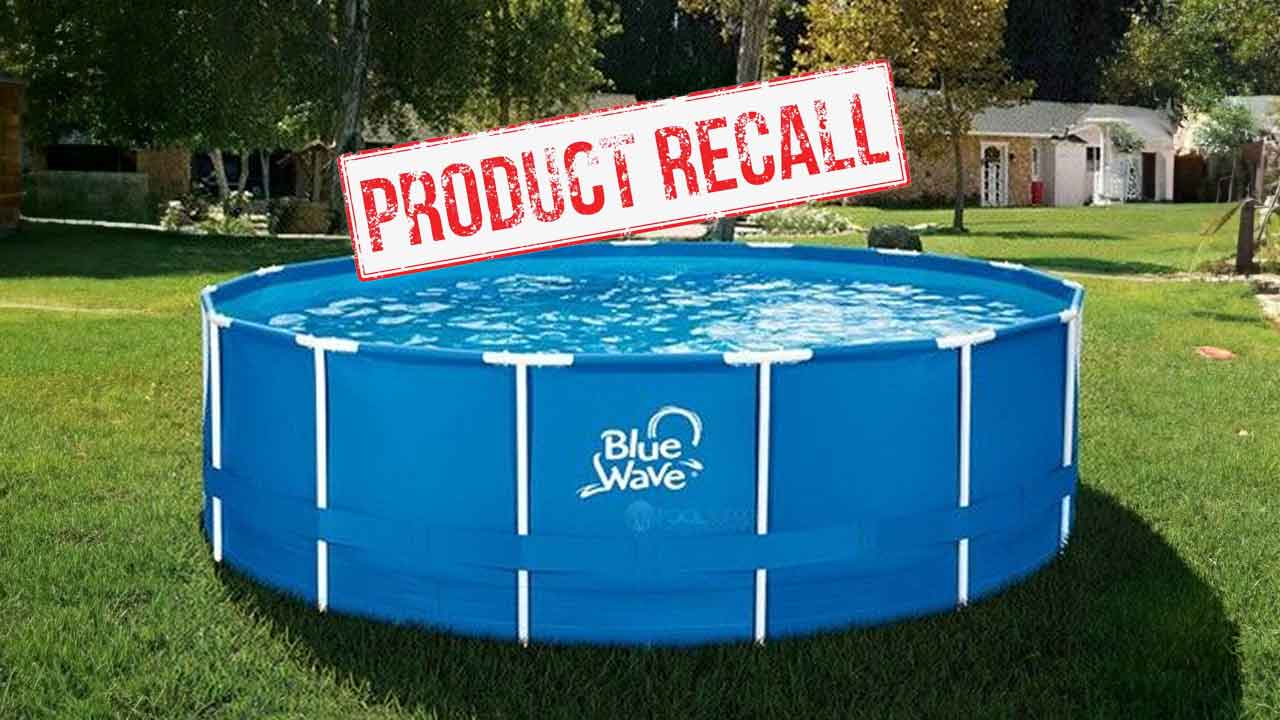
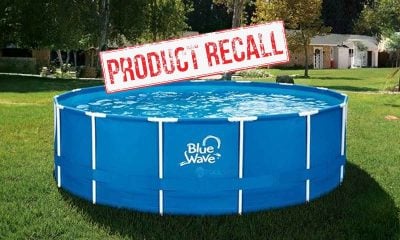
Blue Wave has issued a recall affecting multiple above-ground swimming pool models after federal safety officials identified a potential drowning hazard involving children.
The recall, announced by the U.S. Consumer Product Safety Commission (CPSC) on December 18, covers approximately 13,400 Blue Wave brand above-ground pools that are 48 inches deep or taller and utilize an exterior compression strap as part of the pool’s frame system.
Reason for the Recall
The affected pools feature a compression strap positioned around the outside of the vertical support poles. While the strap is designed to provide structural stability, the CPSC determined that its placement may unintentionally create a foothold.

According to the agency, this foothold could allow children to climb into the pool, even when the ladder has been removed, creating a risk of unsupervised access and potential drowning.
No injuries or fatalities have been reported in connection with the recalled products at the time of the announcement.
Affected Models
The recall applies to the following Blue Wave above-ground pool models:
• Blue Wave 15-Ft Rd 48-In Active Frame Pool
• Blue Wave 18-Ft Rd 52-In Active Frame Pool
• Blue Wave 18-Ft Rd 52-In Dark Cocoa Wicker Frame Pool
• Blue Wave 24-Ft Rd 52-In Dark Cocoa Wicker Frame Pool
• Blue Wave Rustic Cedar 15-Ft Round 48-In Deep Frame Swimming Pool Package W/Cover
• Blue Wave Rustic Cedar 18-Ft Round 52-In Deep Frame Swimming Pool Package W/Cover
• Blue Wave 18-Ft Round 52-In Gray Rattan Swimming Pool Package W/Cover
• Blue Wave 18-Ft Round 52-In Espresso Wicker Swimming Pool Package W/Cover
• Blue Wave 15-Ft Round 48-In Navy Blue Frame Swimming Pool Package W/Cover
• Blue Wave 18-Ft Round 52-In Navy Blue Frame Swimming Pool Package W/Cover
• Blue Wave 15-Ft Round 48-In Aspen Swimming Pool Package W/Cover
• Blue Wave Mocha Wicker 18-Ft Round 52-In Deep Swimming Pool Package With Cover
• Blue Wave Mocha Wicker 24-Ft Round 52-In Deep Swimming Pool Package With Cover
• Blue Wave Laguna 15-Ft Round 48-In Deep Swimming Pool Package With Cover
• Blue Wave Laguna 18-Ft Round 52-In Deep Swimming Pool Package With Cover
All affected models share a common design feature: an exterior compression strap that encircles the pool’s vertical supports.

Sales Channels and Distribution
The recalled pools were sold nationwide from January 2021 through July 2025 through a mix of big-box retailers, sporting goods stores, and online marketplaces, including:
• The Home Depot
• Lowe’s
• Dunham’s Sports
• Amazon
• Walmart
• Wayfair
Retailers have been notified to halt sales of affected models and to direct customers to the manufacturer’s recall remedy.
What Dealers and Retailers Should Know
For dealers and retail partners, the recall highlights the importance of prompt inventory review and customer outreach. Any remaining unsold stock matching the recalled models should be removed from the sales floor and distribution channels immediately.
Retailers that sold affected units during the recall period may see an increase in customer inquiries regarding eligibility, repair kits, and interim safety measures. Clear communication at the point of contact will be critical, particularly around the distinction between structural components and ladders, which many consumers assume are the primary access risk.
Service professionals and retail staff should also be prepared to explain that the recall does not involve a full product replacement, but rather a manufacturer-provided modification designed to eliminate the foothold while maintaining frame integrity.
Manufacturer Remedy
Blue Wave is offering a free repair kit to affected pool owners. The kit replaces the exterior compression strap with a lower-profile system installed closer to ground level. Once the repair is completed, the original strap can be removed.
Until the repair is installed, the manufacturer and CPSC recommend that pool owners prevent unsupervised access to the pool area or drain the pool temporarily.
Dealers and service professionals should advise customers not to remove or cut the compression strap prior to installing the repair kit, as doing so could compromise the pool’s structural stability.

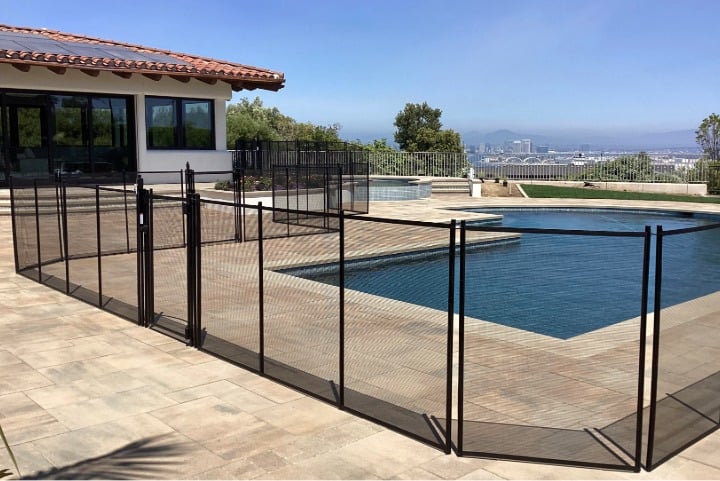
Poolsafe LLC, offers new mesh, removable safety fencing designed to be installed around any pool shape or size. Uses patented, transparent, large-hole ClearGuard™ Mesh for better visibility into the pool area, while also blending the fence into backyard. Lockable, self-closing Triton™ gate features a curved top bar to help prevent climbing. Unique Tri-Pod Truss system keeps gate aligned with daily usage. Available in 4ft and 5ft heights, in black, brown, beige, or gray colors.
https://poolsafe.com/
(888) 489-2282


Latham Group, Inc. (Nasdaq: SWIM), the largest designer, manufacturer, and marketer of in-ground residential swimming pools in North America, Australia, and New Zealand, appoints Sean Gadd as the company’s new President and Chief Executive Officer as part of a CEO transition that will take effect on January 5, 2026. The appointment follows a comprehensive search as part of a succession planning process led by the Board and current CEO Scott Rajeski, who will be retiring from Latham and will serve as a special advisor to the company.
Sean Gadd comes to Latham following a 21-year career at James Hardie. He most recently served as President of North America since 2022, where he has had full P&L responsibility for James Hardie’s largest regional business. Prior to his role as President of North America, Sean served as Executive Vice President, North America, Commercial (2018-2022) and Executive Vice President, Markets and Segments, North America (2015-2018) at James Hardie, leading the front end of the business across product, marketing, and sales. Sean has been instrumental in spearheading James Hardie’s substantial organic net sales growth since 2022, driving material conversion and deeper market penetration through a refined go-to-market strategy targeting end-users via channel partners. Sean brings experience that is directly comparable to Latham’s material conversion and Sand State initiatives, and his demonstrated success in driving strategic growth will be invaluable for Latham and its shareholders.
James E. Cline, Chairman, commented, “Sean is known as a strong leader and brand-builder and has an impressive track record of driving growth at James Hardie. We are thrilled that he has accepted the CEO role at Latham, and the Board believes Sean will be able to leverage his robust commercial experience, sector knowledge, and branding expertise to accelerate our ability to continue to gain share and further the conversion to fiberglass from concrete pools.”
“I am pleased to be joining Latham and am looking forward to building on its achievements to date. This is an excellent opportunity for me to utilize my experience in the building products category to drive further market penetration and adoption of Latham’s top-quality products and greater recognition for its superior service standards,” Mr. Gadd commented.
Mr. Gadd will also become a member of Latham’s Board of Directors, replacing Mr. Rajeski, who is resigning from the Board concurrently with his retirement.
Mr. Cline commented, “On behalf of the Board of Directors, I want to express our deep appreciation for the contributions that Scott Rajeski has made to Latham during his long tenure at the company, first as Chief Financial Officer and, since 2017, as President and Chief Executive Officer. Under his leadership and that of his executive and operating teams, the company went public in April of 2021 and has experienced substantial growth, demonstrated resilience within a difficult industry environment, and built a strong financial position.”
Mr. Rajeski noted, “It has been a privilege to serve as the President & CEO of Latham alongside the talented executive and operating teams that we have at the company. Together, we have advanced the awareness and adoption of fiberglass pools and autocovers, while implementing production and related efficiencies that have streamlined our operations. I am proud to be retiring as CEO of Latham with the company in a strong financial position and in very capable hands. Throughout my conversations with Sean, I have been very impressed with his leadership capabilities and background, and I am confident that he will bring a unique skillset that will allow Latham to continue to outperform the industry, gain further traction in the important Sand States, and remain an acquirer of choice.”
About Latham Group, Inc.
Latham Group, Inc., headquartered in Latham, NY, is the largest designer, manufacturer, and marketer of in-ground residential swimming pools in North America, Australia, and New Zealand. Latham has a coast-to-coast operations platform consisting of approximately 1,850 employees across around 30 locations.


Download the NEW Pool Magazine App
 Sponsored Advertisement
 AquatiCare™: Proactive Pool Maintenance You Can Count On
 RB Retail & Service Solutions adds DocuSign to Software
 BSquared offers New Free Standing Sunledge
 Family Leisure Announces Exclusive Retail Partnership with Jacuzzi
  Blue Wave Recall on Over 13,000 Above Ground Pools
 Tile Heritage Foundation embraces FOUR NEW BOARD MEMBERS joining the current Board of Directors!
 Coverings 2026 Previews Conference Education Ahead of Las Vegas Show

 Fluidra Strengthens Industry Leadership Position
 The Rise of pH
 Warning Signs of a Worn-out Pool
 CCEI Taps Martin Grenier to Head North American Operations
 Bang For Your Buck
 Arch Amenities Group Acquires Innovative Spa Management, Privai and Spa Space
 Paragon Pools/Float Like A Duck Joined by Olympic Gold Medalist Rowdy Gaines for PHTA Step Into Swim Grant
 Sponsored Advertisement
 Sponsored Advertisement
-
 Pool News2 weeks ago
Blue Wave Recall on Over 13,000 Above Ground Pools
-

 Industry News4 weeks ago
Latham Group Appoints Sean Gadd as Chief Executive Officer
-

 News3 weeks ago
Built on Relationships: Pentair Pool’s New Sales Structure and the People Who Make It Work
-
 Pool Service News3 weeks ago
Easton Select Group Adds Harrison Pool & Spa, Expanding Service Across MetroWest Boston
-

 Press Releases4 weeks ago
FSPA Wins Big at Florida Building Commission
-

 News4 weeks ago
Aquadei Technologies Announces Strategic Alliance with the Master Pool Guild
-

 Features4 weeks ago
Adopting Engineered, Reliable Pool Waterproofing Innovations — Why North America pool builders are shifting toward PVC membranes
-

 Manufacturer4 weeks ago
RicoRock® Offers New Temple Stone Firepit