


Safety
A Layered Approach That Saves Lives: The Pyramid of Pool Safety

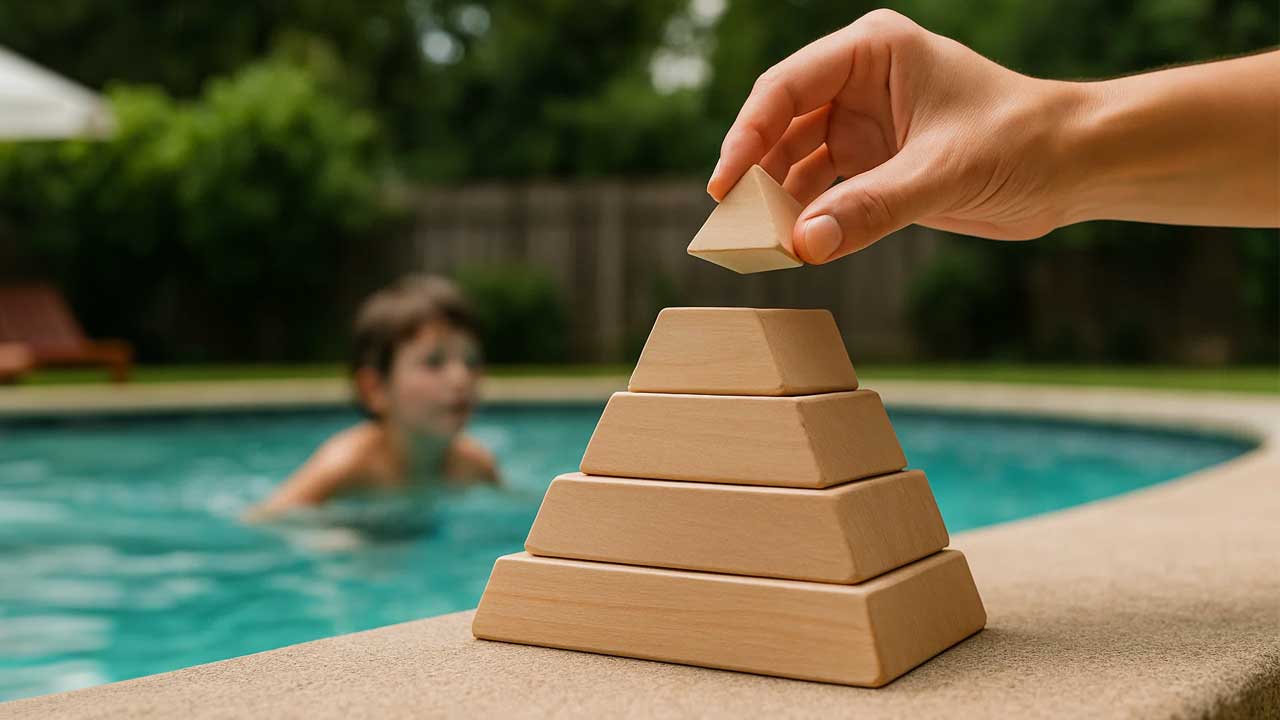
Drowning remains the leading cause of accidental death for children ages one to four in the United States—a tragic reality that is often preventable. As May marks National Water Safety Month, there’s no better time to spotlight the steps parents, guardians, and pool owners can take to protect children during swim season. Dr. Adam Katchmarchi, a nationally recognized expert in drowning prevention and water safety, joined Pool Magazine Podcast to offer practical, potentially life-saving advice.
Why Pool Safety Month Matters
“May is really the kickoff to the summer swim season,” said Katchmarchi. “It’s when many backyard pools start opening, and public recreation facilities and waterparks begin operations. It’s the perfect time to remind families to put water safety front and center.”
The idea isn’t to overcomplicate things. In fact, Katchmarchi emphasized that most drowning prevention measures are simple and actionable. “This isn’t complicated information. These are easy steps people can take to keep their families safer.”

Understanding When and Where Drowning Happens
One of the most alarming statistics Katchmarchi shared is that 70% of toddler drownings happen during non-swim times. “We tend to think drowning only occurs when kids are in the water with us,” he explained. “But for young children, it often happens when they wander off and find a water feature unsupervised.”
Whether it’s a backyard pool, decorative pond, or even a creek nearby, unsupervised access to water is a major hazard. That’s why having proper barriers and safety fencing is so critical. “Any water feature is attractive to a curious child. Without barriers, it becomes an invitation to tragedy.”

The Risk of Overconfidence
Even parents of older children need to be cautious. According to Katchmarchi, many parents overestimate their child’s swimming ability. “Research shows parents are not always the best judges of how skilled their child is in the water. That’s why revisiting swim lessons periodically is so important.”
He also cautioned against assuming that swimming skills learned in a backyard pool automatically transfer to natural bodies of water like lakes or rivers. “Currents, cold temperatures, and the absence of quick help in those environments introduce new risks,” he said. “The pool is the best place to build foundational water competency.”
Drowning Can Happen Fast—and Silently
“Most parents expect that their child would call out for help if they were in trouble, but that’s not always the case,” said Katchmarchi. “Drowning is often silent. Children can slip under the water in seconds.”

He emphasized the need for active, focused supervision and debunked the idea that a gathering of adults inherently means someone is watching the pool. “When everyone is watching, no one is watching. That’s why designating a Water Watcher is so effective.”
Organizations like the National Drowning Prevention Alliance and the Pool Safely campaign provide free Water Watcher cards that can be worn as a reminder of responsibility. “That small token can make all the difference.”
Who’s Most at Risk?
Children between ages one and four are at the highest risk of drowning, but Katchmarchi also flagged a sobering reality for children with autism. “Kids with autism are 160 times more likely to drown than their neurotypical peers. Many are drawn to water and prone to elopement.”
The good news? Swim lessons can begin as early as six months of age, and survival skills like back floating and breathing techniques can be taught to toddlers. “We’re not expecting perfect technique,” he said. “We’re teaching them to float, to breathe, to survive.”
The Problem with Assuming Knowing How To Swim is Enough
“Knowing how to swim is one critical layer of protection, but it doesn’t eliminate risk,” said Katchmarchi. He recommends a multi-layered approach that includes supervision, barriers, alarms, water competency, and emergency preparedness.
“We need to think in terms of layers, because supervision can lapse. Even skilled swimmers can panic or become fatigued. It takes a combination of safeguards to create the safest environment possible.”
Safety Starts at Home—Even if You Don’t Have Kids
The rise of pool-sharing platforms means more homeowners are renting out their pools to neighbors and guests. Even if you don’t have children yourself, you still have a responsibility to keep others safe.
“We created a rental safety checklist that applies whether you’re listing on Airbnb or just hosting friends,” said Katchmarchi. “Post your address by the pool, identify your safety equipment, and make sure guests understand your rules.”
He also recommends highlighting any hidden hazards. “Residential pools don’t always have depth markers. Make sure people know how deep the water is. Have a reaching pole or ring buoy and show people how to use them.”

Technology’s Role in Drowning Prevention
“There’s some promising innovation in AI-driven camera systems and smart alarms, but the technology is still evolving,” Katchmarchi noted. “These are high-tech tools, but they’re not a substitute for fences, supervision, and swim skills.”
In commercial settings, AI tools may assist lifeguards in identifying distress, but he warned about relying too heavily on them. “The psychology of lifeguards could change if they feel secondary to a machine. We need to train people to use these systems as supplements, not replacements.”
For residential use, many of these devices serve as smart alarms. “They can notify you that a child has entered the water, but what if you’re not home? These are great enhancements, but they’re just one part of a broader safety net.”
What Every Pool Owner Should Be Doing
One of the most overlooked pool safety risks? Not setting clear rules. “I hate to sound like the party police,” said Katchmarchi, “but people need to communicate what’s okay and what’s not. No breath-holding contests. No diving into shallow water.”
He explained that many backyard pools aren’t deep enough for diving, and even those who know how to dive safely can inadvertently influence others. “You may know how to enter the water, but does your younger cousin? Pool safety isn’t just about your skill—it’s about modeling behavior.”
The Pyramid of Pool Safety
Katchmarchi praised Pool Magazine’s Pyramid of Pool Safety infographic, which outlines layers of protection in a clear and accessible way. “We talk about layers in all types of accident prevention because we can’t rely on just one thing to work every time.”
Pool Magazine’s “Pyramid of Swimming Pool Safety” infographic lays out a tiered approach that highlights the most effective strategies for preventing drowning. Each level builds on the one below it—stacking layers of protection to reduce risk:

- Safety Devices: The foundation of the pyramid includes life-saving tools like life rings, life jackets, reaching poles, drain covers, and alarms. These devices have been statistically shown to help lower drowning fatalities when used properly.
- Fences & Covers: Isolation fencing and safety covers play a huge role in reducing risk. Pools with four-sided isolation fencing and ASTM-certified covers see up to an 83% reduction in childhood drownings compared to pools without these barriers.
- Swim Lessons: Swimming competency is a major safeguard. Participation in swim lessons has been shown to reduce drowning risk by up to 88% among children aged 1 to 4. Teaching floating, safe entry/exit, and survival strokes saves lives.
- Supervision: At the top of the pyramid is vigilant adult supervision—the most important layer. A lapse in supervision is the single leading cause of drowning fatalities among young children in swimming pools. Always designate a responsible Water Watcher and ensure someone nearby knows CPR and basic rescue techniques
The One Thing You Can Do Today
If there’s one takeaway that Katchmarchi urges every parent or pool owner to act on today, it’s this: Get your kids signed up for swim lessons.
“It’s the most effective, proven thing you can do to reduce drowning risk.”
Final Thoughts
National Pool Safety Month is more than a calendar event—it’s a call to action. Whether you’re a parent, grandparent, pool owner, or professional, the steps you take now can save lives later.
“We want families to enjoy their summer and make amazing memories in and around the water,” said Katchmarchi. “But we want those memories to be safe ones.”
For more resources on drowning prevention, including free tools like Water Watcher cards and rental safety checklists, visit organizations like the National Drowning Prevention Alliance, Pool Safely, and the PHTA. In addition, feel free to download our Pyramid of Pool Safety infographic.
Because when it comes to pool safety, a few small changes can make all the difference.
Ready to take a deeper dive?
Listen to our entire conversation with Dr. Adam Katchmarchi on the Pool Magazine Podcast.









BIG NEWS! The Florida Building Commission Voted Unanimously to Keep Single Wire Swimming Pool Bonding in the 2026 Florida Building Code.
Sarasota, FL — December 10, 2025 — On Tuesday, December 9, the Florida Building Commission unanimously and unequivocally voted to keep the single wire bonding loop method of Bonding Swimming pools and spas in the Florida Building Code for the 2026 code and beyond. This is a big win for Florida residents and for the swimming pool and spa industry.
FSPA and the Pool Industry Council undertook this initiative to prevent the single wire bonding method from being eliminated in Florida, which would force Florida residents to rely on unnecessary and costly methods of swimming pool and spa bonding.

A study funded by the Pool Industry Council and conducted by SunSmart Engineering this year demonstrated that #8 AWG single wire loop bonding was effective in mitigating voltage from a 120V ground fault event at a swimming pool and protecting bathers.
Read the Bonding Study Results here.

Press Releases
Step Into Swim Celebrates GivingTuesday by Garnering Support for 2026 Grant Programs
Millions around the world to participate in annual generosity movement on December 2, 2025


(Alexandria, Va.) — This GivingTuesday, Step Into Swim, an initiative of the Pool & Hot Tub Alliance (PHTA) dedicated to creating more swimmers through safe swim education, will inspire generosity and expand its lifesaving impact by rallying support for its 2026 learn-to-swim grant programs. Step Into Swim grants increase access to swimming and water safety education for children and communities across the globe.
GivingTuesday is a global generosity movement unleashing the power of people and organizations to transform their communities and their world. GivingTuesday kicks off the giving season each year by inspiring people to give back on the Tuesday after Thanksgiving and throughout the year.
For Step Into Swim, participating in GivingTuesday is a powerful opportunity to strengthen its mission of creating more swimmers, reducing childhood drowning, and ensuring all children have equitable access to swim education. In 2025 alone, Step Into Swim has:
- Raised over $1.5 million
- Funded 180,000+ swim lessons
- Supported 250+ learn-to-swim programs
- Partnered with leading aquatic organizations, donors, and community programs to expand equity in water safety
- Reached children across 43 states, as well as American Samoa, the U.S. Virgin Islands, Grand Cayman, and Canada
With continued donor support, Step Into Swim plans to expand its reach even further in 2026 by equipping more swim schools, YMCAs, parks and recreation departments, and aquatic programs with the resources they need to provide safe, effective, and accessible swim lessons.
“Every child deserves the chance to learn how to swim — and every donor who supports Step Into Swim is helping save lives,” said three-time Olympic Gold Medalist Rowdy Gaines, Vice President of Partnerships & Development at PHTA, who leads the Step Into Swim initiative. “GivingTuesday is an incredible opportunity for the pool, spa, and hot tub industry to unite for one cause: eradicating accidental drownings. Together with our supporters, Step Into Swim works every day to ensure more children learn to swim, gain confidence in the water, and enjoy a safer future.”
GivingTuesday began in 2012 as a simple idea: a day that encourages people to do good. Over the past 13 years, it has grown into a global movement that inspires hundreds of millions of people to give, collaborate, and celebrate generosity. Each action—big or small—contributes to lasting positive change. For more details about GivingTuesday, visit www.givingtuesday.org.
Every dollar donated to Step Into Swim goes directly to learn-to-swim programming. To join Step Into Swim’s GivingTuesday efforts, visit stepintoswim.org/donate.
###

About the Pool & Hot Tub Alliance and Step Into Swim™:
The Pool & Hot Tub Alliance (PHTA), a non-profit organization with over 4,000 members from around the world, was established in 1956 to support, promote, and protect the common interests of the $62B pool, hot tub, and spa industry. PHTA provides education, advocacy, standards development, research, and market growth initiatives to increase our members’ professionalism, knowledge, and profitability. Additionally, PHTA promotes the use of pools by expanding swimming, water safety, and related research and outreach activities aimed at introducing more people to swimming, making swimming environments safer, and keeping pools open to serve communities. For more information, visit www.phta.org.
Step Into Swim™ is an initiative of the Pool & Hot Tub Alliance committed to safe swim education and drowning prevention. By investing in the next generation of swimmers through learn-to-swim programs, the Step Into Swim initiative instills confidence, empowers long-term participation in water activities, touts the positive benefits of water play, and advocates for safe practices. Since its inception in 2012, Step Into Swim has played a role in reducing drowning fatalities and has gifted swim lessons to more than 500,000 children with support from community organizations, partners, industry advocates, members and more. For more information, visit www.stepintoswim.org.
About GivingTuesday:
GivingTuesday is a movement that unleashes the power of radical generosity around the world. It was created in 2012 at New York’s 92nd Street Y and incubated in its Belfer Center for Innovation & Social Impact. What started as a simple idea of a day that encourages people to do good has grown into a global movement that inspires hundreds of millions of people to give, collaborate, and celebrate generosity year-round. The movement is brought to life through a distributed network of entrepreneurial leaders who lead national movements in more than 110 countries across the globe. An integral part of the global generosity movement is the GivingTuesday organization, which offers support and resources to GivingTuesday leaders and fosters connection and collaboration across the network. To learn more about GivingTuesday, please visit: www.givingtuesday.org.

(Alexandria, Va.) – The Pool & Hot Tub Alliance (PHTA), the trade association representing the swimming pool, hot tub, and spa industry, welcomes public review and comments on revisions to the ANSI/APSP/ICC-11 2019 American National Standard for Water Quality in Public Pools and Spas. Public review is a fundamental part of the American National Standards Institute (ANSI) standards consensus development process.
The PHTA/ICC-11 standard provides recommended minimum guidelines for the specifications for water quality parameters in the public swimming pool and spa industry. It covers a range of values relating to various chemicals that are acceptable for pool and spa operation, and for purposes of public health and safety.
The draft revision of the standard is now available during the 45-day public review. The public review draft can be found on the PHTA website and includes updates and revisions to the language used to standardize water quality in public swimming pools and spas. The PHTA-11 Standard Writing Committee also reorganized the order and placement of content, notably in Section 6 and Section 7, while keeping stated parameters the same.

This standard applies to pool manufacturers, builders, designers, retailers, U.S. public health and code officials, local municipalities, pool and spa operators, and service companies, as well as consumers who use these types of pools and spas.
PHTA invites all pool, spa, and hot tub professionals, as well as non-industry members, to review the revisions and submit comments for consideration. The ANSI public review period for the PHTA-11 standard was published in the ANSI Standards Action newsletter on October 24, 2025. All public review comments are due by December 8, 2025.
For more information on the draft standard, please visit the PHTA-11 webpage, email [email protected], or call (703) 838-0083.
About the Pool & Hot Tub Alliance
The Pool & Hot Tub Alliance (PHTA), a non-profit organization with over 4,000 members from around the world, was established in 1956 to support, promote, and protect the common interests of the $62B pool, hot tub, and spa industry. PHTA provides education, advocacy, standards development, research, and market growth initiatives to increase our members’ professionalism, knowledge, and profitability. Additionally, PHTA promotes the use of pools by expanding swimming, water safety, and related research and outreach activities aimed at introducing more people to swimming, making swimming environments safer, and keeping pools open to serve communities. For more information, visit www.phta.org.


Download the NEW Pool Magazine App
 Sponsored Advertisement
 AquatiCare™: Proactive Pool Maintenance You Can Count On
 RB Retail & Service Solutions adds DocuSign to Software
 BSquared offers New Free Standing Sunledge
 Family Leisure Announces Exclusive Retail Partnership with Jacuzzi
  Blue Wave Recall on Over 13,000 Above Ground Pools
 Tile Heritage Foundation embraces FOUR NEW BOARD MEMBERS joining the current Board of Directors!
 Coverings 2026 Previews Conference Education Ahead of Las Vegas Show

 Cody Pools Makes $40,000 Donation To Texas Oncology Foundation
 Women Survive Maui Fire By Jumping in Swimming Pool
 Why Do We Need Accurate Swimming Pool Chemical Logs?
 Transforming The Colosseum Into a Pool: Separating Fact From Fiction in Gladiator 2
 Leslie’s Celebrates 60 Years of Serving Pool Owners & Professionals Nationwide
 Buying & Selling a Pool Route With National Pool Route Sales
 The Pandemic is Over, So Why Are Chlorine Prices Still So High?
 Sponsored Advertisement
 Sponsored Advertisement
-
 Pool News2 weeks ago
Blue Wave Recall on Over 13,000 Above Ground Pools
-

 Industry News4 weeks ago
Latham Group Appoints Sean Gadd as Chief Executive Officer
-
 News3 weeks ago
Built on Relationships: Pentair Pool’s New Sales Structure and the People Who Make It Work
-

 Pool Service News3 weeks ago
Easton Select Group Adds Harrison Pool & Spa, Expanding Service Across MetroWest Boston
-
 Press Releases4 weeks ago
FSPA Wins Big at Florida Building Commission
-

 News4 weeks ago
Aquadei Technologies Announces Strategic Alliance with the Master Pool Guild
-

 Features4 weeks ago
Adopting Engineered, Reliable Pool Waterproofing Innovations — Why North America pool builders are shifting toward PVC membranes
-

 Manufacturer4 weeks ago
RicoRock® Offers New Temple Stone Firepit
I’m making over $10k a month working part time. I kept hearing other people tell me how much money they can make online so I decided to look into it. Well, it was all true and has totally changed my life.
This is what I do………. www.best.work43.com
I’m making over $10k a month working part time. I kept hearing other people tell me how much money they can make online so I decided to look into it. Well, it was all true and has totally changed my life.
This is what I do……….
www.pay.money63.com
I’m making over $10k a month working part time. I kept hearing other people tell me how much money they can make online so I decided to look into it. Well, it was all true and has totally changed my life.
This is what I do……….www.paymonney63.com
This is a really simple method to keep making money. There are a lot of ways I can earn money from home………..www.pay.money63.com