


Contractors and Builders
Measures to Perfect Pool Pad Effectiveness


Energy efficiency is essential in every aspect of our lives; from the vehicles we drive to the fridges in our kitchens; the pool is no exception. Most pool builders have at one time discussed with clients regarding saving energy costs and energy efficiency. Such a conversation arises after engaging your client on the perks of upgrading equipment on the pool pad. This can be done to the latest version or according to the recent statute guidelines. This helps to minimize the worries on high electrical costs.

No matter the reason, all pool contractors have a role to play. This is to provide quality service to the clients while ensuring they enjoy their pool experience with minimal energy usage.
The main goal of pool contractors and equipment manufacturers is to guarantee effectiveness for new pools. Considering there are more than 5 million existing pools in the United States, attention now diverts to pool service firms and pool remodelers. In this case, the most necessary pool equipment is already installed. However, pool technicians can still do a number of things to enhance the pool pads’ energy efficiency in the existing pools.

Hydraulically effective equipment
Each innovation comes with hydraulic efficiency equipment. With more attention on equipment productivity, it is a major drive for pool manufacturers to invent machinery that is more hydraulically efficient. They use such strategies as upgrading heater and filter design to minimize friction. Moreover, new designs permit the flow of water around the equipment when not in use. Searching for equipment that contains such built-in features is key to giving the most energy productive pool pad for your clients.
Replace ineffective pipes
There are work areas where, after years of various service providers and individuals substituting equipment of various sizes and shapes, the pool pads are eventually filled with many pipes and elbows above the ground. In such cases, the appropriate thing is to chop the plumbing back to the pipes emanating from the surface and substitute all the plumbing on the pool pads. Replacing the pipes is an ideal way to improve energy and hydraulic efficacy.
Introduce a variable-speed pump
This is the best way that service professionals can ensure a significant decrease in energy usage. The cost of a variable-speed pump is the biggest challenge to persuading a pool owner to change to it. Looking at it broadly, this is the actual cost, though as time goes by, you will discover that the pump will pay for itself during its lifetime.
While conversing with clients, think about the pump in a simpler setting, they can comprehend, such as a light bulb. For instance, if pool owners operate their filtration pumps during the daytime, explain to them using a single-speed pump as proportionate to 16 light bulbs that are on for 8 hours each day. On the other hand, a variable-speed pump operating at a reduced speed is comparable to two to four light bulbs. Regardless of whether it operates for more than eight hours each day, it won’t consume energy even close to what a single pump requires.
Choosing an appropriate pump size
Having an idea of what you are dealing with underground is beneficial in selecting the appropriate pump size and installing filtration pumps. Installation of majority pumps includes the use of pressure ports on the pressure and suction sides of the pump.

To measure a pump, use a vacuum measure on the suction side and a pressure gauge on the pressure side. Operate the pump at full prime and RPMs and note every measurement. Check for the units of calculation; most of the pump bend measurements are in feet of head (ftH₂0).
If your vacuum gauge measures (inHg) inches of mercury, you should multiply the figure by 1.13 to convert the measurements in ftH₂0. In the event, the pressure gauge is (psi) in pounds per square inch, you should multiply by 2.31 to figure out the ftH₂0. After that, add the two products to establish the combined dynamic head for the particular stream rate.
Substitute old, less-effective hardware.
The productivity of electronic pool equipment is regularly progressing. Constant maintenance can lengthen the equipment operation, though it will never be more efficient than it was on the first day of installation. The current manufacture of pump engine designs intends to make it increase its energy efficiency. Gas radiators that were 76% thermally efficient are currently at least 82% productive. This implies that you need to lesser gas to bring about a similar measure of warmth rise.






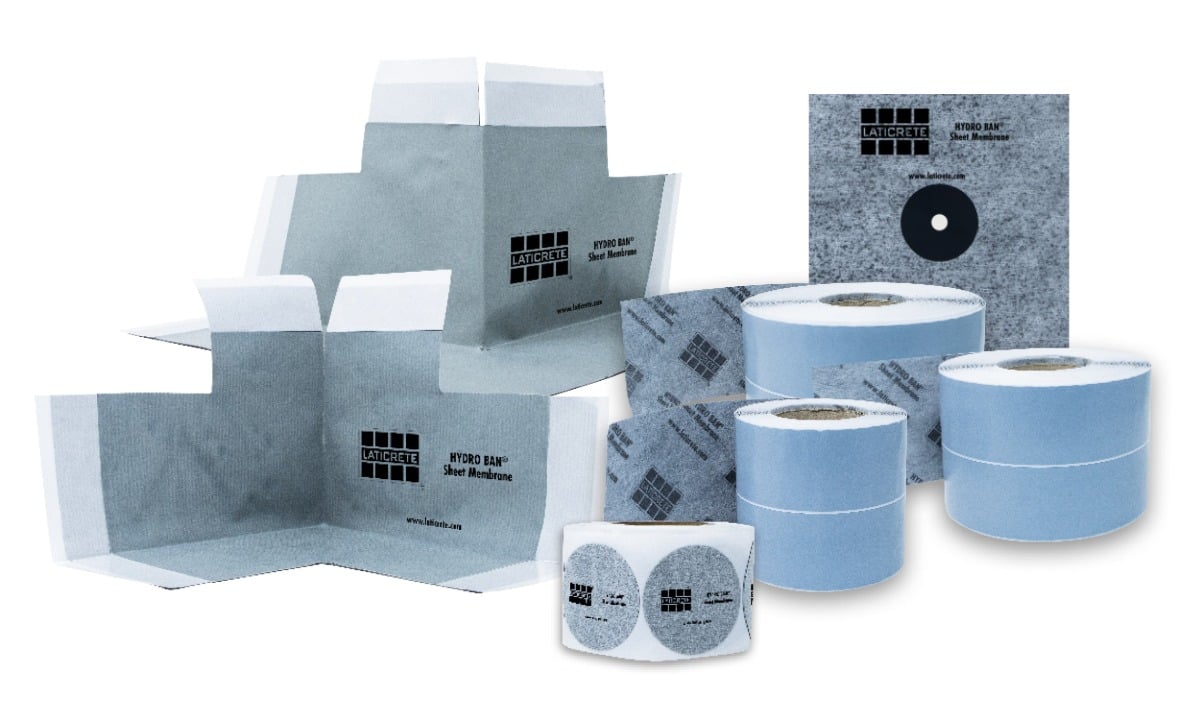
New Peel & Stick Sheet Membrane Accessories and Modular Shower Pans Deliver Economical Options for Installation Flexibility
Bethany, CT – LATICRETE, a manufacturer of globally proven construction solutions for the building industry, announces expansions to its HYDRO BAN® Shower System. New peel-and-stick sheet membrane accessories, modular shower pans, and preformed curbs make their debut. The new products are specifically designed to deliver streamlined waterproofing installation options for tile professionals and contractors.
Professional-Grade Peel & Stick Waterproofing Accessories
Seven new HYDRO BAN Peel & Stick Sheet Membrane Accessories are now available, delivering industry-first innovation for mess-free wet area installations. Each features a non-organic adhesive to circumvent the mold and mildew concerns that can arise with organic chemistries in wet areas. The expansion includes sealing tape in three sizes, preformed inside and outside corners, a pipe collar, and nail circle patches. Whether sealing around pipes, corners, or wall seams, the new accessories eliminate the need for additional adhesives or mortars for membrane installation.

“These accessories are designed to make waterproofing as intuitive as possible,” said Dustin Prevete, senior group product manager at LATICRETE. “Both experienced tile setters and those new to waterproofing will find a fast and reliable application delivered through a simple installation method: just peel, stick, and seal.”
The peel-and-stick format ensures consistent adhesion and flexibility that minimizes user error. When used in conjunction with other vapor resistant waterproofing solutions, they are an ideal choice for steam rooms, steam showers, bathrooms, and other high-humidity environments.
Modular, Pre-Waterproofed Pans for Efficient Shower Installations
The new HYDRO BAN Modular Pre-Sloped Shower Pan and HYDRO BAN Preformed Curbare compatible products engineered to significantly reduce shower installation time and complexity. The pans, available in seven common sizes with both center and off-center train options, feature a pre-applied waterproof coating and ship in a flat-packed, multi-piece format for flexible jobsite handling and field customization. They offer a more economical solution than the one-piece pan, allowing for additional design possibilities and less shipping and storage hassle. The new flat-edge curb is available in 24″, 48″, and 72″ lengths for enhanced compatibility and installation versatility.
“These are the only pre-waterproofed, modular, multi-piece shower pans available on the market today,” added Prevete. “They meet the growing demand for prefabricated shower pans that are easier to install, store, and ship, all while providing compatibility and warranty.”
The new modular pans and compatible flat-edge curbs offer a simplified alternative to custom pre-sloped units, offering an easier dry fit, and allowing contractors to adjust sizing on-site using built-in grid lines. These new products are fully compatible with the HYDRO BAN Shower System, allowing for cohesive, code-compliant installations.
System-Driven Simplicity, Proven Performance
The launch of both products represents the latest innovations from LATICRETE, the most trusted name in the industry. They echo the brand’s ongoing commitment to purpose-driven innovation, offering trusted waterproofing solutions that adapt to the needs of today’s jobsite. The HYDRO BAN line expansion in particular lets users select the premier solutions for a complete shower installation that align with their specific installation preferences.
All components comply with ANSI A118.10 standards and are fully compatible with the HYDRO BAN Shower System. When used together, these high-performance products also maintain the industry-leading LATICRETE system warranty, all while saving time and reducing labor.
For more information on the HYDRO BAN Shower System and its latest additions, visit www.laticrete.com/newproducts.


When the financial crisis of 2008 threatened to strain River Pools, Marcus Sheridan made a decision that not only saved his business but also reshaped how an entire industry thinks about marketing. Today, Sheridan is recognized as one of the foremost voices in digital sales and marketing strategy, a sought-after keynote speaker, and the author of They Ask, You Answer—a book that has become required reading for business owners looking to thrive in the digital age.
Sheridan co-founded River Pools in 2001 with two partners, starting with modest ambitions and a broad focus that included above-ground pools, hot tubs, and a retail store. Things were steady, but when the recession hit, the future of the company looked bleak.
“It looked like we needed to file bankruptcy,” he recalled. “It was during this time though, that I really started to just learn more about the way the digital buyer was evolving.”

The Strategy That Changed Everything
Instead of retreating, Sheridan dove into inbound marketing, drawing from resources like HubSpot, and quickly realized the path forward was through answering every single question potential buyers had ever asked.
“We said, ‘We’re gonna become like the Wikipedia of fiberglass pools. If anybody has a question, good, bad, or ugly, we’re gonna address it. We’re gonna own it with text and with video. We’re just gonna go full send on this.’”
That approach transformed River Pools into the most visited swimming pool website in the world. One of the most impactful moments came when he addressed the question most pool companies avoided: pricing.
“This is literally the first question everybody wants to know,” he said. “We were the first pool company in the world to address how much an in-ground pool costs on our website.”
That one article, written in 45 minutes at his kitchen table, has generated over $35 million in revenue.

Why the Industry Still Resists
Even with proof in hand, many contractors still avoid talking about pricing. Sheridan says it comes down to three myths: every job is different, competitors will use it against them, and customers will be scared off by the cost.
“Just doing that [explaining cost variables] induces a ton of trust,” he said. “And if your competitors don’t already know your pricing, they’re asleep at the wheel.” But perhaps the most critical insight is this: “What we know scares people away is when they can’t find any information on pricing.”
Creating Tools for the Modern Buyer
Today’s buyer doesn’t want to speak to a salesperson until they’re ready. Sheridan calls them the “self-service buyer,” and he built PriceGuide.ai to address their expectations.
He shared a case study from AE Pools & Landscape, which added a pricing estimator to its website in early 2024. “Last year they got 400 leads for the entire year. This year, they’ve gotten 1,200 leads so far. They closed 300 sales and have $5 million in the pipeline.”
That $200 tool, he said, took the company from $3 million to a projected $10 million in one year.

Where AI Is Taking Us Next
Sheridan believes AI will soon be a standard part of how consumers shop for contractors. “Homeowners are going to tell their AI assistant, ‘We want a swimming pool. Research the local companies, give us estimates, and tell us who you’d choose and why.’”
And the contractors who don’t have price estimators? “You don’t get the recommendation.”
He’s confident in his prediction: “Within five years, 90% of all swimming pool companies will have a pricing estimator on their website. Mark my words.”
Missed Opportunities in Video
Asked about the most common marketing mistake contractors make, Sheridan didn’t hesitate: “Video, lack of. It’s not close.”
He believes YouTube may soon be more important than a company website. One-to-one video, project documentation, and consistent short-form content all help create trust.
“The first time the homeowner sees the salesperson’s face shouldn’t be when they walk up the driveway. Shame on you if that’s the case.”
He emphasized the need to document every job. “We’re one of the most visual products in the world. If you’re not taking video of every job—before and afters, showing the process—you’re missing the boat.”
Why You Should Talk About the Competition
Sheridan doesn’t shy away from comparison content, even if it means steering a prospect toward a different product or competitor.
“If somebody asks, ‘Are there other pool builders you’d recommend?’—am I gonna ignore it? No, because they’re not ignoring it.”
River Pools even built a quiz tool that sometimes recommends vinyl or concrete—though they only sell fiberglass. “Why would we do that? Because that’s what buyers want. And I generate way more leads because of it.”
Becoming a Trusted Brand
In Sheridan’s view, being known and trusted isn’t optional—it’s survival. “The most important thing you can do for long-term success is build a known and trusted brand in your market. If you’re not known, and if you’re not trusted, you will fail.”
He urges contractors to stop outsourcing everything and start participating directly in brand-building.
“Stop waiting for somebody else to build your brand. You gotta have a dog in the fight. You gotta be the one to hit record often.”
Looking back, Sheridan says the tactics he used in 2009 wouldn’t be enough today. Text-based blog posts and a few YouTube videos were groundbreaking then, but social media, short-form video, and AI tools are now essential.
“You can’t just answer your customer questions on your website and think that will be enough. It’s not. You’re gonna have to do more than that. If you wanna scale to big numbers, you’ve gotta think more like a media company.”
But even as the tools evolve, the philosophy stays the same: meet buyers where they are.
“Everything your buyer wants—those are the same things you want. You wanna watch video when you’re researching? Meet the consumer where they are. It doesn’t matter if you think you have a face for video or not. You’re still gonna ask them for money, so you better hope they trust you.”
For Sheridan, the future belongs to pool companies that embrace that mindset. “You’re not just a construction company. You’re a sales and marketing company. If you’re not known and trusted, you won’t last. But if you lean into what your buyers really want, you’ll be amazed at how much your business can grow.”
Ready to take a deeper dive?
Listen to our entire conversation with Marcus Sheridan on the Pool Magazine Podcast.

Few names in the world of glass tile carry the prestige of Bisazza. Since its founding in 1956 in Vicenza, Italy, the company has grown into one of the most respected producers of luxury glass tile. Its collections combine craftsmanship with bold, contemporary design, and its collaborations with top architects and designers have helped cement Bisazza’s reputation as a leader in decorative surfaces.
But nowhere does Bisazza shine brighter than in swimming pools. When submerged, its mosaics reflect and refract light in ways that create depth, shimmer, and movement. It’s an effect that has made Bisazza a favorite for homeowners, designers, and builders who want pools that transcend utility and become works of art.

To better understand Bisazza’s role in luxury pool design, Pool Magazine spoke with Jimmy Reed, president of Rock Solid Tile, and Frank Vitori, founder of AquaBlu Mosaics. Reed is widely recognized as one of the top installers of all-tile swimming pools in the country. Vitori, through his online distribution platform, connects homeowners and builders with premium brands like Bisazza every day. Together, they provided insight into what makes the brand special in water.

Why Bisazza Belongs in Pools
For Reed, Bisazza has long been the gold standard. “To me, Bisazza represents really the cream of the crop, glass mosaic surfaces,” he said. That reputation isn’t just about the tile itself, but the support he has received over decades of working with the company. “From the beginning, they’ve been there for me with enthusiasm and support. Connection and communication are a big thing to me, and Bisazza has always delivered that.”
From the retail side, Vitori sees Bisazza’s appeal in how it resonates with pool buyers. “When customers ask for Bisazza, it’s usually for pools,” he explained. “They want those deep blues, aquas, and iridescent blacks that make the water look incredible.”
Part of the allure lies in the ability to customize. Reed noted that most of his Bisazza projects either draw from the Le Gemme series or involve custom blends. “Sometimes there are stock blends that fit beautifully,” he said. “But I like to tweak those stock blends just a little—add or take something away—to make it personal for the client.”
Vitori confirmed the same demand. “North America stocks well over 50 SKUs now, shipping out of New Jersey,” he said. “The real sellers are definitely the blends—dark blue, aqua, iridescent blacks. Higher-end clients don’t mind taking the time to customize. That aspect really appeals to them.”
Customization in pools is about more than color — it’s about how the pool interacts with its surroundings. Homeowners often want the water to mirror the sky, or for the surface to pick up tones from the landscaping and architecture. Vitori said it’s those desires that frequently drive specifiers to Bisazza: “People come to us with a vision. Maybe they want the pool to look like the Caribbean, or they want something dark and dramatic. Bisazza has the palette to make that happen.”

For many homeowners, the moment of truth comes when they first see water flowing over their chosen tile. Reed said that reaction is one of the reasons he continues to use Bisazza. “The excitement when the pool is finally filled — you can see it on their faces. The way the colors shift under water, it feels alive. It’s why we do this.”
Despite its luxury reputation, both men cautioned against assuming Bisazza is out of reach. “One misconception is that Bisazza is always outrageously expensive,” Reed said. “That’s not true. They have several lines at different price points. Some are very reasonable, and just as beautiful as the high-end series.”
Vitori agreed. “From a distributor’s standpoint, it’s a luxury product, but still quite achievable,” he noted.
Context also matters. Reed explained that while Bisazza is perfect for many modern, high-end settings, it isn’t right for every home. “If I’m working on a California bungalow, Bisazza may not fit. But for modern or high-end homes, it definitely belongs. When it’s presented, it’s usually an appropriate fit.”
The Technical Side of Pool Installations
Installing glass mosaics in a swimming pool is a demanding craft, and both Reed and Vitori were quick to point out the challenges that make proper technique essential.
Translucent glass, for example, can magnify imperfections. “Personally, I try to stay away from translucent,” Reed said. “Anything that happens under the glass is visible. It’s not a failure, but in a pool, every bubble and impurity is magnified. Technique matters—using the right products like Laticrete’s Litokol Epoxy and ensuring 100% coverage. But it’s still one more step of risk.”
Vitori sees it similarly. “The Opera series is a popular collection, but to Jimmy’s point, it’s translucent and a more difficult look to pull off in all-tile pool applications,” he explained. “I usually recommend it exclusively for waterlines, not full pool interiors.”
When it comes to adhesives and grout, Reed is unequivocal. “We prefer epoxy,” he said. “The bond strength combined with flexibility is key. Glass moves differently than the substrate. That’s the biggest issue with glass tile installations.”

He is also an advocate for newer grout technologies. “Starlike Evo is easier to use, environmentally safer, and more flexible than other epoxy grouts,” Reed said. “But there is a learning curve. You need to read the specs and lean on technical support before jumping in.”
Vitori highlighted how grout selection can enhance Bisazza’s brilliance. “Starlike Crystal is also known as the ‘chameleon grout,’” he noted. “With Bisazza, it grips and radiates the color of the tile. When used correctly, the results are spectacular.”
Beyond materials, installation demands painstaking attention to detail. Reed takes pride in the craftsmanship his team brings to steps, benches, and transitions. “Every job is alive,” he said. “Curves, steps, complex geometry—we adapt on site. Layout is critical. Each corner can take hours, but the end results are what make Bisazza such a standout material to work with.”
But it’s not only about beauty on day one — longevity is where Bisazza proves its worth. Reed emphasized that poor installations can haunt homeowners years down the line, even when they’ve chosen a premium product. “It’s not just about how it looks when it’s finished. You want it to look that way ten, fifteen years later. If you don’t use the right products or if you rush the layout, it will come back to bite you.” With Bisazza, he explained, the material will stand the test of time, but only when paired with the right adhesives, grout, and craftsmanship to let it perform at its best
Vitori agreed, adding that cutting corners is one of the most common mistakes he sees. “Some installers don’t take the time to get 100% coverage. Others don’t understand paper-face mounting. And when things go wrong, it’s not just cosmetic — it’s structural. That’s why experience matters so much with Bisazza.”

Pools as Showpieces
Bisazza’s range makes it suitable for everything from quiet elegance to bold artistry.
One Los Angeles project stands out in Reed’s memory. “It was a long rectangular pool, one consistent depth, very clean and classic,” he recalled. “We explored custom blends, but the client settled on the stock Elide blend. It gave a timeless, elegant look that won’t feel visually dated over time.”
Another project pushed boundaries by turning a painting into a pool interior. “We worked with art dealers whose daughter was an accomplished artist,” Reed said. “We digitized one of her paintings with Bisazza, scaled it to the pool floor, and created custom gradient blends on the walls. That pool became an absolute showstopper.”
The Damasco Opale design offered a different opportunity for creativity. “It was a dark blue and black mix, very bold,” Reed explained. “We redesigned the pool interior to accommodate it—making it shallower, changing transitions, creating a graceful slope. The result was striking, but still clean and beautiful.”
Guidance for Builders and Homeowners
For builders and homeowners considering Bisazza, both men stressed the importance of working with experienced professionals.
“Ask them: do you know what you’re doing? And can you prove it?” Reed advised. “Experience is everything. I’ve even seen people install Bisazza backwards, with the paper to the wall. It still happens.”
Vitori agreed. “That’s why the right installer matters so much,” he said.
Both also cautioned that Bisazza is best when thoughtfully specified. Reed put it simply: “If a design team has already specified Bisazza, it’s not my position to change it. But when I’m presenting materials, I’ll only suggest it when it’s appropriate.”
For homeowners worried about cost, both Reed and Vitori stressed that Bisazza is not out of reach. “Some lines are very reasonably priced,” Reed said. “Beauty isn’t just in the top tier.”
The Future of All-Tile Pools
Asked about trends, Reed was confident that glass mosaics — and Bisazza in particular — aren’t going anywhere. “People always ask what’s next,” he said. “I don’t see glass mosaic tile ever going away. It’s a tried-and-true medium for water features going back thousands of years. Large format glass and thin porcelain are coming on strong, but glass mosaics will stay in the lead. Bisazza has earned its reputation with installers in this regard.”
Vitori sees the same trajectory. “Customization, versatility, timeless beauty — Bisazza checks all the boxes for designers and homeowners looking to make a pool truly special.”
The future of all-tile pools, both agreed, is tied to larger design shifts in outdoor living. As homeowners invest in creating backyard environments that match the sophistication of their interiors, pools are no longer just recreational spaces — they are showpieces. Reed noted, “People want pools that match the architecture of the home, that feel like an extension of the design. Bisazza’s glass mosaics certainly give you that flexibility.”
Vitori added that durability is part of the appeal. “When someone invests in Bisazza, they’re not just buying a look — they’re buying performance. Ten years, twenty years from now, if properly maintained, that tile is still going to look amazing.”
Ready to take a deeper dive?
Listen to our entire conversation with Jimmy Reed of Rock Solid Tile and Frank Vitori of Aqua Blu Mosaics on the Pool Magazine Podcast.


Download the NEW Pool Magazine App
 Sponsored Advertisement
 AquatiCare™: Proactive Pool Maintenance You Can Count On
 RB Retail & Service Solutions adds DocuSign to Software
 BSquared offers New Free Standing Sunledge
 Family Leisure Announces Exclusive Retail Partnership with Jacuzzi
  Blue Wave Recall on Over 13,000 Above Ground Pools
 Tile Heritage Foundation embraces FOUR NEW BOARD MEMBERS joining the current Board of Directors!
 Coverings 2026 Previews Conference Education Ahead of Las Vegas Show

 Pentair Dives Into National Water Safety Month As Program Sponsor
 Best Prime Day Pool Deals of 2025
 Happy Pool & Spa Scales to Become One of the Largest Pool Service Providers on the Space Coast
 California Pool Industry Looking at Another Drought
 The Rise of pH
 We Asked AI To Imagine The Most Beautiful Pools In The World
 Pool Industry New Spa and Pool Products
 Sponsored Advertisement
 Sponsored Advertisement
-
 Pool News2 weeks ago
Blue Wave Recall on Over 13,000 Above Ground Pools
-

 Industry News4 weeks ago
Latham Group Appoints Sean Gadd as Chief Executive Officer
-
 News3 weeks ago
Built on Relationships: Pentair Pool’s New Sales Structure and the People Who Make It Work
-

 Pool Service News4 weeks ago
Easton Select Group Adds Harrison Pool & Spa, Expanding Service Across MetroWest Boston
-

 Press Releases4 weeks ago
FSPA Wins Big at Florida Building Commission
-

 News4 weeks ago
Aquadei Technologies Announces Strategic Alliance with the Master Pool Guild
-

 Features4 weeks ago
Adopting Engineered, Reliable Pool Waterproofing Innovations — Why North America pool builders are shifting toward PVC membranes
-

 Manufacturer4 weeks ago
RicoRock® Offers New Temple Stone Firepit