


Pool News
Germs In Pools Versus Natural Bodies of Water, Which is Worse?
Which has more germs, a natural body of water or a swimming pool? Experts say there are more germs in a natural body of water than in a pool.


When it comes to swimming outdoors most people aren’t thinking about germs. After all, going for a swim in the local lake or river has gained tremendous popularity in recent years. For many, the allure of swimming outdoors provides the opportunity to bask in the sunshine, breathe in fresh air, and immerse oneself in the tranquil surroundings of the great outdoors. Aside from the locale, swimming outdoors also offers stress relief, the release of endorphins, calorie burning, and muscle exercise.
However, along with the joys of swimming in natural waters come inherent dangers. Unlike swimming pools, where conditions are carefully controlled, outdoor bodies of water pose unique risks. Swimmers are more vulnerable to tides, currents, and swells, which can be unpredictable and powerful. Additionally, the water may harbor hidden perils in the form of harmful bacteria and bugs. In certain areas, untreated sewage finds its way into rivers, lakes, and seas, making it challenging to find a safe spot for a refreshing dip.
One of the significant differences between swimming in a pool and swimming in natural waters is the level of water monitoring. Pools undergo regular testing and treatment to maintain cleanliness, whereas the composition of outdoor waters is constantly changing. Chemicals can leach into natural waters from nearby farms or industrial areas, and animals may defecate in the water, further increasing the risk of contamination. Moreover, the presence of toxic agents may not be readily apparent, and there might be no signposts warning of local dangers. When in doubt about the chemical safety of outdoor waters, it is better to err on the side of caution and avoid entering them. Trusting one’s instincts is crucial— if the water appears or smells off, it is wise to steer clear.

Another hazard specific to swimming in natural bodies of water is the presence of blue-green algae. This type of bacteria is naturally found in lake ecosystems, and during warm summers, it tends to multiply rapidly, forming a powdery green scum, known as a bloom, on the water’s surface. Unfortunately, these blooms can release toxins harmful to humans and occasionally fatal to pets. Swimmers who come into contact with or swallow water containing toxin-releasing algal blooms may experience skin rashes, eye irritation, severe gastrointestinal problems, fever, and muscle and joint pain.
Which Has More Germs a Natural Body of Water or a Swimming Pool?
In terms of swimming and germs, bacteria and viruses are the biggest risks. It’s a fact that swimming in natural waters is associated with a higher likelihood of contracting illnesses such as diarrhea. Sewage contamination is a common culprit, and swallowing contaminated water exposes swimmers to bacteria and viruses such as E. coli, Norovirus, and Shigella. Germs that cause other RWI’s include Naegleria fowleri and Pseudomonas. Additionally, rodents living in sewers near freshwater rivers or canals can carry the bacterial pathogen Leptospira, which causes Leptospirosis or Weil’s disease. The infection can occur when a swimmer ingests soil or water containing urine from infected animals or when it enters their eyes or a cut. Leptospirosis can lead to liver and kidney damage and, if left untreated, can be fatal. Swimmers can develop flu-like or jaundice symptoms within two weeks of swimming in a river, lake, pond, or other natural body of water.

Pools Are Far From Germ-Proof
This is not to say that swimming pools are necessarily germ-proof, quite the contrary, far from it. The primary cause of RWI’s (recreational water illness) in both treated and untreated swimming locations shared a common source: fecal matter, particularly human feces. Most germs responsible for these infections are transmitted through the fecal-oral route. In this process, an infected person swims in the water, and the pathogens are released from their anus into the water. Subsequently, another individual may swallow the contaminated water or inhale aerosolized droplets containing the pathogens.
For example, approximately 80% of illnesses contracted from treated water were attributed to Cryptosporidium, a parasite that resides in animal intestines and spreads by being excreted through feces into water sources. Although the illnesses resulting from untreated water were more diverse, the primary culprits still originated from fecal matter. Norovirus, a highly contagious virus transmitted through vomit and feces, accounted for about 30 percent of all cases. Additionally, the most common bacterial infection, Shigella, spreads through diarrhea.
While chlorine can effectively control many other pathogens that cause illnesses in pools and spas, Cryptosporidium can survive in chlorinated water for an extended period, surpassing a week. This prolonged survival allows the parasite to spread easily among swimmers in the contaminated water and subsequently infect others who come into contact with that water. Such scenarios contribute to the occurrence of outbreaks and the rapid transmission of the parasite.
Considering all these factors, it becomes evident that, despite occasional instances of urine and feces in pools, managed swimming pools still provide a much safer environment for swimming. When it comes to germs, pools with proper maintenance, including chlorine disinfection and pH regulation, are significantly less likely to harbor infectious microorganisms. Furthermore, the presence of trained lifeguards and safety equipment in pools reduces the risks of injuries and drowning incidents.
While swimming in natural bodies of water offers a captivating and immersive experience, it comes with inherent risks due to the presence of potentially harmful microbes and unpredictable water conditions. Swimming pools, on the other hand, provide a controlled and sanitized environment for recreational swimming. Therefore, when it comes to ensuring safety, managed swimming pools offer a more reliable option. They undergo regular monitoring and treatment, reducing the likelihood of waterborne illnesses and providing a safer space for swimmers. So, while the allure of swimming in a natural body of water is undeniable, it’s important to weigh the risks and take necessary precautions to ensure a pleasant and safe swimming experience.


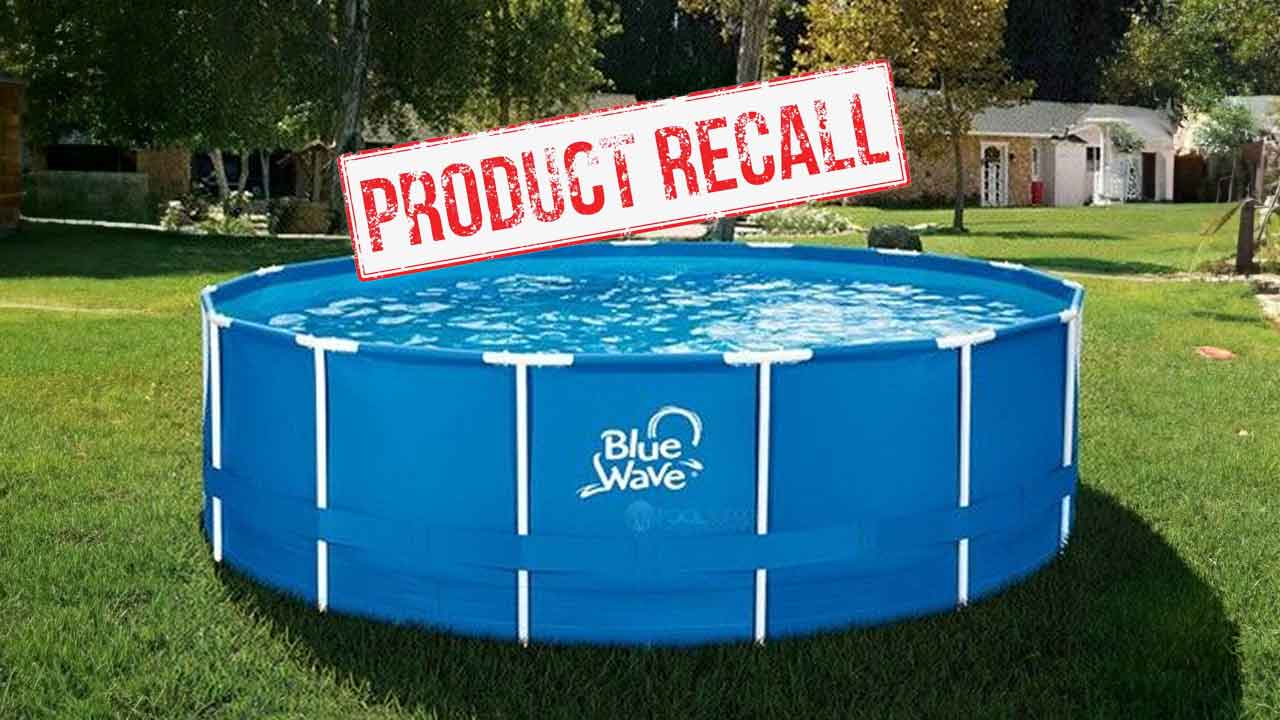
Blue Wave has issued a recall affecting multiple above-ground swimming pool models after federal safety officials identified a potential drowning hazard involving children.
The recall, announced by the U.S. Consumer Product Safety Commission (CPSC) on December 18, covers approximately 13,400 Blue Wave brand above-ground pools that are 48 inches deep or taller and utilize an exterior compression strap as part of the pool’s frame system.
Reason for the Recall
The affected pools feature a compression strap positioned around the outside of the vertical support poles. While the strap is designed to provide structural stability, the CPSC determined that its placement may unintentionally create a foothold.

According to the agency, this foothold could allow children to climb into the pool, even when the ladder has been removed, creating a risk of unsupervised access and potential drowning.
No injuries or fatalities have been reported in connection with the recalled products at the time of the announcement.
Affected Models
The recall applies to the following Blue Wave above-ground pool models:
• Blue Wave 15-Ft Rd 48-In Active Frame Pool
• Blue Wave 18-Ft Rd 52-In Active Frame Pool
• Blue Wave 18-Ft Rd 52-In Dark Cocoa Wicker Frame Pool
• Blue Wave 24-Ft Rd 52-In Dark Cocoa Wicker Frame Pool
• Blue Wave Rustic Cedar 15-Ft Round 48-In Deep Frame Swimming Pool Package W/Cover
• Blue Wave Rustic Cedar 18-Ft Round 52-In Deep Frame Swimming Pool Package W/Cover
• Blue Wave 18-Ft Round 52-In Gray Rattan Swimming Pool Package W/Cover
• Blue Wave 18-Ft Round 52-In Espresso Wicker Swimming Pool Package W/Cover
• Blue Wave 15-Ft Round 48-In Navy Blue Frame Swimming Pool Package W/Cover
• Blue Wave 18-Ft Round 52-In Navy Blue Frame Swimming Pool Package W/Cover
• Blue Wave 15-Ft Round 48-In Aspen Swimming Pool Package W/Cover
• Blue Wave Mocha Wicker 18-Ft Round 52-In Deep Swimming Pool Package With Cover
• Blue Wave Mocha Wicker 24-Ft Round 52-In Deep Swimming Pool Package With Cover
• Blue Wave Laguna 15-Ft Round 48-In Deep Swimming Pool Package With Cover
• Blue Wave Laguna 18-Ft Round 52-In Deep Swimming Pool Package With Cover
All affected models share a common design feature: an exterior compression strap that encircles the pool’s vertical supports.
Sales Channels and Distribution
The recalled pools were sold nationwide from January 2021 through July 2025 through a mix of big-box retailers, sporting goods stores, and online marketplaces, including:
• The Home Depot
• Lowe’s
• Dunham’s Sports
• Amazon
• Walmart
• Wayfair
Retailers have been notified to halt sales of affected models and to direct customers to the manufacturer’s recall remedy.
What Dealers and Retailers Should Know
For dealers and retail partners, the recall highlights the importance of prompt inventory review and customer outreach. Any remaining unsold stock matching the recalled models should be removed from the sales floor and distribution channels immediately.
Retailers that sold affected units during the recall period may see an increase in customer inquiries regarding eligibility, repair kits, and interim safety measures. Clear communication at the point of contact will be critical, particularly around the distinction between structural components and ladders, which many consumers assume are the primary access risk.
Service professionals and retail staff should also be prepared to explain that the recall does not involve a full product replacement, but rather a manufacturer-provided modification designed to eliminate the foothold while maintaining frame integrity.
Manufacturer Remedy
Blue Wave is offering a free repair kit to affected pool owners. The kit replaces the exterior compression strap with a lower-profile system installed closer to ground level. Once the repair is completed, the original strap can be removed.
Until the repair is installed, the manufacturer and CPSC recommend that pool owners prevent unsupervised access to the pool area or drain the pool temporarily.
Dealers and service professionals should advise customers not to remove or cut the compression strap prior to installing the repair kit, as doing so could compromise the pool’s structural stability.

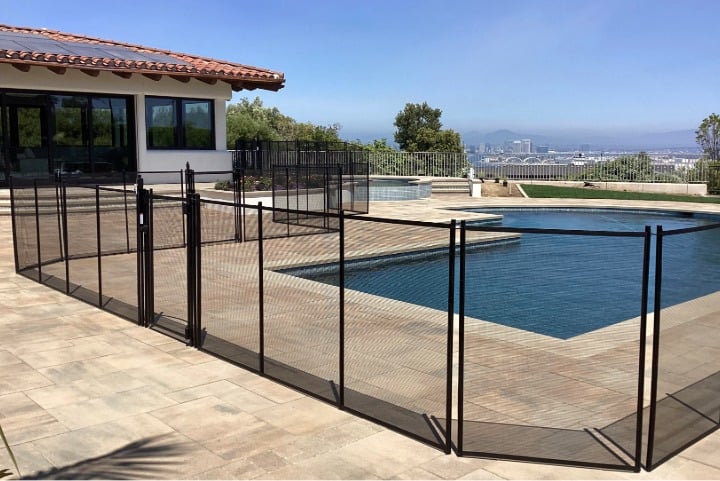
Poolsafe LLC, offers new mesh, removable safety fencing designed to be installed around any pool shape or size. Uses patented, transparent, large-hole ClearGuard™ Mesh for better visibility into the pool area, while also blending the fence into backyard. Lockable, self-closing Triton™ gate features a curved top bar to help prevent climbing. Unique Tri-Pod Truss system keeps gate aligned with daily usage. Available in 4ft and 5ft heights, in black, brown, beige, or gray colors.
https://poolsafe.com/
(888) 489-2282

Latham Group, Inc. (Nasdaq: SWIM), the largest designer, manufacturer, and marketer of in-ground residential swimming pools in North America, Australia, and New Zealand, appoints Sean Gadd as the company’s new President and Chief Executive Officer as part of a CEO transition that will take effect on January 5, 2026. The appointment follows a comprehensive search as part of a succession planning process led by the Board and current CEO Scott Rajeski, who will be retiring from Latham and will serve as a special advisor to the company.
Sean Gadd comes to Latham following a 21-year career at James Hardie. He most recently served as President of North America since 2022, where he has had full P&L responsibility for James Hardie’s largest regional business. Prior to his role as President of North America, Sean served as Executive Vice President, North America, Commercial (2018-2022) and Executive Vice President, Markets and Segments, North America (2015-2018) at James Hardie, leading the front end of the business across product, marketing, and sales. Sean has been instrumental in spearheading James Hardie’s substantial organic net sales growth since 2022, driving material conversion and deeper market penetration through a refined go-to-market strategy targeting end-users via channel partners. Sean brings experience that is directly comparable to Latham’s material conversion and Sand State initiatives, and his demonstrated success in driving strategic growth will be invaluable for Latham and its shareholders.
James E. Cline, Chairman, commented, “Sean is known as a strong leader and brand-builder and has an impressive track record of driving growth at James Hardie. We are thrilled that he has accepted the CEO role at Latham, and the Board believes Sean will be able to leverage his robust commercial experience, sector knowledge, and branding expertise to accelerate our ability to continue to gain share and further the conversion to fiberglass from concrete pools.”

“I am pleased to be joining Latham and am looking forward to building on its achievements to date. This is an excellent opportunity for me to utilize my experience in the building products category to drive further market penetration and adoption of Latham’s top-quality products and greater recognition for its superior service standards,” Mr. Gadd commented.
Mr. Gadd will also become a member of Latham’s Board of Directors, replacing Mr. Rajeski, who is resigning from the Board concurrently with his retirement.
Mr. Cline commented, “On behalf of the Board of Directors, I want to express our deep appreciation for the contributions that Scott Rajeski has made to Latham during his long tenure at the company, first as Chief Financial Officer and, since 2017, as President and Chief Executive Officer. Under his leadership and that of his executive and operating teams, the company went public in April of 2021 and has experienced substantial growth, demonstrated resilience within a difficult industry environment, and built a strong financial position.”
Mr. Rajeski noted, “It has been a privilege to serve as the President & CEO of Latham alongside the talented executive and operating teams that we have at the company. Together, we have advanced the awareness and adoption of fiberglass pools and autocovers, while implementing production and related efficiencies that have streamlined our operations. I am proud to be retiring as CEO of Latham with the company in a strong financial position and in very capable hands. Throughout my conversations with Sean, I have been very impressed with his leadership capabilities and background, and I am confident that he will bring a unique skillset that will allow Latham to continue to outperform the industry, gain further traction in the important Sand States, and remain an acquirer of choice.”
About Latham Group, Inc.
Latham Group, Inc., headquartered in Latham, NY, is the largest designer, manufacturer, and marketer of in-ground residential swimming pools in North America, Australia, and New Zealand. Latham has a coast-to-coast operations platform consisting of approximately 1,850 employees across around 30 locations.


Download the NEW Pool Magazine App
 Sponsored Advertisement
 AquatiCare™: Proactive Pool Maintenance You Can Count On
 RB Retail & Service Solutions adds DocuSign to Software
 BSquared offers New Free Standing Sunledge
 Family Leisure Announces Exclusive Retail Partnership with Jacuzzi
  Blue Wave Recall on Over 13,000 Above Ground Pools
 Tile Heritage Foundation embraces FOUR NEW BOARD MEMBERS joining the current Board of Directors!
 Coverings 2026 Previews Conference Education Ahead of Las Vegas Show

 Building a Successful Pool and Spa Business
 Trichlor Shortage in the Pool Industry
 Coverings 2023 Special Programming and Activations Announced
 BioLab Hires Brittany Brock as new Marketing Manager
 Hayward® Expands Presence in Outdoor Living Market with Acquisition from Halco Lighting Technologies®
 Pool Service Technician Saves Elderly Couple
 Hayward Earns 2022 ENERGY STAR® Partner of the Year Award
 Sponsored Advertisement
 Sponsored Advertisement
-
 Pool News2 weeks ago
Blue Wave Recall on Over 13,000 Above Ground Pools
-

 Industry News4 weeks ago
Latham Group Appoints Sean Gadd as Chief Executive Officer
-
 News3 weeks ago
Built on Relationships: Pentair Pool’s New Sales Structure and the People Who Make It Work
-
 Pool Service News4 weeks ago
Easton Select Group Adds Harrison Pool & Spa, Expanding Service Across MetroWest Boston
-

 Press Releases4 weeks ago
FSPA Wins Big at Florida Building Commission
-

 News4 weeks ago
Aquadei Technologies Announces Strategic Alliance with the Master Pool Guild
-

 Features4 weeks ago
Adopting Engineered, Reliable Pool Waterproofing Innovations — Why North America pool builders are shifting toward PVC membranes
-

 Manufacturer4 weeks ago
RicoRock® Offers New Temple Stone Firepit