


Pool News
California Pool Industry Looking at Another Drought
Pool industry braces as California begins instituting new Water Regulations


Folks in the pool industry still remember the bleak days of 2015 when there were mandatory water restrictions in place across California. Six years ago the governor hoped to reduce water consumption by 25% by targeting the pool industry. Leaders were able to unify and fight back to change the misconception that pools are water wasters.
The perception amid many homeowners that were facing all these crazy new water restrictions at the time was that inground swimming pools were wasteful uses of water. An alarming number of homeowners had taken to filling in their swimming pools as a result and new pool construction had slowed to a crawl in California.
Although swimming pool construction has seen a tremendous resurgence with the Covid-19 pandemic, analysts fear that the bubble for pool construction is about to pop. Rising costs for construction materials, shortages of labor and ongoing price increases from the leading pool manufacturers have cut into the gains the swimming pool industry has made with consumers over the last 2 years. Issues like the ongoing drought in California aren’t helping matters.


California’s Drought & The Pool Industry
It’s not on the national radar yet, but California is facing a serious drought and there are growing concerns that it could adversely impact the pool industry yet again. Although Californians are not yet facing the mandatory restrictions they were in 2015, residents now find themselves confronted with a patchwork of new regulations.
Towns reliant on the hard-hit Russian River have imposed strict mandates in preparation for an impending crisis which they feel is coming. There is growing concern that many coastal areas may have to truck in water simply to get through the year. Simultaneously, most cities in California are preparing to weather the summer with only voluntary cuts and limited limitations, many of which are carryovers from prior droughts.
“We have a patchwork in part because (water) is managed locally,” said Felicia Marcus, who was responsible for leading the state of California’s response to the 2012-2016 drought under former Gov. Jerry Brown.
“The situation is dire in some places, and those places are making calls for higher levels of conservation,” Marcus said. “In other places, they may be prepared, or they may be dreaming.”
Tracy, CA has traditionally been a good barometer on whether or not a drought may impact the pool industry. Residents in Tracy, CA were just told they will only be allowed to water their lawns on select days after the city council voted unanimously to impose more restrictions. There are 5 stages of water restrictions they impose, right now they are in the 3rd. The 4th level has restrictions on washing cars, while the 5th level restricts residents from refilling their pools without a separation tank and recovery system.


How bad is the drought right now in California?
This year, California regulators announced that they would deliver only 5% of the State Water Project’s supplies because of extreme drought conditions. This year’s drought is the most dire situation Mendocino County has faced in decades. At the end of May, Lake Mendocino hit a record low of just 40% capacity. Earlier this month, the county faced projections that the reservoir could be dry by the end of the year.
“The aggressiveness and the severity of this drought, the way the drought is increasing is much greater than the previous drought,” Aaron Baker, chief operating officer at Valley Water, said. “Conditions will be far worse in 2022 if drought conditions continue and no action is taken.”

The Real World Concerns of Extreme Drought
This extreme drought in California has been quickly drying up reservoirs and putting a tremendous strain on electrical grids. This mega drought has depleted the states 1,500 reservoirs statewide by over 50%. This Friday, over 85% of the state was classified as officially being in an extreme drought according to National Integrated Drought Information System. The problem is so severe that a recent warning said that the drought may kill nearly all juvenile salmon in the Sacramento river this year. Given the short 3 year life cycle of salmon, a one year wipe out could greatly increase the chances of extinction for the species.
While Governor Newsome has not yet instituted the 25% mandatory restrictions of 2015, in executive order signed on Thursday he encouraged all Californians to reduce water use by 15% as 50 of the state’s 58 counties are now a drought-related state of emergency.

The PHTA Leads The Charge in Fighting Fake Drought News
One of the biggest challenges the pool industry faced back in 2015 was getting solidarity to fight negative publicity and connotations that inground pools were the equivalent of wasting water. The Pool & Hot Tub Alliance in coordination with the California Pool & Spa Association have gone to great measures in recent years releasing information that specifically addresses the myths and misinformation associated with inground pool water usage.
- 85% of California’s water supplies are dedicated to agricultural use, 10% is dedicated to personal usage, and the remaining 5% for industrial and commercial purposes. If agricultural conservation measures were instituted to cut use by 5%, the amount available for domestic & commercial usage would increase by 1/3.
- In a community where 800 new pools are built annually at an average cost of $20,000 each, about 33 percent of that $16 million (which comes to more than $5 million) represents wages of approximately 450 workers that contribute to the local economy.
Restricting Water Usage for Pools Is Not a Logical Answer To a Drought
In a state hard hit by Covid-19 restrictions and eager to get back to work, now is conceivably the worst possible time for California to begin instituting water restrictions on swimming pools. The pool industry accounts for hundreds of millions of dollars in revenue for the state of California. During the recent pandemic the industry went to great lengths to remain operational in order to support the communities which it serves. It’s important to remember that in times of drought, that pools aren’t just a luxury, they are the lifeblood for many California residents and business owners.

Let’s Look At The Numbers
California may be unprepared for a drought but it’s important to realize that instituting water conversation can hurt the pool industry and impact public perception like it did 6 years ago.
The amount of revenue an inground pool generates in terms of water usage versus what agricultural usage can produce for the same amount of water simply isn’t an apples to apples discussion and never will be unless California farmers start growing diamonds.
A study conducted by the City of Sacramento concluded that lawn irrigation use equals 49 inches per year and that swimming pool requirements are 39.6 inches per year, less walkway and decking areas equal to the actual pool area, which reduces total pool water use to 20 inches per year.
Obviously, regulating or prohibiting pool construction or the filling of swimming pools would have large-scale ramifications on the pool industry. Instituting restrictions will undoubtedly effect the taxes paid by these businesses and wage earners. Water restrictions impacting pools would also impact the amount of money consumers spend in the local economy. In this humble Editors opinion, there are more obvious places to conserve water than looking at soft targets like the pool industry which actually stimulate the economy and employ a good percentage of Californians.









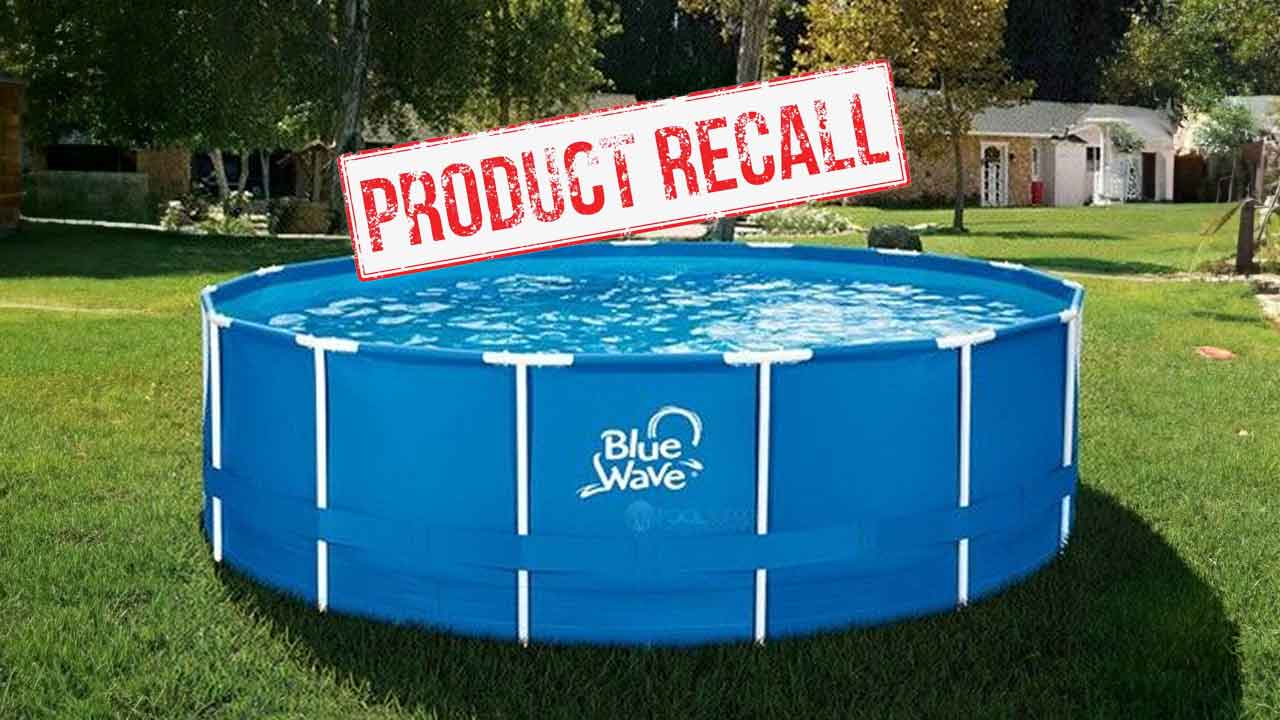
Blue Wave has issued a recall affecting multiple above-ground swimming pool models after federal safety officials identified a potential drowning hazard involving children.
The recall, announced by the U.S. Consumer Product Safety Commission (CPSC) on December 18, covers approximately 13,400 Blue Wave brand above-ground pools that are 48 inches deep or taller and utilize an exterior compression strap as part of the pool’s frame system.
Reason for the Recall
The affected pools feature a compression strap positioned around the outside of the vertical support poles. While the strap is designed to provide structural stability, the CPSC determined that its placement may unintentionally create a foothold.
According to the agency, this foothold could allow children to climb into the pool, even when the ladder has been removed, creating a risk of unsupervised access and potential drowning.
No injuries or fatalities have been reported in connection with the recalled products at the time of the announcement.
Affected Models
The recall applies to the following Blue Wave above-ground pool models:
• Blue Wave 15-Ft Rd 48-In Active Frame Pool
• Blue Wave 18-Ft Rd 52-In Active Frame Pool
• Blue Wave 18-Ft Rd 52-In Dark Cocoa Wicker Frame Pool
• Blue Wave 24-Ft Rd 52-In Dark Cocoa Wicker Frame Pool
• Blue Wave Rustic Cedar 15-Ft Round 48-In Deep Frame Swimming Pool Package W/Cover
• Blue Wave Rustic Cedar 18-Ft Round 52-In Deep Frame Swimming Pool Package W/Cover
• Blue Wave 18-Ft Round 52-In Gray Rattan Swimming Pool Package W/Cover
• Blue Wave 18-Ft Round 52-In Espresso Wicker Swimming Pool Package W/Cover
• Blue Wave 15-Ft Round 48-In Navy Blue Frame Swimming Pool Package W/Cover
• Blue Wave 18-Ft Round 52-In Navy Blue Frame Swimming Pool Package W/Cover
• Blue Wave 15-Ft Round 48-In Aspen Swimming Pool Package W/Cover
• Blue Wave Mocha Wicker 18-Ft Round 52-In Deep Swimming Pool Package With Cover
• Blue Wave Mocha Wicker 24-Ft Round 52-In Deep Swimming Pool Package With Cover
• Blue Wave Laguna 15-Ft Round 48-In Deep Swimming Pool Package With Cover
• Blue Wave Laguna 18-Ft Round 52-In Deep Swimming Pool Package With Cover
All affected models share a common design feature: an exterior compression strap that encircles the pool’s vertical supports.
Sales Channels and Distribution
The recalled pools were sold nationwide from January 2021 through July 2025 through a mix of big-box retailers, sporting goods stores, and online marketplaces, including:
• The Home Depot
• Lowe’s
• Dunham’s Sports
• Amazon
• Walmart
• Wayfair
Retailers have been notified to halt sales of affected models and to direct customers to the manufacturer’s recall remedy.
What Dealers and Retailers Should Know
For dealers and retail partners, the recall highlights the importance of prompt inventory review and customer outreach. Any remaining unsold stock matching the recalled models should be removed from the sales floor and distribution channels immediately.
Retailers that sold affected units during the recall period may see an increase in customer inquiries regarding eligibility, repair kits, and interim safety measures. Clear communication at the point of contact will be critical, particularly around the distinction between structural components and ladders, which many consumers assume are the primary access risk.
Service professionals and retail staff should also be prepared to explain that the recall does not involve a full product replacement, but rather a manufacturer-provided modification designed to eliminate the foothold while maintaining frame integrity.
Manufacturer Remedy
Blue Wave is offering a free repair kit to affected pool owners. The kit replaces the exterior compression strap with a lower-profile system installed closer to ground level. Once the repair is completed, the original strap can be removed.
Until the repair is installed, the manufacturer and CPSC recommend that pool owners prevent unsupervised access to the pool area or drain the pool temporarily.
Dealers and service professionals should advise customers not to remove or cut the compression strap prior to installing the repair kit, as doing so could compromise the pool’s structural stability.

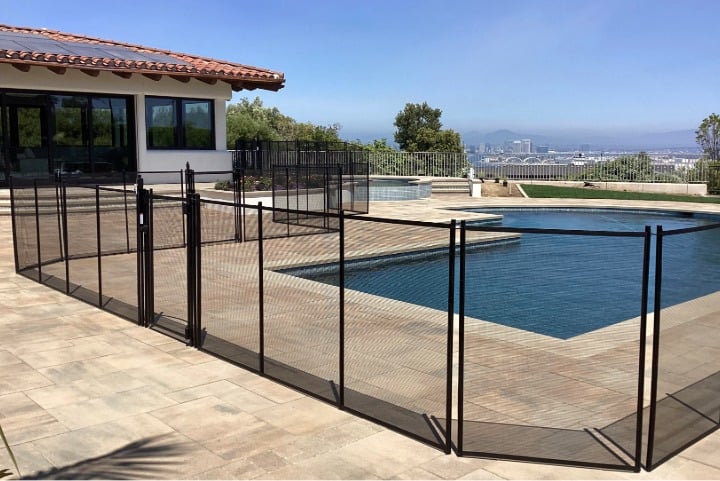
Poolsafe LLC, offers new mesh, removable safety fencing designed to be installed around any pool shape or size. Uses patented, transparent, large-hole ClearGuard™ Mesh for better visibility into the pool area, while also blending the fence into backyard. Lockable, self-closing Triton™ gate features a curved top bar to help prevent climbing. Unique Tri-Pod Truss system keeps gate aligned with daily usage. Available in 4ft and 5ft heights, in black, brown, beige, or gray colors.
https://poolsafe.com/
(888) 489-2282


Latham Group, Inc. (Nasdaq: SWIM), the largest designer, manufacturer, and marketer of in-ground residential swimming pools in North America, Australia, and New Zealand, appoints Sean Gadd as the company’s new President and Chief Executive Officer as part of a CEO transition that will take effect on January 5, 2026. The appointment follows a comprehensive search as part of a succession planning process led by the Board and current CEO Scott Rajeski, who will be retiring from Latham and will serve as a special advisor to the company.
Sean Gadd comes to Latham following a 21-year career at James Hardie. He most recently served as President of North America since 2022, where he has had full P&L responsibility for James Hardie’s largest regional business. Prior to his role as President of North America, Sean served as Executive Vice President, North America, Commercial (2018-2022) and Executive Vice President, Markets and Segments, North America (2015-2018) at James Hardie, leading the front end of the business across product, marketing, and sales. Sean has been instrumental in spearheading James Hardie’s substantial organic net sales growth since 2022, driving material conversion and deeper market penetration through a refined go-to-market strategy targeting end-users via channel partners. Sean brings experience that is directly comparable to Latham’s material conversion and Sand State initiatives, and his demonstrated success in driving strategic growth will be invaluable for Latham and its shareholders.
James E. Cline, Chairman, commented, “Sean is known as a strong leader and brand-builder and has an impressive track record of driving growth at James Hardie. We are thrilled that he has accepted the CEO role at Latham, and the Board believes Sean will be able to leverage his robust commercial experience, sector knowledge, and branding expertise to accelerate our ability to continue to gain share and further the conversion to fiberglass from concrete pools.”

“I am pleased to be joining Latham and am looking forward to building on its achievements to date. This is an excellent opportunity for me to utilize my experience in the building products category to drive further market penetration and adoption of Latham’s top-quality products and greater recognition for its superior service standards,” Mr. Gadd commented.
Mr. Gadd will also become a member of Latham’s Board of Directors, replacing Mr. Rajeski, who is resigning from the Board concurrently with his retirement.
Mr. Cline commented, “On behalf of the Board of Directors, I want to express our deep appreciation for the contributions that Scott Rajeski has made to Latham during his long tenure at the company, first as Chief Financial Officer and, since 2017, as President and Chief Executive Officer. Under his leadership and that of his executive and operating teams, the company went public in April of 2021 and has experienced substantial growth, demonstrated resilience within a difficult industry environment, and built a strong financial position.”
Mr. Rajeski noted, “It has been a privilege to serve as the President & CEO of Latham alongside the talented executive and operating teams that we have at the company. Together, we have advanced the awareness and adoption of fiberglass pools and autocovers, while implementing production and related efficiencies that have streamlined our operations. I am proud to be retiring as CEO of Latham with the company in a strong financial position and in very capable hands. Throughout my conversations with Sean, I have been very impressed with his leadership capabilities and background, and I am confident that he will bring a unique skillset that will allow Latham to continue to outperform the industry, gain further traction in the important Sand States, and remain an acquirer of choice.”
About Latham Group, Inc.
Latham Group, Inc., headquartered in Latham, NY, is the largest designer, manufacturer, and marketer of in-ground residential swimming pools in North America, Australia, and New Zealand. Latham has a coast-to-coast operations platform consisting of approximately 1,850 employees across around 30 locations.


Download the NEW Pool Magazine App
 Sponsored Advertisement
 AquatiCare™: Proactive Pool Maintenance You Can Count On
 RB Retail & Service Solutions adds DocuSign to Software
 BSquared offers New Free Standing Sunledge
 Family Leisure Announces Exclusive Retail Partnership with Jacuzzi
  Blue Wave Recall on Over 13,000 Above Ground Pools
 Tile Heritage Foundation embraces FOUR NEW BOARD MEMBERS joining the current Board of Directors!
 Coverings 2026 Previews Conference Education Ahead of Las Vegas Show

 PHTA Launches New $5,000 Greg Garrett Scholarship Award
 Which States Struggled the Most With Lifeguard Shortages This Summer?
 Pool Magazine Joins Florida Swimming Pool Association
 Hayward Offers Pool Pros Hands-On Training
 Hayward Earns 2022 ENERGY STAR® Partner of the Year Award
 Stellar Sales Alliance Partners with Chlorine Genie
 Head to Head With Joe Vassallo of Paragon Pools
 Sponsored Advertisement
 Sponsored Advertisement
-
 Pool News2 weeks ago
Blue Wave Recall on Over 13,000 Above Ground Pools
-

 Industry News4 weeks ago
Latham Group Appoints Sean Gadd as Chief Executive Officer
-
 News3 weeks ago
Built on Relationships: Pentair Pool’s New Sales Structure and the People Who Make It Work
-
 Pool Service News4 weeks ago
Easton Select Group Adds Harrison Pool & Spa, Expanding Service Across MetroWest Boston
-

 Press Releases4 weeks ago
FSPA Wins Big at Florida Building Commission
-

 News4 weeks ago
Aquadei Technologies Announces Strategic Alliance with the Master Pool Guild
-

 Features4 weeks ago
Adopting Engineered, Reliable Pool Waterproofing Innovations — Why North America pool builders are shifting toward PVC membranes
-

 Manufacturer4 weeks ago
RicoRock® Offers New Temple Stone Firepit