


Pool News
Natural Pools – The Pros & Cons of Going Au Naturel
We look at the Pros and Cons of Natural Pools and discuss the chemistry & science behind NSP’s. With guests Rudy Stankowitz & Allen Schnaak.


The chlorine shortages we’ve been facing this pool season has consumers looking for viable alternatives to a traditionally chlorine sanitized pool. Natural pools first started as a trend a few decades ago in Europe and over the past few years have slowly been gaining traction in the United States and Australia.

What is a Natural Pool?
A natural swimming pool typically doesn’t use chlorine for sanitization. NSP’s use plants to filter the water chemistry naturally, without chemicals. In most applications, the swimming pool is divided into two different sections: an area for swimming, and a dedicated regeneration zone with living plants that feed hydroponically on the water.
How does a natural pool work?
The water itself is naturally filtered by microorganisms through biological filtration plant life in the regeneration zone. The water is cleaned and filtered as it passes through the regeneration zone, and then back into the swimming area. A pump allows slow moving water to passively filtrate and the movement helps prevent mosquitos from breeding.

Small aquatic animals, such as microscopic algae-eating daphnia, snails, and amphibians, will typically colonize the regeneration zone of a natural pool environment over time.

Natural Pools Are Becoming More Popular
Allen Schnaak, Vice President of Business Development for BioNova Natural Pools thinks this could actually be a pivotal moment to introduce the pool industry to a new way of looking at how to filtrate and treat bodies of water. Recently Schnaak spoke with the Wall Street Journal touting the virtues of a chemically independent pool environment, and suddenly folks have begun to seriously pay attention.
No chlorine? No problem. This summer, homeowners are trading traditional pools for natural pools, which are chemical-free. https://t.co/r2uoH5VJWA
— WSJ Real Estate (@WSJRealEstate) June 25, 2021
BioNova is one of a handful of companies around the United States that are specializing in building NSP’s (natural swimming pools). Schnaak, who has appeared in numerous articles on the subject, has been working to educate consumers as well as the pool industry about the benefits of bio filtering swimming pools without the use of chlorine or other chemicals.
The Value Proposition of owning a Natural Pool
“Biological filtration in a natural pool has the same objectives as chemical applications.” said Schnaak who has a long history in the pool industry and worked on the chemical side before embracing natural pools. “The purpose of adding chemicals to the pool,” continued Schnaak, “is the same purpose of biological filtration and that is to reduce and suppress the opportunity for pathogens to exist and thrive in the water.”

“We’re seeing this play out in natures backyard in Tampa Bay right now with the red tide influenced by a greater amount of nutrients than the ecosystem can consume which gives these pathogens an opportunity to thrive.” said Schnaak referring to a toxic algae bloom which has ravaged marine life and killed millions of fish over 100 square miles of Florida coastline.

We’ve seen plenty of articles discussing natural pools, how they work, and why consumers should consider building one. In my discussions with Schnaak prior to our interview, I asked him if he would be willing to have a frank and open conversation with Rudy Stankowitz who has openly expressed his disdain for natural filtration and disaffectionately refers to NSP’s as “ponds”. Schnaak jumped at the opportunity to address Stankowitz one on one on the Pool Magazine podcast.
The timing for Schnaak to pitch the value proposition for natural pools couldn’t come at a better moment. With the current shortages consumers are facing, plus a new emphasis on eco-consciousness, the opportunity is there for bio pools to pick up enormous traction. The problem however, is winning over the pool industry. Folks like Rudy Stankowitz, one of the foremost experts in swimming pool algae have their own ideas about how viable bio filtration truly is in comparison to using chlorine.

Advantages of Natural Pools
- Natural pools are eco-friendly and can work in a range of different climates.
- Natural pools do not rely on chemicals like chlorine to sanitize the water in the pool.
Disadvantages of Natural Pools
- Require larger lot sizes to build essentially two pools, one for swimming and the other to function as a regeneration zone.
- Water color and clarity is not identical to that of a chemically treated chlorine pool.
“It is not necessary to chemically treat a pool in order to make it viable and healthful for someone to swim in.” said Schnaak, “Our opportunity in the market has certainly increased, and we’re definitely anxious and interested in getting more of our pool industry cohorts to consider that there is a viable option outside of chemical treatment.”
An Opportunity To Convince Non-Believers
Stankowitz, who recently authored a new book “How To Get Rid of Swimming Pool Algae“, has appeared on the Pool Magazine podcast when we discussed the chlorine shortages and the trajectory this years supply chain would take. Extremely knowledgeable when it comes to swimming pool chemistry, Stankowitz is a 30 year veteran and CEO of Aquatic Facility Training / CPOClass.com.

We felt that having Schnaak and Stankowitz go head to head would make for a compelling dialogue and we weren’t wrong. Stankowitz’s expertise and viewpoint create the perfect counterpoint for a dynamic conversation about natural pools. Schnaak and Stankowitz go way back and have a mutual respect for eachother, but currently they sit on opposite sides of an important issue. Whether natural pools are as safe to swim in and ultimately as cost feasible as chemically treated pools.

“Really, I’m not a fan” said Stankowitz, “I am a fan of algae being used for other things. Things are progressing, there’s been a lot more fuels. Even in waste water treatment, algae has become a major player. My problem is that this is basically a pond and it looks like a pond.”
“As long as anything living gets into it, there is going to be constantly things that are introduced to that body of water that are not able to be eradicated quick enough that it can’t cause a potential problem for human beings. The follow up to that which is just as heavy is water clarity. We know that 10% of all drownings are attributed to cloudy water situations.” said Stankowitz.

“The preconceived notion that all natural pools are green messy bodies of pond water are just a misimpression. We’ve done pools with water clarity easily down to 12 feet. I’m a big believer in safe water environments. In fact the swimming pools we design are built to ICC and ANSI standards. The vessels are safe, and to that point water clarity is not an issue.” said Schnaak.
“If your only experience with a natural pool is looking at a green cloudy pond, then there’s a greater exploration of opportunity. We’ve got a 20,000 square foot public pool up at Webber Park with a 13 foot diving well that is totally clean with a 500 person bather load.”

- Swimming pool is 21,000 sq. ft. (500,000 gallons water)
- Regeneration basin is approximately 16,250 sq. ft.
“The Opportunity Is On You”
Stankowitz replied “We’re giving you the benefit of the doubt. The opportunity is on you…” in reference to changing perception in the market that not all natural pools are ponds. “I’ve only seen the pictures that people put out there and honestly I have never in any magazine, in any post or anywhere seen a natural pool that is not green. So the opportunity for education is on you. I’ve known you a long time and I believe you.”

“From the standpoint of the industry and where it is in the United States, natural pools are not nearly as prevalent in the U.S. as they are in Europe. 16% of the recreational water in Europe are natural swimming pools. Probably less than 0.3% in the U.S. can be termed as a natural pool.” said Schnaak.
“The opportunity for helping the industry recognize that this is a viable method for maintaining recreational water is on us, you’re right; and it’s really up to the market as well. There certainly is an increasing interest by those looking for more sustainable options for pool care.” continued Schnaak.
“The opportunity for nutrients to be put into a body of water is going to be defined by the footprint that it has in the landscape.” said Schnaak. “As any pool is constructed it’s always built so that it does not allow surface runoff to enter the pool.”
Debating The Safety of Natural Pools
“We do know that with a given square footage there is an anticipdated amount of environmental depositions of nutrients that are constantly bombarding the pool.” said Schnaak, “In a chemical environment they are referred to as contaminants because everything that can be oxidized, reduced or killed has to be killed as soon as you begin taking out the beneficial microbial life that would be consuming it.”
“I don’t necessarily know that I agree with you that if you have diatoms present in a body of water that you will not see cyanobacterial biofilm.” said Stankowitz.
“I understand the process that we’re feeding the water with phosphates and silicates so that diatoms can outgrow and use up the nitrates so that nothing else can have them therefore they don’t grow. In theory, that works great. The problem is just like there are carbon fixing diatoms, there are nitrogen fixing cyanobacteria so you will still have these biofilms, and these biofilms do harbor many other disease causing organisms such as Legionella and Naegleria fowleri (the brain eating amoeba),” continued Stankowitz.
“I’ve done extensive studies on black algae which is cyanobacteria and in those biofilms I’ve found diatoms living happily. It’s not an incompatible relationship if you have the right diatoms and the right cyanobacteria.” said Stankowitz.
“It’s interesting that diatoms are a participant,” responded Schnaak, “they are part of the population, but they are not the only microbial life. When you consider phytoplankton, zooplankton, the entirety of population of beneficial bacteria that has been specialized for the nitrogen reduction cycle.”
Schnaak suggested that copepod zooplankton like Daphnia which grazes in fresh water environments on cysts like Cryptosporidium and Giardia and harmful viruses to which Stankowitz responded with a few different “what if” scenarios. “To your point about Daphnia, it feeds til it explodes and releases that back into the water. That’s also the problem we are having with the red tide. Daphnia doesn’t last long enough to contain it all and then if it’s consumed by an animal, a person can eat that animal, or it can be defecated or released into the atmosphere and that could make it’s way back into the pool.”

Changing Perception That Chlorine Is King
“I think the major challenge for you,” Stankowitz said to Schnaak, “is chlorine does kill these things. We have proof that chlorine kills those things. What we need then if this is true, if this system takes all these things out, we need to get that research out and make that common knowledge because that’s how you gain more acceptance in the pool industry,” continued Stankowitz.
Schnaak agreed and said that as a member of the council for the Model Aquatic Health Code that they’d begun participating in an ad-hoc committee for the evaluation and potential implementation of biological filtration for public aquatic venues. Schnaak agreed there is much that is still misunderstood about natural pools and that each project has to account for the specific environment, size, bather load and unique characteristics.
No One Size Fits All Solution
Natural swimming pools are very dependent on maintaining ideal conditions for the plant life which bio filtrates and allows useful organisms to thrive. “There isn’t a one size fit’s all, neither is there in chemical applications. There’s not a pool out there where you couldn’t find a pathogen or organism living in that environment. The presence of chlorine does not indicate a sanitized environment.” said Schnaak.
Ultimately, Stankowitz still had serious questions pertaining to how long harmful pathogens can survive in the biofilm in a natural pool and insists that chlorine is still the most reliable solution for sanitizing pools. Schnaak is adamant that the system that BioNova has created is capable of biologically filtering swimming pools to the point where they are viably safe swimming environments.
Stankowitz said that while he’s open minded to the concept of natural pools, he needs to see more conclusive research on the subject before he’s swayed from using tried and true chlorine sanitization methods, which prompted Schnaak to invite him and as well as others interested in learning more about natural filtration methods, to seek out more information on the Association for Swimming Ponds and Natural Swimming Pools website.

Why Have Natural Pools Been Slow To Catch On In The U.S.?
While natural pools are becoming increasingly popular in Europe, there is no denying that they have a nominal marketshare in the United States. In this humble editors opinion, there are several impediments towards more acceptance beyond those early adapters.
One is the public perception that all pools must have crystal clear blue water. Another are the requirements for constructing a natural pool. Given the need for an additional regeneration zone, most natural pools are typically built on larger sized lots. The initial build and configuration cost for a natural pool is also much more than your typical inground pool. There is definitely some give and take in terms of initial cost concerns versus ongoing chemical costs.
There are also a good portion of consumers that while aware of natural pools, have a tendency to believe a popular misconception; which is that NSP’s maintain themselves. Natural pools, just like chemically treated pools still require routine maintenance and to some extent even more attention than a chemically treated pool in order to ensure a harmonious water environment.
Still Schnaak remains a champion for the bio filtration cause and says a growing percentage of environmentally conscious homeowners yearn to go chlorine free. As such, he will continue to facilitate and fan that interest to generate more excitement and awareness about natural pools.
Q&A Fact Sheet About Natural Swimming Pools – NSP’s courtesy of Allen Schnaak – Vice President of BioNova Natural Pools
Listen to our entire interview with Allan Schnaak and Rudy Stankowitz on the Pool Magazine podcast.
Featured Photo Credit & Article Photo Credits: BioNova Natural Pools




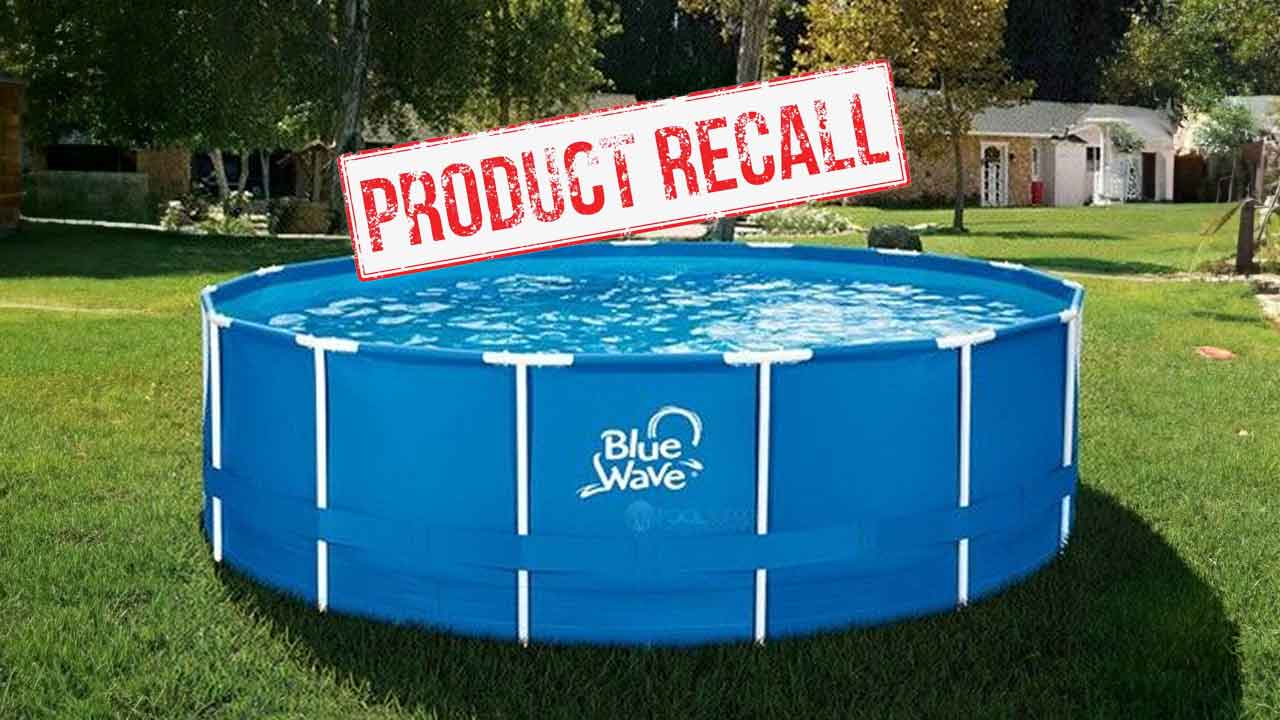
Blue Wave has issued a recall affecting multiple above-ground swimming pool models after federal safety officials identified a potential drowning hazard involving children.
The recall, announced by the U.S. Consumer Product Safety Commission (CPSC) on December 18, covers approximately 13,400 Blue Wave brand above-ground pools that are 48 inches deep or taller and utilize an exterior compression strap as part of the pool’s frame system.
Reason for the Recall
The affected pools feature a compression strap positioned around the outside of the vertical support poles. While the strap is designed to provide structural stability, the CPSC determined that its placement may unintentionally create a foothold.

According to the agency, this foothold could allow children to climb into the pool, even when the ladder has been removed, creating a risk of unsupervised access and potential drowning.
No injuries or fatalities have been reported in connection with the recalled products at the time of the announcement.
Affected Models
The recall applies to the following Blue Wave above-ground pool models:
• Blue Wave 15-Ft Rd 48-In Active Frame Pool
• Blue Wave 18-Ft Rd 52-In Active Frame Pool
• Blue Wave 18-Ft Rd 52-In Dark Cocoa Wicker Frame Pool
• Blue Wave 24-Ft Rd 52-In Dark Cocoa Wicker Frame Pool
• Blue Wave Rustic Cedar 15-Ft Round 48-In Deep Frame Swimming Pool Package W/Cover
• Blue Wave Rustic Cedar 18-Ft Round 52-In Deep Frame Swimming Pool Package W/Cover
• Blue Wave 18-Ft Round 52-In Gray Rattan Swimming Pool Package W/Cover
• Blue Wave 18-Ft Round 52-In Espresso Wicker Swimming Pool Package W/Cover
• Blue Wave 15-Ft Round 48-In Navy Blue Frame Swimming Pool Package W/Cover
• Blue Wave 18-Ft Round 52-In Navy Blue Frame Swimming Pool Package W/Cover
• Blue Wave 15-Ft Round 48-In Aspen Swimming Pool Package W/Cover
• Blue Wave Mocha Wicker 18-Ft Round 52-In Deep Swimming Pool Package With Cover
• Blue Wave Mocha Wicker 24-Ft Round 52-In Deep Swimming Pool Package With Cover
• Blue Wave Laguna 15-Ft Round 48-In Deep Swimming Pool Package With Cover
• Blue Wave Laguna 18-Ft Round 52-In Deep Swimming Pool Package With Cover
All affected models share a common design feature: an exterior compression strap that encircles the pool’s vertical supports.
Sales Channels and Distribution
The recalled pools were sold nationwide from January 2021 through July 2025 through a mix of big-box retailers, sporting goods stores, and online marketplaces, including:
• The Home Depot
• Lowe’s
• Dunham’s Sports
• Amazon
• Walmart
• Wayfair
Retailers have been notified to halt sales of affected models and to direct customers to the manufacturer’s recall remedy.
What Dealers and Retailers Should Know
For dealers and retail partners, the recall highlights the importance of prompt inventory review and customer outreach. Any remaining unsold stock matching the recalled models should be removed from the sales floor and distribution channels immediately.
Retailers that sold affected units during the recall period may see an increase in customer inquiries regarding eligibility, repair kits, and interim safety measures. Clear communication at the point of contact will be critical, particularly around the distinction between structural components and ladders, which many consumers assume are the primary access risk.
Service professionals and retail staff should also be prepared to explain that the recall does not involve a full product replacement, but rather a manufacturer-provided modification designed to eliminate the foothold while maintaining frame integrity.
Manufacturer Remedy
Blue Wave is offering a free repair kit to affected pool owners. The kit replaces the exterior compression strap with a lower-profile system installed closer to ground level. Once the repair is completed, the original strap can be removed.
Until the repair is installed, the manufacturer and CPSC recommend that pool owners prevent unsupervised access to the pool area or drain the pool temporarily.
Dealers and service professionals should advise customers not to remove or cut the compression strap prior to installing the repair kit, as doing so could compromise the pool’s structural stability.

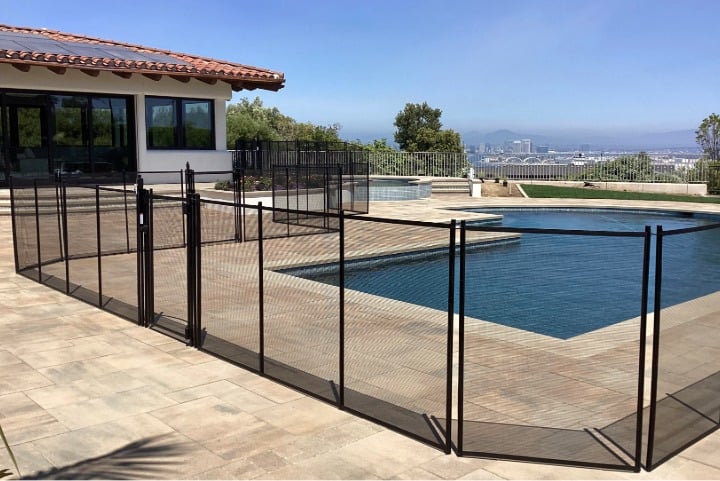
Poolsafe LLC, offers new mesh, removable safety fencing designed to be installed around any pool shape or size. Uses patented, transparent, large-hole ClearGuard™ Mesh for better visibility into the pool area, while also blending the fence into backyard. Lockable, self-closing Triton™ gate features a curved top bar to help prevent climbing. Unique Tri-Pod Truss system keeps gate aligned with daily usage. Available in 4ft and 5ft heights, in black, brown, beige, or gray colors.
https://poolsafe.com/
(888) 489-2282

Latham Group, Inc. (Nasdaq: SWIM), the largest designer, manufacturer, and marketer of in-ground residential swimming pools in North America, Australia, and New Zealand, appoints Sean Gadd as the company’s new President and Chief Executive Officer as part of a CEO transition that will take effect on January 5, 2026. The appointment follows a comprehensive search as part of a succession planning process led by the Board and current CEO Scott Rajeski, who will be retiring from Latham and will serve as a special advisor to the company.
Sean Gadd comes to Latham following a 21-year career at James Hardie. He most recently served as President of North America since 2022, where he has had full P&L responsibility for James Hardie’s largest regional business. Prior to his role as President of North America, Sean served as Executive Vice President, North America, Commercial (2018-2022) and Executive Vice President, Markets and Segments, North America (2015-2018) at James Hardie, leading the front end of the business across product, marketing, and sales. Sean has been instrumental in spearheading James Hardie’s substantial organic net sales growth since 2022, driving material conversion and deeper market penetration through a refined go-to-market strategy targeting end-users via channel partners. Sean brings experience that is directly comparable to Latham’s material conversion and Sand State initiatives, and his demonstrated success in driving strategic growth will be invaluable for Latham and its shareholders.
James E. Cline, Chairman, commented, “Sean is known as a strong leader and brand-builder and has an impressive track record of driving growth at James Hardie. We are thrilled that he has accepted the CEO role at Latham, and the Board believes Sean will be able to leverage his robust commercial experience, sector knowledge, and branding expertise to accelerate our ability to continue to gain share and further the conversion to fiberglass from concrete pools.”

“I am pleased to be joining Latham and am looking forward to building on its achievements to date. This is an excellent opportunity for me to utilize my experience in the building products category to drive further market penetration and adoption of Latham’s top-quality products and greater recognition for its superior service standards,” Mr. Gadd commented.
Mr. Gadd will also become a member of Latham’s Board of Directors, replacing Mr. Rajeski, who is resigning from the Board concurrently with his retirement.
Mr. Cline commented, “On behalf of the Board of Directors, I want to express our deep appreciation for the contributions that Scott Rajeski has made to Latham during his long tenure at the company, first as Chief Financial Officer and, since 2017, as President and Chief Executive Officer. Under his leadership and that of his executive and operating teams, the company went public in April of 2021 and has experienced substantial growth, demonstrated resilience within a difficult industry environment, and built a strong financial position.”
Mr. Rajeski noted, “It has been a privilege to serve as the President & CEO of Latham alongside the talented executive and operating teams that we have at the company. Together, we have advanced the awareness and adoption of fiberglass pools and autocovers, while implementing production and related efficiencies that have streamlined our operations. I am proud to be retiring as CEO of Latham with the company in a strong financial position and in very capable hands. Throughout my conversations with Sean, I have been very impressed with his leadership capabilities and background, and I am confident that he will bring a unique skillset that will allow Latham to continue to outperform the industry, gain further traction in the important Sand States, and remain an acquirer of choice.”
About Latham Group, Inc.
Latham Group, Inc., headquartered in Latham, NY, is the largest designer, manufacturer, and marketer of in-ground residential swimming pools in North America, Australia, and New Zealand. Latham has a coast-to-coast operations platform consisting of approximately 1,850 employees across around 30 locations.


Download the NEW Pool Magazine App
 Sponsored Advertisement
 AquatiCare™: Proactive Pool Maintenance You Can Count On
 RB Retail & Service Solutions adds DocuSign to Software
 BSquared offers New Free Standing Sunledge
 Family Leisure Announces Exclusive Retail Partnership with Jacuzzi
  Blue Wave Recall on Over 13,000 Above Ground Pools
 Tile Heritage Foundation embraces FOUR NEW BOARD MEMBERS joining the current Board of Directors!
 Coverings 2026 Previews Conference Education Ahead of Las Vegas Show

 Hayward Industries, Inc. Acquires Paramount Leisure Industries, Inc.
 Pool & Hot Tub Alliance Announces Diversity, Equity, and Inclusion Statement
 United Aqua Group Member Builds Dream Pool for Local Boy Battling Cancer, Inspired by Conference Keynote
 France Using A.I. To Find Thousands of Untaxed Pools
 Pentair Supports National Water Safety Month As Program Sponsor
 GENESIS Announces Newest Platinum Sponsor: Pool Magazine
 International Swimming Pool and Spa Code to Become Law in Maryland


 Sponsored Advertisement
-
 Pool News2 weeks ago
Blue Wave Recall on Over 13,000 Above Ground Pools
-

 Industry News4 weeks ago
Latham Group Appoints Sean Gadd as Chief Executive Officer
-
 News3 weeks ago
Built on Relationships: Pentair Pool’s New Sales Structure and the People Who Make It Work
-
 Pool Service News3 weeks ago
Easton Select Group Adds Harrison Pool & Spa, Expanding Service Across MetroWest Boston
-

 Press Releases4 weeks ago
FSPA Wins Big at Florida Building Commission
-
 News4 weeks ago
Aquadei Technologies Announces Strategic Alliance with the Master Pool Guild
-

 Features4 weeks ago
Adopting Engineered, Reliable Pool Waterproofing Innovations — Why North America pool builders are shifting toward PVC membranes
-

 Manufacturer4 weeks ago
RicoRock® Offers New Temple Stone Firepit