


Pool News
Did The Pool Deck Contribute To The Collapse at The Champlain Towers?
Cracks radiating in the ceiling of the parking structure underneath the pool deck at the Champlain Towers

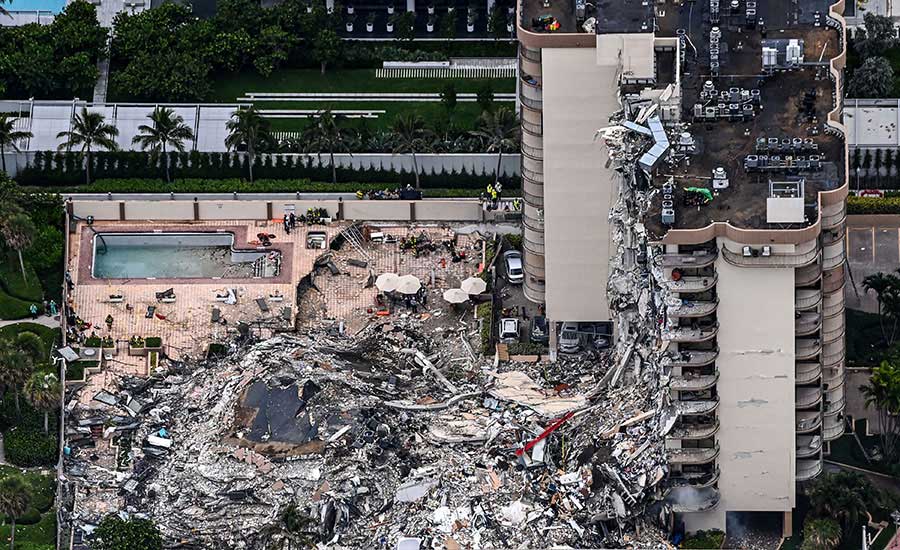
It’s been a week since the collapse at The Champlain Towers. The loss of life and devestation to the community of Surfside, FL cannot be calculated at this time. Workers are still scrambling against the clock and hoping against all odds to recover survivors from the deadly collapse. Almost immediately, pictures and reports began pointing to the pool deck as the possible source of the building collapse.
One of the initial first reports pertaining to the incident was from a resident who claimed that directly before the structure failed, that the pool deck was caving in. This news in itself came as a precursor to a damning structural survey discovered that was released in 2018 which pointed to numerous repairs that needed to be conducted, citing various leaks and deteriorating concrete as a necessary focus for immediate repair work.

What Role Did Poor Waterproofing Play?
To get a better understanding of what role waterproofing may have played, we reached out to one of the leading experts in the pool industry – Vito Mariano, President of Basecrete and a recognized industry authority on waterproofing pools. Mariano’s company has been involved in over 90,000 swimming pool waterproofing projects worldwide. As an analyst, we asked him based on the photos circulating in the media what his take was on the incident. Specifically, did waterproofing play a role in the collapse of The Champlain Towers?

“Concrete is a sponge for water and it has to be protected, especially if it has steel in it. This is a perfect situation where water got to the steel – it expanded and once the metal in the steel starts to break down, you are going to get some deviation in the strength.” said Mariano.
New video footage released the other day shows what appears to be pouring water coming from the ceiling of the parking structure at the Champlain Towers, which validates what many have been saying – which is the collapse started in the parking structure near the pool deck.
What’s In The Morabito Report?
Frank Morabito’s analysis conducted in 2018 indicated a laundry list of structural repairs that needed to be conducted. Morabito’s report included major structural detoriation in the concrete slab below the pool deck, as well as abundant cracking and spalling in the columns of the parking garage.
Read the entire Champlain Towers structural analysis report from 2018
We asked Mariano if any particular shortcomings in the pool deck area may have led to deterioration and whether this is common in the pool industry.

“I do see this type of thing all the time. I get the worst swimming pool vessels in the country thrown at me.” said Mariano who explained that not all of them can be saved “Some of them have to be demolished and started from scratch”.
Many pools in South Florida are suspended between the floors of a building or over a parking structure. The need for waterproofing these vessels and the surrounding structure is imperative. Mariano explained that these types of structures are constantly prone to movement. “The structure has to maintain all that weight in place and when you get deterioration that starts, you never know… it’s a ticking timebomb”.
“Concrete needs to be protected from water, even if there is no swimming pool it still needs to be protected because you have hundreds of thousands of tons that are suspended and moving in the air.” said Mariano, “Then you have all these structures that are built on sand around these beaches. They’re all built on pylons. As we all know this building was sinking for a number of years.” continued Mariano.
What Went Wrong With The Pool Deck
The Champlain Towers had been sinking at an average of 2mm per year according to reports. In the structural survey done by Frank Morabito, his analysis defined the pool deck area as an instance of poor project planning. The flat surface of the pool deck allowed water to sit on top of the waterproofing until it evaporated.
Morabito’s recommendation was to perform immediate repairs which would consist of removing the deck waterproofing as well as the top concrete slab to gain access to the waterproofing membrane. The report stated however, that it would be impossible for full restoration and repair work on the pool corbel and wall repair work in the pool pump room to be performed. The survey indicated that “areas of deteriorated concrete appeared to penetrate deep into wall/corbel construction” and that “aggressive excavation of concrete at the severely deteriorated pool corbel could affect the stability of the remaining adjacent concrete constructions.”
The recommended repairs were going to cost approximately $15 million dollars. It’s a point of fact, that the process of conducting the repairs would have effectively shut down the building for a good portion of residents as well.
When discussing the overall cost of the repairs, ultimately it is the homeowners who were going to foot the bill. This year each resident had been assessed their fair share of the necessary repairs. On average residents were facing anywhere from $80,190 for one-bedroom units to $336,135 for the owner of the building’s four-bedroom penthouse for the recommended repairs in Morabito’s report.
The underside of the pool deck had cracks that were radiating and were fixed with epoxy injection. In the structural survey conducted in 2018, the report indicated that the application was not continuous and was evident of poor workmanship.

A commercial contractor snapped some photos of the pool equipment room days before the collapse. These photos were released recently on the Miami Herald website. As can be seen from the photos, there are definite indications of major deterioration of the concrete structure in the pool pump room.
When analyzing the photos the contractor took and inspecting the deterioration, an analyst on CNN Wednesday evening determined that the photos of the pump room look bad but are inconclusive and was reluctant to say whether they represent a contributing cause in the collapse.

In analyzing what went wrong, we asked Mariano, if this method of epoxy injection repair was correct. “You have to use a proper material to do your injections first of all.” said Mariano, “I would never use epoxy to fill a crack that is going to move. Epoxy is a very rigid material, you need something that’s going to elongate when it does move.”
Mariano recommended a waterproofing caulking and injection system for this type of application. “The failure of using the proper material will always create some damage in the future if there is any additional movement of water.”
Sadly, this type of incident is fairly common in other places of the world with lower construction standards. It is incredibly rare to see this type of structural failure in North America, however it’s not unheard of and Mariano fears that unless something is done soon, we may see more similar incidents unfold.
Many of the high rise condos in South Florida were built over 50 years ago. Mariano explained what troubles him the most is that the building standards and the quality of concrete were lower decades ago. “The stuff that they built years ago really scares me.” said Mariano, “These buildings that are falling apart were built 50, 60, 70 years ago, they’re the ones I’m really worried about. The standards then don’t even come close to the standards we have today.”
America’s $3 Trillion Dollar Concrete Bill
The problem seems systemic as these aging concrete structures become more and more expensive to fix. People have this misconception that concrete is permanent. The notion of long standing concrete structures dating back to antiquity often leads to a misguided belief that today’s concrete has the same strength or more. In actuality this couldn’t be further than the truth. Today’s modern concrete has a lifespan of roughly 50-100 years thanks to the way that modern concrete is reinforced. One of the most famous concrete buildings in America, Frank Lloyd Wright’s Fallingwater, cost only $155,000 to build in 1936… the cost of repairs in 2001 came to $11.5 million.
Mariano said the most troubling issue is ultimately that HOA’s do not want to pay for the necessary repairs on these older buildings. In many cases the residents are looking at over a hundred thousand dollars in assessed repairs and simply can’t afford it.
In a recent article Slate said that the dream of Florida is dead and said that the Miami condo collapse was a crisis for the entire state. A sentiment Mariano echoed when he described the issue of aging buildings and HOA’s who are reluctant to pass millions in repairs on to residents. The issue has many condo owners in South Florida concerned whether their buildings are safe or not.
As the nation speculates, the cause of the collapse is still under investigation as are rescue efforts. To date the death toll is now 22 people. So far no survivors have been recovered and approximately 126 people still remain unaccounted for. Impending weather is also expected to hamper first responders as Florida lays directly in Hurricane Elsa’s long range path. Concerns remain about the structural integrity of what is left standing. Rescuers stopped for 15 hours Thursday as engineers evaluated the remaining structure.
Listen to our complete podcast with Vito Mariano


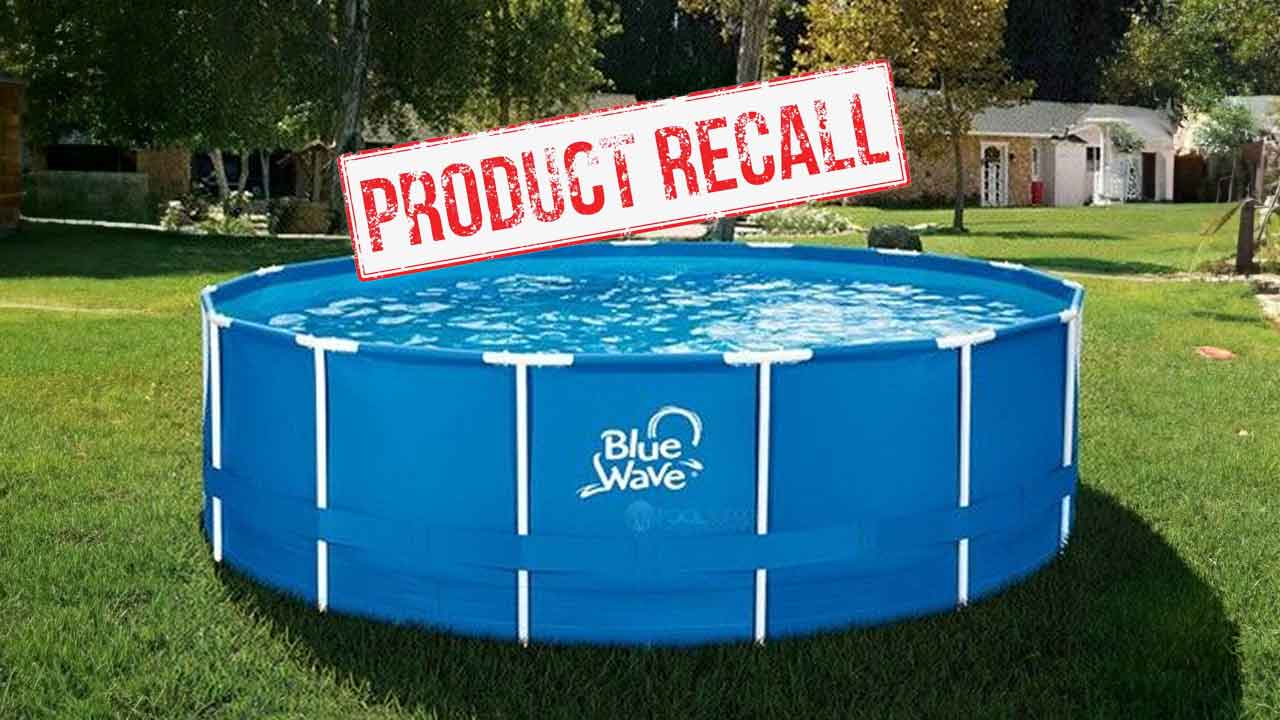
Blue Wave has issued a recall affecting multiple above-ground swimming pool models after federal safety officials identified a potential drowning hazard involving children.
The recall, announced by the U.S. Consumer Product Safety Commission (CPSC) on December 18, covers approximately 13,400 Blue Wave brand above-ground pools that are 48 inches deep or taller and utilize an exterior compression strap as part of the pool’s frame system.
Reason for the Recall
The affected pools feature a compression strap positioned around the outside of the vertical support poles. While the strap is designed to provide structural stability, the CPSC determined that its placement may unintentionally create a foothold.

According to the agency, this foothold could allow children to climb into the pool, even when the ladder has been removed, creating a risk of unsupervised access and potential drowning.
No injuries or fatalities have been reported in connection with the recalled products at the time of the announcement.
Affected Models
The recall applies to the following Blue Wave above-ground pool models:
• Blue Wave 15-Ft Rd 48-In Active Frame Pool
• Blue Wave 18-Ft Rd 52-In Active Frame Pool
• Blue Wave 18-Ft Rd 52-In Dark Cocoa Wicker Frame Pool
• Blue Wave 24-Ft Rd 52-In Dark Cocoa Wicker Frame Pool
• Blue Wave Rustic Cedar 15-Ft Round 48-In Deep Frame Swimming Pool Package W/Cover
• Blue Wave Rustic Cedar 18-Ft Round 52-In Deep Frame Swimming Pool Package W/Cover
• Blue Wave 18-Ft Round 52-In Gray Rattan Swimming Pool Package W/Cover
• Blue Wave 18-Ft Round 52-In Espresso Wicker Swimming Pool Package W/Cover
• Blue Wave 15-Ft Round 48-In Navy Blue Frame Swimming Pool Package W/Cover
• Blue Wave 18-Ft Round 52-In Navy Blue Frame Swimming Pool Package W/Cover
• Blue Wave 15-Ft Round 48-In Aspen Swimming Pool Package W/Cover
• Blue Wave Mocha Wicker 18-Ft Round 52-In Deep Swimming Pool Package With Cover
• Blue Wave Mocha Wicker 24-Ft Round 52-In Deep Swimming Pool Package With Cover
• Blue Wave Laguna 15-Ft Round 48-In Deep Swimming Pool Package With Cover
• Blue Wave Laguna 18-Ft Round 52-In Deep Swimming Pool Package With Cover
All affected models share a common design feature: an exterior compression strap that encircles the pool’s vertical supports.
Sales Channels and Distribution
The recalled pools were sold nationwide from January 2021 through July 2025 through a mix of big-box retailers, sporting goods stores, and online marketplaces, including:
• The Home Depot
• Lowe’s
• Dunham’s Sports
• Amazon
• Walmart
• Wayfair
Retailers have been notified to halt sales of affected models and to direct customers to the manufacturer’s recall remedy.
What Dealers and Retailers Should Know
For dealers and retail partners, the recall highlights the importance of prompt inventory review and customer outreach. Any remaining unsold stock matching the recalled models should be removed from the sales floor and distribution channels immediately.
Retailers that sold affected units during the recall period may see an increase in customer inquiries regarding eligibility, repair kits, and interim safety measures. Clear communication at the point of contact will be critical, particularly around the distinction between structural components and ladders, which many consumers assume are the primary access risk.
Service professionals and retail staff should also be prepared to explain that the recall does not involve a full product replacement, but rather a manufacturer-provided modification designed to eliminate the foothold while maintaining frame integrity.
Manufacturer Remedy
Blue Wave is offering a free repair kit to affected pool owners. The kit replaces the exterior compression strap with a lower-profile system installed closer to ground level. Once the repair is completed, the original strap can be removed.
Until the repair is installed, the manufacturer and CPSC recommend that pool owners prevent unsupervised access to the pool area or drain the pool temporarily.
Dealers and service professionals should advise customers not to remove or cut the compression strap prior to installing the repair kit, as doing so could compromise the pool’s structural stability.

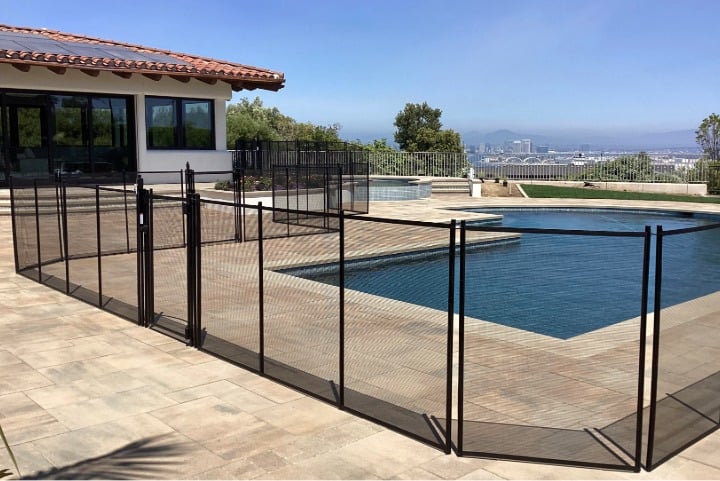
Poolsafe LLC, offers new mesh, removable safety fencing designed to be installed around any pool shape or size. Uses patented, transparent, large-hole ClearGuard™ Mesh for better visibility into the pool area, while also blending the fence into backyard. Lockable, self-closing Triton™ gate features a curved top bar to help prevent climbing. Unique Tri-Pod Truss system keeps gate aligned with daily usage. Available in 4ft and 5ft heights, in black, brown, beige, or gray colors.
https://poolsafe.com/
(888) 489-2282


Latham Group, Inc. (Nasdaq: SWIM), the largest designer, manufacturer, and marketer of in-ground residential swimming pools in North America, Australia, and New Zealand, appoints Sean Gadd as the company’s new President and Chief Executive Officer as part of a CEO transition that will take effect on January 5, 2026. The appointment follows a comprehensive search as part of a succession planning process led by the Board and current CEO Scott Rajeski, who will be retiring from Latham and will serve as a special advisor to the company.
Sean Gadd comes to Latham following a 21-year career at James Hardie. He most recently served as President of North America since 2022, where he has had full P&L responsibility for James Hardie’s largest regional business. Prior to his role as President of North America, Sean served as Executive Vice President, North America, Commercial (2018-2022) and Executive Vice President, Markets and Segments, North America (2015-2018) at James Hardie, leading the front end of the business across product, marketing, and sales. Sean has been instrumental in spearheading James Hardie’s substantial organic net sales growth since 2022, driving material conversion and deeper market penetration through a refined go-to-market strategy targeting end-users via channel partners. Sean brings experience that is directly comparable to Latham’s material conversion and Sand State initiatives, and his demonstrated success in driving strategic growth will be invaluable for Latham and its shareholders.
James E. Cline, Chairman, commented, “Sean is known as a strong leader and brand-builder and has an impressive track record of driving growth at James Hardie. We are thrilled that he has accepted the CEO role at Latham, and the Board believes Sean will be able to leverage his robust commercial experience, sector knowledge, and branding expertise to accelerate our ability to continue to gain share and further the conversion to fiberglass from concrete pools.”
“I am pleased to be joining Latham and am looking forward to building on its achievements to date. This is an excellent opportunity for me to utilize my experience in the building products category to drive further market penetration and adoption of Latham’s top-quality products and greater recognition for its superior service standards,” Mr. Gadd commented.
Mr. Gadd will also become a member of Latham’s Board of Directors, replacing Mr. Rajeski, who is resigning from the Board concurrently with his retirement.
Mr. Cline commented, “On behalf of the Board of Directors, I want to express our deep appreciation for the contributions that Scott Rajeski has made to Latham during his long tenure at the company, first as Chief Financial Officer and, since 2017, as President and Chief Executive Officer. Under his leadership and that of his executive and operating teams, the company went public in April of 2021 and has experienced substantial growth, demonstrated resilience within a difficult industry environment, and built a strong financial position.”
Mr. Rajeski noted, “It has been a privilege to serve as the President & CEO of Latham alongside the talented executive and operating teams that we have at the company. Together, we have advanced the awareness and adoption of fiberglass pools and autocovers, while implementing production and related efficiencies that have streamlined our operations. I am proud to be retiring as CEO of Latham with the company in a strong financial position and in very capable hands. Throughout my conversations with Sean, I have been very impressed with his leadership capabilities and background, and I am confident that he will bring a unique skillset that will allow Latham to continue to outperform the industry, gain further traction in the important Sand States, and remain an acquirer of choice.”
About Latham Group, Inc.
Latham Group, Inc., headquartered in Latham, NY, is the largest designer, manufacturer, and marketer of in-ground residential swimming pools in North America, Australia, and New Zealand. Latham has a coast-to-coast operations platform consisting of approximately 1,850 employees across around 30 locations.


Download the NEW Pool Magazine App
 Sponsored Advertisement
 AquatiCare™: Proactive Pool Maintenance You Can Count On
 RB Retail & Service Solutions adds DocuSign to Software
 BSquared offers New Free Standing Sunledge
 Family Leisure Announces Exclusive Retail Partnership with Jacuzzi
  Blue Wave Recall on Over 13,000 Above Ground Pools
 Tile Heritage Foundation embraces FOUR NEW BOARD MEMBERS joining the current Board of Directors!
 Coverings 2026 Previews Conference Education Ahead of Las Vegas Show

 PSP/Deck Expo Opens Its Million Dollar Pool Design Challenge
 When Homeowners Hold The Last Payment Hostage
 Heritage Pool Supply Group Announces Appointment of Scott Frost as President
 Sustainability & Swimming Pools: Diving Into An Eco-Friendly Future
 Pool Protection Technologies’ S.A.M. Offers a Fresh Take on Algae Control
 PRESIDENTIAL POOLS HOSTS “HOLIDAY PHOTOS FOR A CAUSE” EVENT BENEFITTING TOYS FOR TOTS ON NOV. 8
 Quality Construction Means Attention to Details
 Sponsored Advertisement
 Sponsored Advertisement
-
 Pool News2 weeks ago
Blue Wave Recall on Over 13,000 Above Ground Pools
-

 Industry News4 weeks ago
Latham Group Appoints Sean Gadd as Chief Executive Officer
-
 News3 weeks ago
Built on Relationships: Pentair Pool’s New Sales Structure and the People Who Make It Work
-

 Pool Service News3 weeks ago
Easton Select Group Adds Harrison Pool & Spa, Expanding Service Across MetroWest Boston
-

 Press Releases4 weeks ago
FSPA Wins Big at Florida Building Commission
-

 News4 weeks ago
Aquadei Technologies Announces Strategic Alliance with the Master Pool Guild
-

 Features4 weeks ago
Adopting Engineered, Reliable Pool Waterproofing Innovations — Why North America pool builders are shifting toward PVC membranes
-

 Manufacturer4 weeks ago
RicoRock® Offers New Temple Stone Firepit